Culture and Society
 PUBLISHED





It may not be a pleasant sensation, but fear plays a vital role in helping us identify danger and steer clear of potentially life-threatening situations. Phobias, on the other hand, are irrational fears that, at their worst, prevent people from engaging in everyday life.
Unlike regular trepidation, then, the intense panic triggered by these sometimes baseless terrors seems so unnecessary, raising the question as to why phobias exist in the first place.
Why spiders and snakes give you the shakes
It's true that, prehistorically, clowns wouldn't have been around, but clowns, in my mind, represent a broader category of fears that children often have, which is the fear of costumed characters.
Martin Antony
While it’s possible for a person to develop a phobia of anything from beards (pogonophobia) to flowers (anthophobia), the vast majority of terror is reserved for dangerous-looking animals – particularly snakes and spiders – as well as heights, deep water, and needles.
From an evolutionary perspective, it’s easy to see where such fears come from, given that venomous creatures, falls, oceans, and sharp objects have been claiming lives since time immemorial.
However, while a certain level of respect for all of the above is healthy, phobias represent a pathological level of anxiety that significantly impacts a person’s quality of life. Yet while losing your blob over the fear of encountering a tiny spider might sound ridiculous to some, research suggests that our brains may be hardwired to obsess over certain animals.
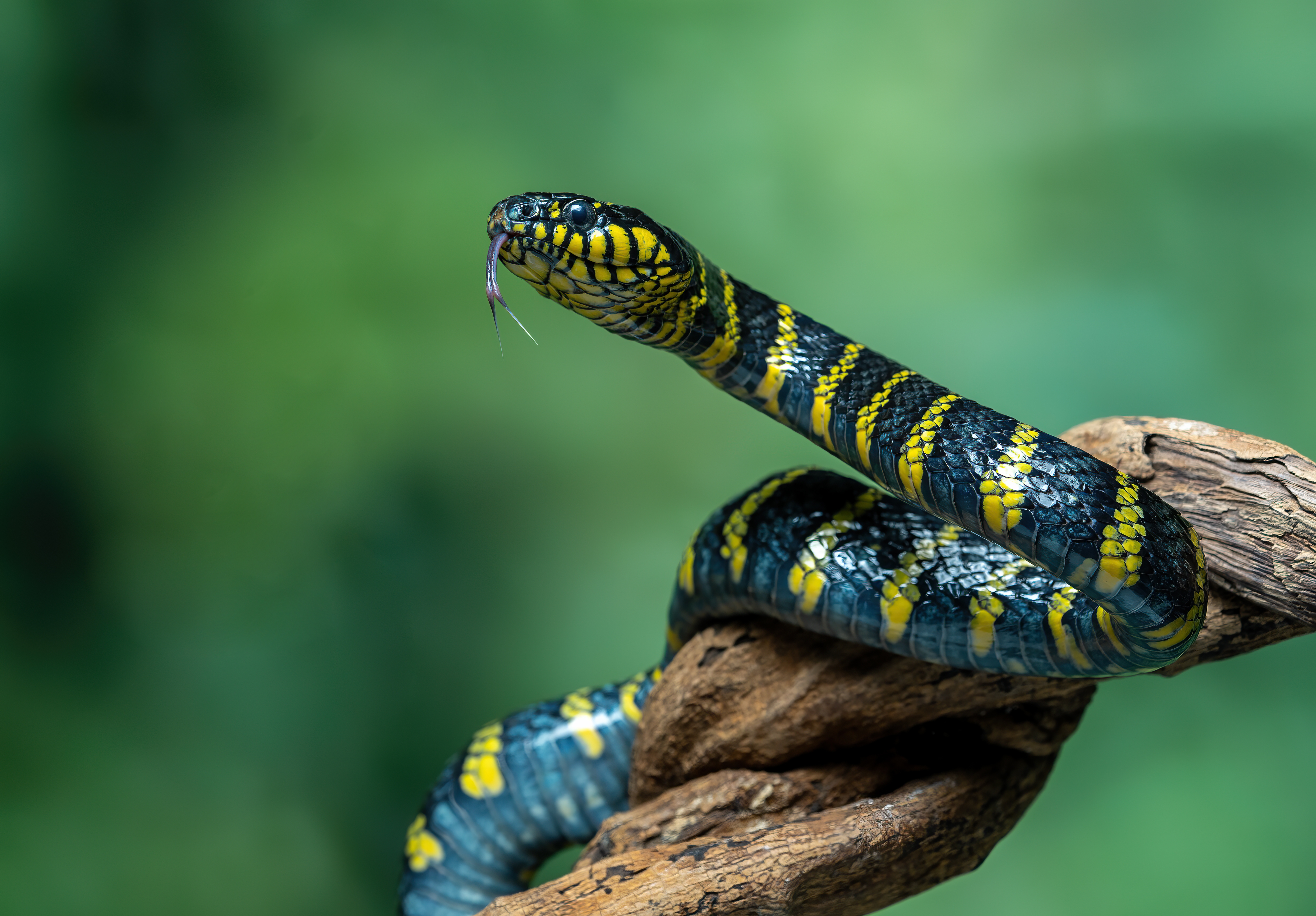
For instance, studies have shown that certain neurons react much faster to images of snakes than to pictures of monkeys, indicating that our vision may be primed to pick out serpents in our environment.
Separate research has revealed that young infants are more likely to show signs of arousal when viewing pictures of snakes or spiders than when looking at fish. Another important study demonstrated that baby monkeys tend to develop a fear of snakes if they see adults acting afraid around serpents, but that they don’t develop a flower phobia when they see their parents freaking out near floral images.
“We call these prepared fears,” phobia expert Martin Antony, professor of psychology at Toronto Metropolitan University and co-author of The Anti-Anxiety Program, told IFLScience. “Through evolution, we've developed mechanisms to develop those fears more easily than others.”
Some of us are just predisposed genetically to be more anxious, more reactive than others.
Martin Antony
In other words, many of our most common phobias can be traced back to the mortal threats faced by our prehistoric ancestors, who developed a particular aversion to snakes and spiders as a vital defense mechanism.
Extending the notion of prepared fears to certain other phobias – clowns and needles, for instance – Antony says that even these modern terrors may have their roots in our evolutionary past.
“It's true that, prehistorically, clowns wouldn't have been around, but clowns, in my mind, represent a broader category of fears that children often have, which is the fear of costumed characters,” he muses.
“So where would that come from? Well, it might be that kids are predisposed to fear strangers or people who look unfamiliar and maybe could do harm to them, and I can imagine that has some evolutionary value.”
Likewise, Antony says that while our prehistoric ancestors wouldn’t have received injections, “they would have wanted to avoid having their skin pierced by things,” thus placing needle phobias in the “prepared fears” category.
Similarly, he explains that “fears of contamination that we see in people with OCD [obsessive compulsive disorder] would have some evolutionary value.”
Unusual phobias
So if arachnophobia, coulrophobia (fear of clowns), and trypanophobia (fear of needles) all serve an evolutionary purpose, how do we explain less common yet equally debilitating phobias of things like knees (genuphobia), balloons (globophobia), or getting peanut butter stuck to the roof of your mouth (arachibutyrophobia)?
“I wouldn't say you can't develop a fear that doesn't have evolutionary value, but I would say it's more unusual and more difficult to develop those unprepared fears,” says Antony. Generally, these more unusual phobias stem from influential life experiences, becoming ingrained via one of three main “learning pathways”.

The first and perhaps the most obvious of these is what Antony calls “direct learning”, referring to out-and-out traumatic experiences.
“So you get into a car accident, you develop a fear of driving; you get bitten by a dog, you develop a fear of dogs, that kind of thing,” he says.
Yet the seeds of many phobias are sown far more subtly. For instance, the second pathway, known as observational learning, involves watching others act fearfully around a particular stimulus. In some cases, this can be sufficient to transfer that sense of panic to an impressionable onlooker.
But the good thing is you don’t really have to know [how your phobia started]. In the end, what we're most interested in is not necessarily what triggered the fear initially, but what's maintaining it currently.
Martin Antony
Then there’s instructional learning, which involves language and messaging.
“So this includes learning from things that parents say, things that you see in the media, things that you see on television or social media, that may contribute to fear, and we know that one of the ways that the media keeps us engaged is through fear,” says Antony.
Indeed, with so many horror and disaster movies, not to mention a hefty focus on terrifying news stories, it’s no wonder that so many of us have phobias.
At the same time, however, we all have different levels of susceptibility to these cues, with some of us being more resilient to fear than others. Numerous factors contribute to this, including our stress levels, previous experiences, and even genetics.
“Some of us are just predisposed genetically to be more anxious, more reactive than others,” says Antony. “It's not like some people are genetically predisposed to fear snakes and other people have a spider genetic predisposition. It’s probably more of a general effect making us more [or less] vulnerable to the effects of these learning experiences and giving us a greater [or lesser] tendency to develop fears.”
But there is a cure!
“I'll also just mention that a lot of people have no idea why they're afraid,” says Antony. Indeed, most people with phobias can’t trace their fear back to a particular traumatic episode, and it’s likely that in many cases, the trigger can be found in a subtle event from one’s early childhood that has long since been forgotten.
“But the good thing is you don’t really have to know [how your phobia started]”, he continues. “In the end, what we're most interested in is not necessarily what triggered the fear initially, but what's maintaining it currently… and that’s typically people’s avoidance of the situation [that they fear].”
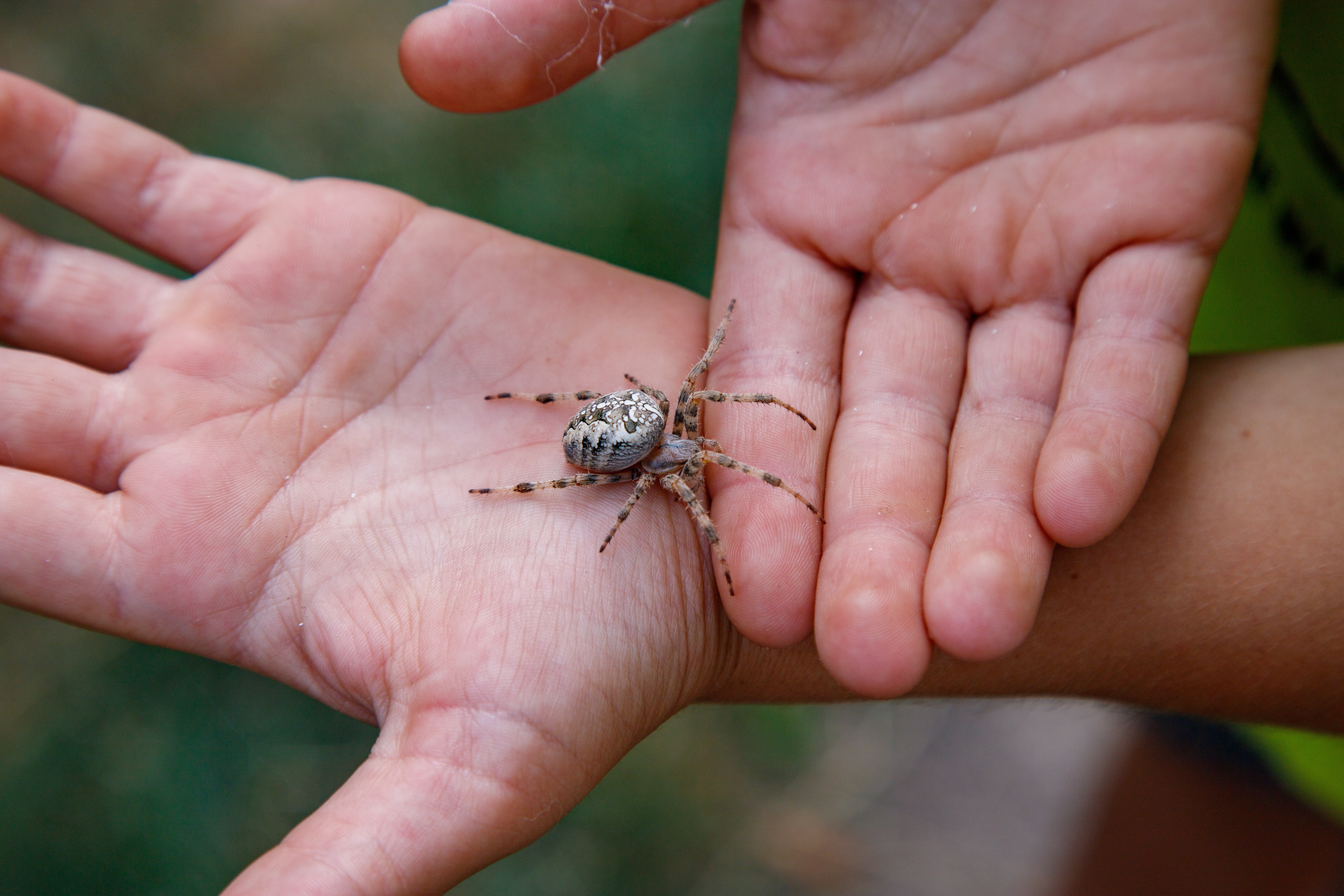
By rearranging one’s entire life to minimize the possibility of encountering heights, or running away screaming whenever a tiny spider enters the house, we reinforce the idea that these things are fear-worthy and that getting away from them brings relief. One of the most effective ways to overcome a phobia, therefore, is through exposure therapy.
As the name suggests, exposure therapy involves facing one’s fear head-on in a controlled environment and is so successful that it’s not uncommon for patients to completely lose their phobia in a single session.
“People stay in the situation [they’re afraid of] until they learn that nothing bad happens,” explains Antony. “Until they learn, typically, that they can be in that situation and not be afraid.”
Like monsters under the bed, phobias control us because we continue to tell ourselves there’s something to be scared of, and can vanish the moment we stop believing in them.
Go on, then, take a peek. Perhaps the only thing we have to fear is fear itself – or phobophobia, to use the technical term.
This Curious Questions first appeared in Issue 27 of our digital magazine CURIOUS. To access exclusive CURIOUS content first and receive the quarterly digital magazine, become an All Access Member.

 1
1