


 Nature
 PUBLISHED


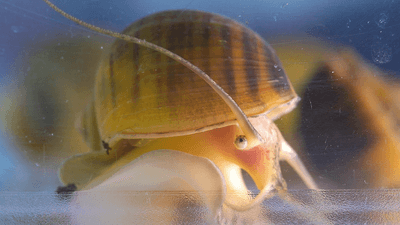


Sometimes science stumbles across something amazing while researching another thing entirely. Most recently? That the humble apple snail (Pomacea canaliciulata) can regrow its eyes, regenerating them after injury or amputation.
The discovery came about after Assistant Professor Dr Alice Accorsi began working on a solution for the invasive apple snails that are munching their way through Italy’s lettuce fields. She got a curious request from president and chief scientific officer at the Stowers Institute for Medical Research, Dr Alejandro Sánchez Alvarado, to try something out; “I asked her, ‘Hey Alice, can you go back to the university and amputate some parts of these snails and then see if they regenerate?’”
Within less than two weeks after complete eye removal, early signs of regrowth become visible, and in under a month, a newly reconstructed eye is restored.
Dr Alice Accorsi
Just another day in the life of a scientist, eh? Accorsi did just that and noticed that yes, the apple snails were regenerating. The pair teamed up and began trying to turn the apple snail into a model organism for studying the genetic mechanisms behind complex sensory organ regeneration. It's a useful solution for a creature that's become such a troublesome invasive species, and something we've never been able to do for this kind of eye before.
“Within less than two weeks after complete eye removal, early signs of regrowth become visible, and in under a month, a newly reconstructed eye is restored,” Accorsi told IFLScience. “The speed and precision of this process are truly remarkable and reveal a largely untapped opportunity to explore the mechanisms of sensory organ regeneration.”
It was unexpected to see how asynchronous the regeneration of its individual parts was.
Dr Alejandro Sánchez Alvarado
“The most surprising outcome was discovering that the different components of the regenerating apple snail eye, such as the lens, photoreceptor microvilli, pigment granules, photoreceptor inner segment, and neuropile, do not regenerate at the same rate or in synchrony,” Sánchez Alvarado, the study’s lead investigator, told IFLScience. “By 28 days post-amputation, the regenerated eye closely matches the structure of a normal intact eye, but it was unexpected to see how asynchronous the regeneration of its individual parts was.”
The regeneration occurred in four key stages: wound healing, formation of a special cell mass, emergence of a lens and retina, and the maturation of all eye components. Though we have anatomically similar eyes, we humans can only perform the first stage, wound healing, so understanding what triggers the next step could be a pivotal discovery for human eye health.
One key gene that has already come to their attention is pax6, known to play a crucial role in vertebrate and fruit fly eye development. When this gene function was disrupted in gene-edited snails, the new line of apple snails was healthy, but didn’t develop eyes. This marks the first time science has been able to peer into the genetic underpinnings of a sensory organ as complex as the eye, and already they have a list of candidate genes to further experiment with.
A fascinating first step in better understanding how to build an eye, but the team isn’t done yet. Key questions they’d still like to tackle include figuring out the molecular and cellular mechanisms that orchestrate the asynchronous regeneration, whether specific progenitor or stem cell populations are responsible for rebuilding the different eye tissues, and which regulatory factors beyond pax6 are driving the process.
It also paves the way for comparative studies that could yield valuable insights into the biology of regeneration and potentially inform strategies to repair or restore human tissues
Dr Alice Accorsi
Perhaps most intriguingly of all, they also hope to explore if we could apply that knowledge to bring about a similar degree of sensory organ regeneration in other species.
“Many of the genes active during snail eye regeneration are those involved in vertebrate eye development,” added Accorsi. “This finding suggests that, although eyes in snails and humans evolved independently, they rely on a shared set of genetic building blocks. It also paves the way for comparative studies that could yield valuable insights into the biology of regeneration and potentially inform strategies to repair or restore human tissues.”
Truly, research to keep your eyes peeled for.
The study is published in the journal Nature Communications.




 1
1