Nature
 PUBLISHED
 1
1


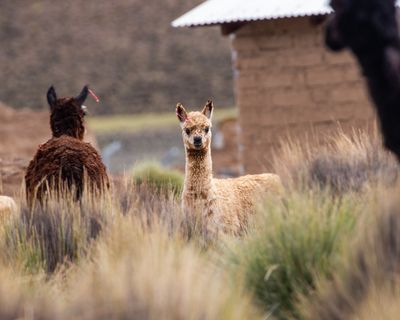


Alpacas have weird sex lives: they are the only mammal we know of in which the penis enters the uterus to directly deposit sperm. It’s a reproductive strategy that’s never been confirmed in any other mammal before, and new research suggests it may help the kinky camelids’ chances of pregnancy.
Alpacas (Vicugna pacos) – not to be confused with llamas – have long been suspected of mating like this, which would make them unique among mammals, but until now there has only been circumstantial evidence that this is the case.
Mating in the animal kingdom can be pretty weird, and often difficult, meaning there are a multitude of strategies used by different species to maximize their chances of success. In most mammals, the penis is inserted into the vagina and insemination occurs in the cranial vagina or fornix. But for some, known as intrauterine inseminators, insemination happens in the uterus. Species thought to do this include horses, mice, rats, and ferrets.
Alpacas, however, were believed to be unique in that they have intrauterine insemination and intrauterine penile intromission – meaning that the penis is inserted into the uterus itself where it directly deposits sperm.
To find out if this was really the case, researchers examined the reproductive systems of 10 female alpacas culled for meat either one hour or 24 hours after mating. They found evidence of “conspicuous bleeding” along the reproductive tracts, including the hymen, cervix, and tips of the uterine horns, which was not present in alpacas that had not recently mated.
This, they have taken as evidence that male alpacas thrust their penises through the females’ entire reproductive tracts, penetrating to the very tips of the uterine horns, and in doing so causing abrasions and breaking fine blood vessels.
Sperm were then deposited at the uterine papillae of the oviduct entrance, the study authors write, and from there were able to enter the oviducts within just one hour of mating.
These conclusions are supported by the alpaca’s unusual penis morphology: males have a long, thin, and fibro-elastic phallus with a hard cartilage tip, which is likely responsible for the abrasion the team documented.
It may seem a bizarre method of reproduction – and the researchers don’t refute that – but it could have evolutionary benefits for the curious camelids.
“A peculiar copulatory mode in alpaca may improve the odds of successful fertilization and pregnancy,” the team conclude. “The fact that the entire reproductive tract in alpaca is essentially functioning as a vagina during copulation likely has some immunological consequences worth further investigation.”
They add that the inflammation caused by the internal wounds may help the fertilized egg implant in the uterus walls or could help to induce ovulation.
Whatever the reason, alpacas’ strange sexual habits are a mammalian anomaly (at least for now) – but there are plenty of other examples of quirky copulation out there, from bats reproducing without penetration because of their seven-times-too-big dongs to sloths screaming in D sharp.
The study is published in the journal PLOS ONE.