Nature
 PUBLISHED


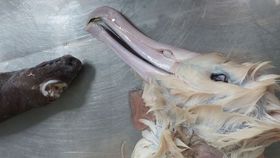


If you’ve got eyes bigger than your stomach, you can sympathize with this albatross, which choked to death after swallowing a whole shark.
The northern royal albatross had a soaring wingspan of 3 meters (9.8 feet) and was more than a meter (3 feet) in length. The seabird choked on a whole seal shark, which was around 67 centimeters (26 inches) long.
The massive seafaring bird was found just off the coast at Wellington, New Zealand by researchers at the Museum of New Zealand. The researchers only found the shark lodged in the albatross's throat back at the lab.
Northern royal albatrosses tend to live a scavenger lifestyle with a diet largely comprised of already dead or decaying flesh, so it’s likely the shark was eaten while it was dead after being discarded from a deep-sea fishing boat.
“Albatrosses are mainly scavengers but they have very sharp beaks so can normally slice up bigger prey items before swallowing them,” Alan Tennyson, a curator at the Museum of New Zealand, told New Scientist.
“This shark had very leathery rough skin and perhaps the albatross assumed that it could slice it up when it grabbed it, but ended up swallowing the whole thing – with tragic consequences.”
To immortalize this very unusual death, the museum is preparing both bodies to be preserved as skeletons for future research.
Image credit: Photographer: Alan Tennyson (c) Te Papa
Image credit: Photographer: Alan Tennyson (c) Te Papa
[H/T: New Scientist]