Nature
 PUBLISHED


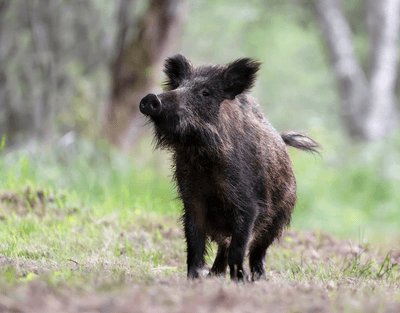


In the wake of the Fukushima nuclear disaster, an “unusually large hybridization event” unfolded between local wild boar and escaped domestic pigs. Within just a few years, the genetics of the two animals became closely intertwined, disrupting their typical evolutionary processes in unexpected ways.
In 2011, a major meltdown at the Fukushima Daiichi Nuclear Power Plant in Japan led to the abandonment of huge swathes of land around the impacted area. This gave domestic swine (Sus scrofa domesticus) the opportunity to escape into the wild, while allowing wild boar (Sus scrofa leucomystax) to expand into areas previously dominated by domesticated livestock.
By no surprise, the two subspecies hooked up and were closely related enough to produce fertile offspring. The hog hybrid population quickly grew, providing researchers with a unique chance to study a natural experiment in hybridization.
To investigate the freak occurrence, scientists in Japan analyzed mitochondrial DNA from 191 wild boars and 10 domestic pigs collected in the Fukushima region between 2015 and 2018. Since mitochondrial DNA is passed down through the mother, it allowed them to trace the maternal lineages of the interbreeding animals.
Domestic pigs have a fast-paced, year-round reproductive cycle, as opposed to wild boar, which typically reproduce just once a year. Interestingly, this ability to rapidly reproduce persisted after the pigs escaped into the wild and was passed down through maternal lineages into the hybrids. Many individuals with both pig and boar ancestors were already more than five generations removed from the original crossover, indicating they were breeding to produce new generations at an impressive pace.
However, as a result of the rapid breeding over generations, the domestic pig genes were quickly diluted through repeated backcrossing with wild boar. This super-fast breeding allowed the hybrids to initially boom, but ultimately led to their bust.
"While it has been previously suggested that hybridization between rewilded swine and wild boars can contribute to population growth, this study demonstrates – through the analysis of a large-scale hybridization event following the Fukushima nuclear accident – that the rapid reproductive cycle of domestic swine is inherited through the maternal lineage," study author Professor Shingo Kaneko, from Fukushima University, said in a statement.
The researchers were keen to point out that these conditions were exceptional as they resulted from a single, one-time release of domestic pigs, with no further introductions. This is unlike other parts of the world, such as North America, where pigs can continually escape and interbreed with wild boar, constantly spicing up the gene pool with traits that keep the hybrids aggressive, competitive, and fast-breeding.
In Fukushima, the gene pool was pumped with a big, one-off load of new pig genes, which were promptly drowned out and engulfed by the wild boar population. Nevertheless, the team believes their recent work could have practical implications for managing invasive species, especially if they’re released in an unusual lone event.
"The findings can be applied to wildlife management and damage control strategies for invasive species," Professor Kaneko explained. "By understanding that maternal swine lineages accelerate generation turnover, authorities can better predict population explosion risks."
The study is published in the Journal of Forest Research.


 1
1