


 Nature
 PUBLISHED



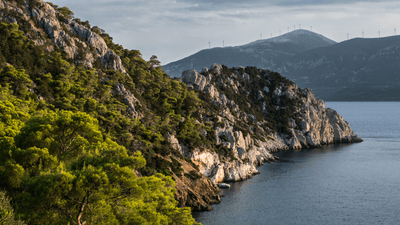


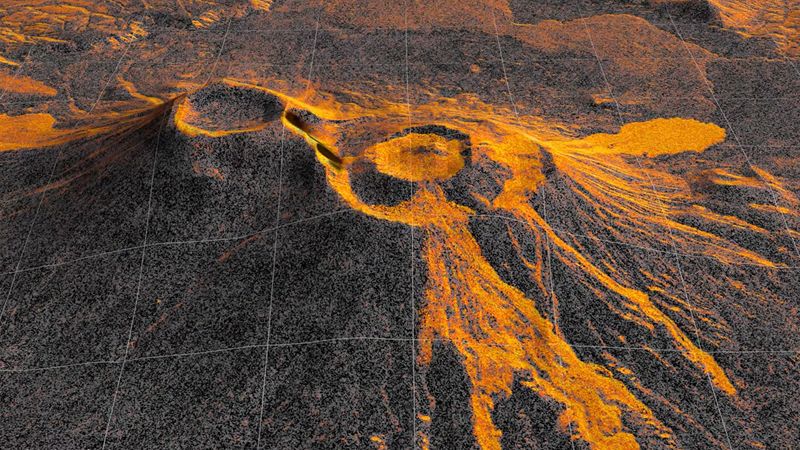
Things don’t come back from the dead, but a worrying new discovery suggests some volcanoes we thought to be extinct could one day wake up. The findings have big implications for volcano hazard authorities as they reveal we may need to reassess the status of some volcanoes, even ones that have been quiet for tens of thousands of years.
The study takes us to Greece, home of an active lava dome volcano called Methana. Researchers there have been studying zircon, a kind of crystal that forms inside the volcano when magma cools, acting as a time capsule that locks in the conditions that existed at the time it was made.
“We can think of zircon crystals as tiny flight recorders,” said Olivier Bachmann at ETH Zurich in a statement. “By dating more than 1,250 of them across 700,000 years of volcanic history, we’ve reconstructed the volcano’s inner life with a precision and statistical power that simply wasn’t possible a decade ago.”
Studying zircon in this way has revealed some findings that are rather impressive, if a little bit terrifying. The crystalline timeline of Methana suggests that even during periods of dormancy lasting over 100,000 years, the volcano continued to show signs of intense magma activity. Far from being dormant, it was actually building its reservoir deep underground.
“What we learned is that volcanoes can ‘breathe’ underground for millennia without ever breaking the surface,” said Bachmann. “For volcano hazard authorities, for example, in Greece, Italy, Indonesia, Philippines, South and North America, Japan, etc. this means re-evaluating the threat level of volcanoes that have been quiet for tens of thousands of years but show periodic signs of magmatic unrest.”
So, if Methana was building up this underground well of explosive potential, why didn’t it erupt? The zircon also tells us that the magma in Methana contained more water than expected, particularly during the periods when the volcano was quiet.
Water-rich magma behaves differently, bubbling and containing more crystals that make it thicker and stickier. A team of scientists recreated the effect using computer models and observed how this kind of magma slows down as it rises. This means a big reservoir doesn’t necessarily cause a big bang, as the magma may struggle to reach the surface. Unfortunately, it doesn’t rule out the possibility of a future eruption either.
The research reveals a mechanism through which volcanoes we have labeled “extinct” after prolonged periods of perceived dormancy may have been more active than we realized. The findings have big implications for volcanic risk assessment, highlighting the need to keep an eye on sleeping volcanoes we may not have otherwise been monitoring.
After all, to quote the paper’s title, you don’t want to get caught short when “a volcano reawakens.”
The study is published in the journal Science Advances.


 1
1