Nature
 PUBLISHED


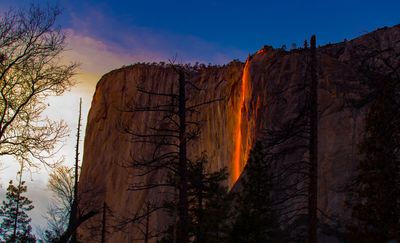


At this time of year, if conditions are just right, Horsetail Fall on the eastern ridge of El Capitan in Yosemite National Park appears to glow a fiery orange. We’re currently in the brief window when this stunning spectacle can be enjoyed, so here’s what to expect.
Yosemite National Park recently announced that the 2026 Horsetail Fall viewing period is projected to last from February 10 to 26, 2026. The natural light show lasts for just a few minutes when the setting sun strikes the waterfall at just the right angle, creating the illusion of a thin ribbon of fire cascading down the rock face.
However, even during the peak viewing period, the firefall spectacle is never guaranteed. Clear skies at sunset are a must, since clouds can obscure the sunlight that illuminates the fall, muting its fiery glow. The angle of the sun also has to be just right, as it needs to catch the fall at a particular angle.
Timing is crucial, too. Horsetail Fall is fed by melting snow, so if winter snowfall has been light or temperatures have been too cold to melt the snowpack, the waterfall may slow to a trickle or disappear completely.
Be sure to get there early and bring plenty of patience. In past years, floods of eager visitors have damaged riverbanks, trampled precious vegetation, and dumped litter. On one particularly packed day in February 2022, some 2,433 visitors came to view the Horsetail Fall in a mass gathering that overwhelmed the parking, facilities, and other infrastructure.
Unlike previous years, tickets for the 2026 Horsetail Fall viewing period are not required. However, there are a few things you should know before you rock up. Visitors can park in eastern Yosemite Valley and walk to designated viewing areas using a temporary pedestrian lane on Northside Drive. More information about the restrictions is available on the National Park Service website.
Located in California, Yosemite National Park is an awe-inspiring landscape known for its towering granite cliffs, giant sequoias, and dramatic waterfalls. One of its most iconic features is El Capitan, which rises more than 900 meters (3,000 feet) above the floor of Yosemite Valley. It is from the eastern side of this sheer rock face that Horsetail Fall descends.
El Capitan has long been a favorite of artists and adventurers alike. It was a repeat subject of Ansel Adams, the pioneering American photographer known for his iconic images of the American West. In 2017, it was climbed without ropes or safety equipment by Alex Honnold, the same guy who recently scaled the Taipei 101 tower, in an anxiety-inducing feat documented in the Oscar-winning film Free Solo.
But for those with a more sensitive fear response, we recommend bringing a deck chair and enjoying the sights from the safety of ground level.