Nature
 PUBLISHED




Warning: This story contains graphic images
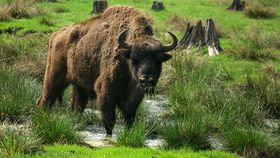
The European bison has been gradually reintroduced across Europe over the past few decades after their numbers collapsed from over-hunting and habitat loss. However, they’ve recently had a mysterious and gruesome setback at one breeding program in Spain.
The decapitated body of a European bison was discovered at the private Valdeserillas reserve in the eastern region of Valencia, while three others have been reported missing, AFP reports.
Conservationists at the reserve believe the male bison, named Sauron, was decapitated with an axe and his head sold or kept as a trophy. Most of the eight-strong herd of European bison in the reserve were sick last month, leading the staff to believe they had been poisoned.
“He was called Sauron after the Lord of the Rings character because he was the biggest and the most powerful,” Rodolfo Navarro, a spokesman for the reserve, told the Guardian. “He was a beautiful animal that weighed nearly 800 kilograms [1,764 pounds]. He was sort of the symbol of the reserve.”
Navarro added that skin and blood samples from Sauron have been taken to try and identify the source of the poison and hopefully trace the perpetrators.
The European bison is the largest mammal found in Europe. It once lived in abundant numbers around the continent and was even depicted in the famous Lascaux Paleolithic cave paintings in southwestern France, dating from around 17,000 BCE.
But the species succumbed to widespread hunting and loss of habitat during the 19th century. They were considered extinct in the wild in the years following World War One. After the reintroduction of captive European bison, their numbers have gradually increased, according to the IUCN Red List.
There was a brief dip in the population during the 1990s, but thanks to intensive conservation management, their numbers are back to their steady rise. The WWF estimates that the global population of European bison is now around 5,553. The species, however, is still considered vulnerable.