Nature
 PUBLISHED
 1
1




The Steller’s sea cow was one of humans’ great discoveries, and by great, we mean large. These giant sirenians were comparable to a fishing boat in terms of size, humble giants that drifted about the kelp forest. That is, until we came along.
They were first described in 1741 by biologist Georg Wilhelm Steller, after the expedition to North America that he was part of became stranded on Bering Island. Little did he know he would end up being the only scientist to see the creature alive.
By 1768, just 27 years after Steller’s discovery, the sea cows had already gone extinct. It was one of only a small number of megafaunal extinctions at the time, one that marked the first marine mammal driven to extinction by humans.
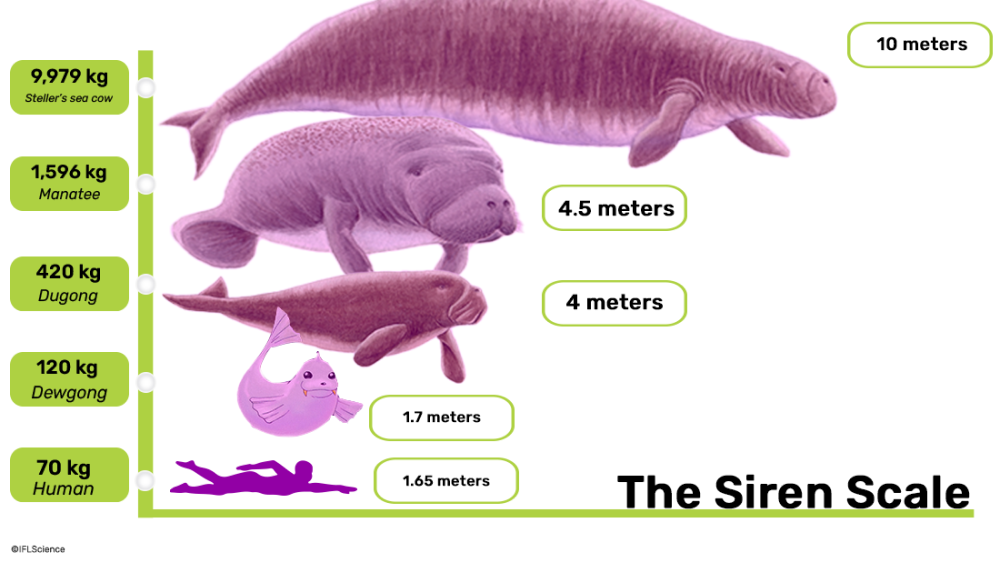
At 10 meters (33 feet) long with a layer of blubber almost 23 centimeters (9 inches) thick and weighing a hefty 9,979 kilograms (22,000 pounds), they made quite a meal. It’s also hardly surprising, then, that the skeletal remains of a Steller’s sea cow found in Siberia were mistaken for a sea monster.
A single Steller’s sea cow could feed a whole crew for a long time, and it wasn’t long before they became a top menu item for sailors across their vast home range that stretched from California to Japan and islands in the Bering Sea.
Overhunting killed them, but modeling studies have found they were already headed for another human-made disaster. At that time, we were hunting fur seals and sea otters at a rate that decimated their numbers, and as their population plummeted, urchin numbers sky rocketed.
Those urchins started munching their way through the kelp forest that Steller’s sea cows needed to survive. No kelp forest meant no sea cows, but the kelp disaster never got a chance to prove fatal. Within a few decades, humans had already hunted Steller’s sea cows to death.
It’s estimated they were being hunted at a rate seven times higher than the sustainable limit. Evidence, the authors of a 2006 study say, that even small bands of hunters using pre-industrial technologies were capable of driving megafaunal extinctions.
While it’s true there weren’t many sea cows alive by the time Steller met them, and they were up against several other factors (they only ate kelp, which limited their range to shallow waters; they were slow-moving and couldn’t fully submerge underwater; and they seemed unafraid of humans), it was still humans who dealt the final blow.
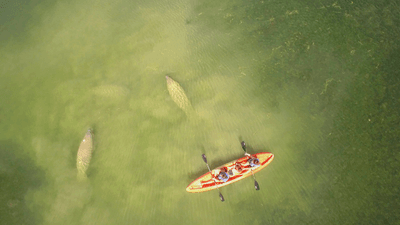
The world hasn’t seen a sirenian like the Steller’s sea cow since, but today we are still blessed by the presence of manatees. They’re facing their own challenges in the modern era, but 2025 did welcome the largest gathering of manatees ever seen in Florida's Blue Spring State Park.