Nature
 PUBLISHED


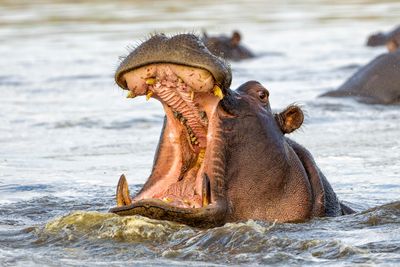


Every few years or so, there’s a new ludicrous but entertaining horror movie added to the roster of improbable creature features out there. We’ve had a giant crocodile in Lake Placid, enormous human-hunting snakes in Anaconda (the original), and even narcotic-fueled violence in Cocaine Bear. How can anyone top that? Well, in 2026, cinema goers will be treated to the new, tusk-filled maw of death in the upcoming film, Hungry, starring a disgruntled and belligerent hippopotamus.
The movie, which is set to hit the theatres in June, focuses on a group of tourists exploring the mysterious bayous of New Orleans. These types of trips offer visitors close encounters with various critters, including alligators, snakes, and other things that crawl, creep, or slither through the slow-moving Louisiana waters. But what these theatrical tourists don’t expect to see is a bloody thirsty hippo when they stray off the prescribed path. From the trailer – which is extremely dark – we see the terrible beastie chomping and chasing these hapless visitors as they try to survive its terrible rampage.
Clearly Hungry, which must draw its name from the game “Hungry Hungry Hippos” as the trailer explicitly says the animals are vegetarians, is going to be a lot of fun, but is there any truth to the idea that hippos can be deadly?
The short answer is, yes, though obviously not to the extent that Hungry portrays with its rogue example. Although the deadliest animal in the world is actually the mosquito (Anopheles gambiae) – killing over 1,000,000 people every year through disease – hippos are not placid herbivores, despite their chunky appearance. In Africa, where they are native – we don’t yet know how Hungry’s hippo has ended up in New Orleans – hippos are estimated to kill around 500 humans a year. This is staggeringly high compared to lions, which only kill around 22 people each year, making them the deadliest large land mammal on Earth.
This is because they are extremely aggressive animals that are surprisingly fast on land and even faster in the water. They’re very territorial, so they have a habit of charging boats if they feel threatened if humans get too close. Once in the water, passengers can either drown or be directly killed by the animals, which are very strong – males weigh between 1,600-3,200 kilograms (3,527–7,055 pounds) while females weigh between 650-2,350 kg (1,433–5,181 pounds) – and are armed with long, sharp tusks and teeth.
The hippo’s annual kill count even outdoes that of the world’s most feared creature, the shark. Each year, sharks kill around 6-10 people across the world (2025 had an unusually high number of deaths, reaching 12). That’s the total number recorded for the planet, and hippos are only located in Africa (and Colombia). Bears kill even fewer people, with Grizzly bears probably only killing two to three people in North America each year.
The only other creature feature animal whose deadly behavior lives up to its Hollywood celebrity is the crocodile. Every year, crocodiles kill around 1,000 people across the world. And while many species of these reptiles can attack humans, saltwater crocodiles are the most likely to see humans as a potential meal.
But while we may like to make a spectacle of the world’s deadliest creatures, enjoying over-the-top performances that pit beast against person, we also need to remember that one of the deadliest animals on this planet is ourselves. Every species mentioned here has a lot more to fear from humans than we do from them. Be it through habitat loss or direct hunting, humans kill an order of magnitude more of these “deadly” animals each year than they do us. This doesn’t even take into account just how many other humans are killed by other people each year, nor how much of the natural world is destroyed by climate change.
Still, Hungry looks like it will be an entertaining representation of just how powerful hippos can be. And who knows, given what was just said about human activity on the planet, perhaps we will root for the hippo in this instance.


 1
1