Health and Medicine
 PUBLISHED
 2
2


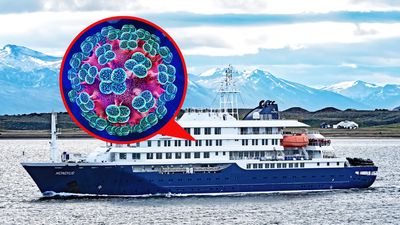


A suspected outbreak of hantavirus disease on a cruise ship has killed three passengers and left at least three others unwell, the World Health Organization reports. The infection, which spreads via contact with infected rodents, is rare in humans but often severe, as evidenced by the 2025 case of Betsy Arakawa – wife of legendary actor Gene Hackman – who died from the disease.
Eight people are known to have fallen ill: the three who died, one who is critically ill, and four with mild symptoms. Investigations are ongoing. There are three lab-confirmed cases of hantavirus and the other five are suspected cases.
“The type of virus in this outbreak has been confirmed as Andes hantavirus by the National Institute for Communicable Diseases, South Africa and the Geneva University Hospitals, Switzerland,” the WHO says, but clarified the overall risk to the public remains low.
The outbreak was reported on the cruise ship m/v Hondius, which set sail from Argentina three weeks ago is currently on its way to the Canary Islands. Operator Oceanwide Expeditions, headquartered in the Netherlands, said in a statement that they are working with Dutch authorities to begin repatriation efforts and are "in close contact with those directly affected and their families".
“WHO is facilitating medical evacuation of two symptomatic passengers, conducting a full risk assessment, and supporting affected people onboard,” added WHO Director-General Dr Tedros Adhanom Ghebreyesus in a separate post.
What is hantavirus?
There are two types of hantavirus infection, explains microbiologist Thomas Jeffries of Western Sydney University in an article for The Conversation.
“Hantavirus pulmonary syndrome, which affects the lungs, is mainly found in the United States. If a person becomes infected with this type of hantavirus, within days they will likely experience coughing and shortness of breath.
“As the illness progresses, they can develop symptoms such as fatigue, fever and muscle aches. They may also get headaches, dizziness, nausea, vomiting and abdominal pain. This is the most deadly kind of hantavirus. Tragically, about 38 percent of people who develop these symptoms die from the disease.”
Betsy Arakawa, classical pianist, businesswoman, and wife of the late Gene Hackman, died from hantavirus pulmonary syndrome in February 2025. Hackman is thought to have passed away around a week later – he had advanced Alzheimer’s disease and cardiovascular disease.
The other type of hantavirus disease is hemorrhagic fever with renal syndrome. There are a few different viruses that cause it, with differing degrees of severity, Jeffries explains, but between 1 and 15 percent of cases are fatal.
At time of writing, it’s unclear which subtype of hantavirus disease the passengers on the cruise ship have been affected by.
How is hantavirus spread?
Hantaviruses don’t spready easily from person to person. Most human infections occur after exposure to the droppings, urine, or saliva of infected rodents or, infrequently, bites and scratches.
It’s possible that rodent contamination on the cruise ship is the cause in this case, though that’s still to be determined. Rodents may have got onto the ship via the cargo hold. Jeffries also suggests that other factors like general hygiene and food storage practices could have allowed the infection to spread more easily – cruise ships are renowned for viral outbreaks, particularly norovirus, though that is much more contagious than hantaviruses are and spreads very easily between people.
It’s also possible that the source of the outbreak was not on the vessel itself. “Passengers or crew members could theoretically be exposed during land-based activities,” said molecular virologist Vinod Balasubramaniam to the Guardian. Hantaviruses can have long incubation periods – up to eight weeks in some cases.
“Detailed investigations are ongoing, including further laboratory testing, and epidemiological investigations,” the WHO stated. “Medical care and support are being provided to passengers and crew. Sequencing of the virus is also ongoing.”
This article has been updated to reflect the latest illness figures and will continue to be updated while this is a developing story.