Culture and Society
 PUBLISHED


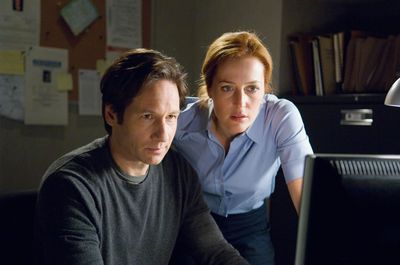


For many people, The X-Files' monster-of-the-week episodes were their favorites. In the second movie, The X-Files: I Want To Believe, we got a whole two-hour standalone thriller that tells a grisly tale of murder, organ thefts, and head and body transplants. You may be surprised to discover that real-life scientific head and body experiments inspired show creator Chris Carter to make the movie.
IFLScience sat down with Carter to discuss the inspiration behind the grisly tale ahead of the director's cut released this week, now fittingly titled The X-Files: I Want To Believe – Vrach Frankenshteyn, or what he calls "a kind of twisted, dark love story.”
I want to believe (but shouldn't actually do)
In 1791, Luigi Galvani published his work on animal electricity, showing how a frog’s leg would twitch once an electrical connection was attached to a nerve. The work went on to inspire Mary Shelley in the science behind her 1818 novel Frankenstein, starting a new genre of fiction and a deep fascination with body assemblage among the newly so-called "science fiction" writers and scientists.
I always wanted to put the stuff back in that I thought would make it the scary movie it always wanted to be, and this is really my opportunity to do that.
Chris Carter
We can’t imbue life into a corpse with a thunderbolt, but the idea that body parts could be transplanted left fiction and became reality in the second half of the 20th century – with no need to shock the patients at all.
Just as patients were being saved with organ transplantation, more ethically questionable experiments were taking place, involving either head or body transplants. The first documented procedure was performed around the same time as the first successful organ transplant.
Frankenstein as an instruction manual and not a cautionary tale
Back in the 1950s, heart surgeon and transplant pioneer Vladimir Demikhov carried out what has been described in scientific literature as "the most controversial experiemnt of the 20th century".
He grafted the head and forelimbs of a puppy onto the body of a different dog. If this was not enough, he also created two-headed dogs. None of these animals lived for more than a few days.
Demikhov’s work went on to inspire American neurosurgeon Dr Robert White, who in the 1970s successfully demonstrated that it is possible to perform a head transplant between two rhesus monkeys.
White's work, despite his minimal success (the donor monkey remained paralyzed and couldn’t breathe without assistance), was profoundly influential, not just on other scientists. It was also the inspiration behind 2008's The X-Files: I Want To Believe, co-written and directed by Carter.
“I went to Cleveland, Ohio, and I met with [White], who had done the transplant, and he was nice enough to sit with me and talk to me about it and how it worked and when he needed to do all the elements,” Carter told IFLScience.
“I just thought this was a perfect opportunity to tell this story and make it a love story at the same time. A kind of twisted, dark love story.”
“That was my original inspiration!”
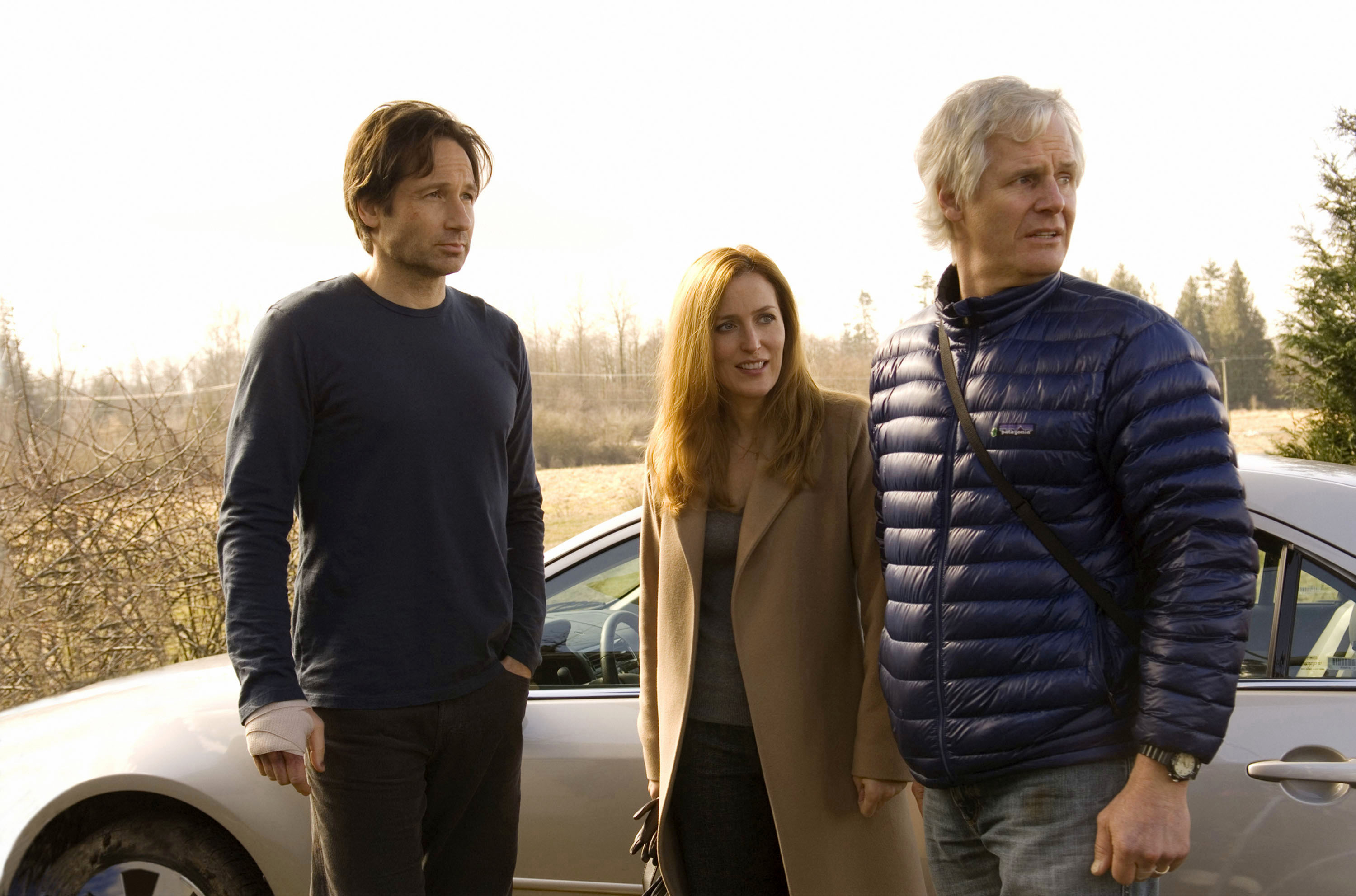
The horrors persist, and so does Chris Carter!
As is often the case, fiction paves the way to reality. In the decade after the release of the movie, bold claims of an upcoming human head transplant surgery were shared with the press. Italian doctor Sergio Canavero and collaborator Dr Xiaoping Ren of China’s Harbin Medical University planned the feat for 2017.
They announced conducting the procedure in more than 1,000 mice that lived a matter of minutes after the surgery, and even on a monkey, which was euthanized just 20 hours after the surgery. There were no attempts at fusing the spinal column with the head.
As far as we know, the human head transplant surgery never went ahead – as far as we know, no human head transplant has ever gone ahead, not for want of trying – although experts have speculated that if that were to happen, it would leave the subject(s) in unimaginable pain.
But Carter hasn't shied away from the more gruesome aspects in the director's cut, with the newly added Vrach Frankenshteyn, Russian for Doctor Frankenstein, in the title hinting at the darker content.
The original version of the movie was deemed too scary and gory by both producers and censors but Carter argues the horror is needed to underline just how gruesome the subject matter is. Carter has now had the opportunity to re-include all the gore into the movie and re-release it as his original vision.
“I always wanted to put the stuff back in that I thought would make it the scary movie it always wanted to be, and this is really my opportunity to do that,” Carter told IFLScience.
Straddling science, science fiction, and the supernatural
The X-Files focused on the fantastical and unexplained, mixing science fiction and supernatural elements in a grounded setup. There is actually a lot of science in The X-Files. Some of it, ranging from cloning to genomics, was on the cusp of science fiction at the time and became grounded science by the time the show ended in 2002, and later in 2018 for its final run.
I think of it as one of my greatest achievements, that I could draw people into a search for the truth, which is what I see science as.
Chris Carter
It was also extremely inspirational. While Special Agent Fox Mulder is the paranormal believer, his partner, Special Agent Dr Dana Scully, MD, a medical doctor also with a degree in physics, is the skeptic. Scully’s character and portrayal by Gillian Anderson as a smart, capable scientist is thought to be responsible for the so-called Scully Effect, leading to an increase in women and girls entering STEM careers.
“I think of it as one of my greatest achievements, that I could draw people into a search for the truth, which is what I see science as, through the storytelling with these two characters. Scully in particular, because she's a scientist,” Carter told IFLScience.
Representation does indeed matter, and as always, the truth is out there.
The X-Files: I Want to Believe – Vrach Frankenshteyn arrives on Hulu and Disney+ on August 14, 2026.