Nature
 PUBLISHED
 3
3


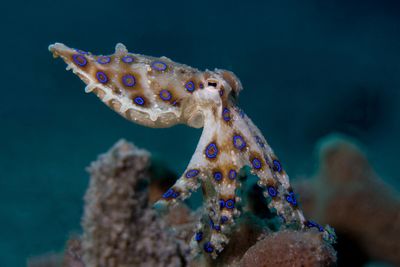


Earlier this month, a woman in Australia was bitten multiple times by a blue-ringed octopus – the deadliest octopus in the world, and one of the most venomous animals full stop. However, in what may seem a surprisingly happy ending, she lived to tell the tale.
While swimming at a beach in New South Wales on March 16, the woman picked up a shell, out of which tumbled a tiny octopus, reports NSW Ambulance. The deceptively adorable cephalopod then bit her twice on the stomach, leaving her with abdominal pain.
Paramedics applied pressure and a cold compress to the bites before taking her to a hospital to be treated further and monitored for more symptoms.
“A blue-ringed octopus bite is a rare call for us, but they are extremely venomous," Inspector Christian Holmes said in a statement on Facebook.
So venomous, in fact, that their toxins are 1,000 times more powerful than cyanide and pack enough of a punch to kill 26 humans in minutes, according to the Ocean Conservancy.
With an average body size of just 12 to 20 centimeters (5 to 8 inches), the blue-ringed octopus is small but deadly thanks to an extremely harmful toxin it can envenomate attackers – or curious hands – with.
Tetrodotoxin is found in some species of fish, including puffer fish, as well as some amphibians, shellfish, and of course octopus. It is a potent neurotoxin produced by symbiotic bacteria in the animal’s salivary glands. When bitten by a blue-ringed octopus, the venom blocks nerve signals in the body, resulting in muscle numbness, and the loss of vision, other senses, and motor skills.
Ultimately, it can lead to paralysis, which can extend to the muscles needed to breathe and cause respiratory arrest. Death can occur anywhere between 20 minutes or 24 hours after exposure, state the Centers for Disease Control and Prevention, and there is no known antidote.
Fortunately, the little cephalopods aren’t aggressive: they only bite to protect themselves, for example, if cornered or handled by a human. As a result, both bites and deaths are extremely rare.
There have, however, been a number of narrow escapes. Back in 2021, a woman uploaded a TikTok of herself unknowingly holding a blue-ringed octopus while in Bali. Meanwhile, a similar story did the rounds on Reddit in 2019 after an Australian tourist diced with death handling this most deadly of sea creatures.
If you want to find out more about potentially toxic, and maybe even valuable, venom, then why not check out issue 4 of our e-magazine CURIOUS, where Rachael Funnell asks: Is scorpion venom really the most expensive liquid in the world?