


 Nature
 PUBLISHED


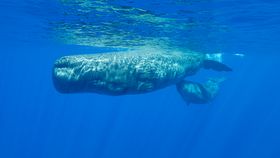


One of the leading shared traits among mammals is young’s dependency on parental milk, and while they may have slid their way back into marine life, whales are no exception. That whale calves feed from their mothers like this is old news, but until now such behavior among sperm whales had never been caught on camera.
The lucky team behind the world-first footage were on location for Secrets of the Whales, a new documentary to be released this spring by National Geographic. Airing on the Disney Channel, the series takes viewers on a deep dive into the life of whales with narration from Sigourney Weaver, bringing big Finding Dory energy to the production.
While their mammal status made milk production a probable source of nourishment for sperm whale babies, exactly how these calves nursed has been something of a mystery. Sperm whale mothers have inverted nipples, and with a long old snoot (containing their namesake spermaceti organ) it seemed like something of a logistical puzzle working out how the two came together.
This new footage demonstrates how the calf, in this instance a female, uses its lower jaw to penetrate the inverted nipple of the mother, which creates a pathway for the milk. To say it’s nourishing is something of an understatement, as this yogurt-like substance actually contains 10 times the concentration of fat compared to human milk.
It might sound a little like a recipe for morbid obesity, but at 4 meters (13 feet) long, the babies have a lot of growing to do before they reach their adult size of 15.8 meters (52 feet). During this time, since the calves can’t tolerate deep dives, sperm whale mothers will sometimes band together to form a protective huddle nearer the water’s surface.
Sperm whales are the largest of the toothed whales, which perhaps explains why their mating behavior might have once led a ship of sailors to believe they were facing a fearsome sea creature. In 1875, sailors aboard the merchant vessel Pauline saw a "sea serpent" they described as a "whitish pillar". However, this particular sea serpent was seen in the midst of a pod of sperm whales, which at the time were "frantic with excitement". Some argue that a surprising number of “sea monster” sightings like this are, in fact, just whale erections.
Secrets of the Whales will be available for streaming from April 22 (depending on your location) and the series promises further world-first footage including vocalizations, unusual modes of communication, and even adoptions among whales caught on camera.




 1
1