Health and Medicine
 PUBLISHED





It is, perhaps, the only way something can be more clear to you than the back of your hand: by being as plain as the nose on your face. Which is odd, really – because for all that it’s literally right in front of our eyes at all times, most of us never really see our own conker without looking in something reflective. Why is that?
The answer is stranger than you might expect. The truth is, we do see our own noses – all the time, in fact. We can’t help it: after all, our noses are sitting right within our field of vision, which is why if we concentrate (or go cross-eyed), we can really force our brains to accept that it’s there. It’s just that, most of the time, they don’t want to do that – so they edit it out.
It’s a phenomenon that’s at odds with how we think the world should work. Our eyes should tell us how the world is, not some filtered version that doesn’t truly exist. But there are good reasons for ignoring the presence of a nose – from the simple biophysics of it all, to important survival mechanisms, to just getting through life without a constant migraine. Here’s why.
A stitch in your vision
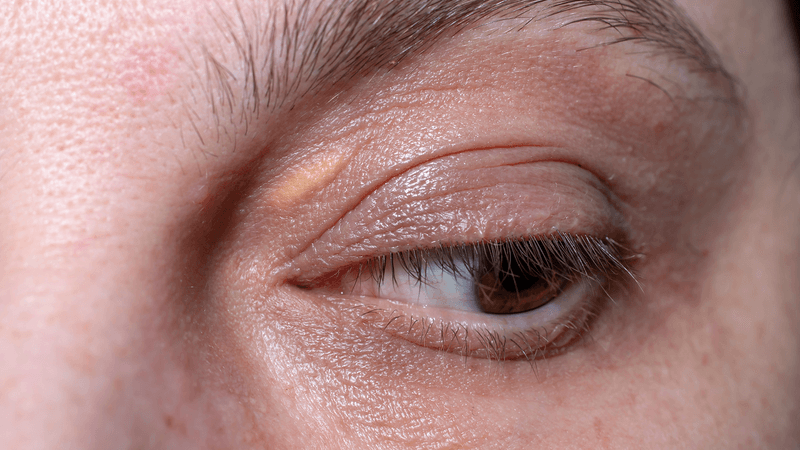
Close one eye, and you’ll quickly notice that you can see your nose. But let’s face it, it’s not a great view: your nose is both in your peripheral vision and so close to your eyes that it’s constantly out of focus. Even if we could see what was “really” in front of us, therefore, it wouldn’t be a great sight – so why bother trying?
“The lens cannot focus on objects very close to it, and the nose sits well within the minimum focusing distance of the human eye,” pointed out Elio Quiroga Rodríguez, a lecturer at the Universidad del Atlántico Medio in Spain, in a new review article. “This blur means that the nose never appears as a sharply defined object in our visual field but rather as a diffuse, out-of-focus region.”
“Some researchers have proposed that this blur might contribute to the brain's classification of the nose as ‘not a real object in the environment’ and therefore something to be ignored,” he explained. “The visual system generally prioritizes sharp, well-defined features that are likely to represent important objects or events in the world.”
But the nose is not just close up, it’s also central – which means that, despite blocking about 15 percent of each eye’s field of vision, the nose is pretty unobstructive if both work together. “When an object obstructs the visual field of only one eye while the other eye has an unobstructed view of the background – as occurs with the nose – the monocular obstruction can appear transparent rather than opaque,” Rodríguez explained. “This transparency effect allows perceivers to ‘see through’ the obstructing object to the background scene visible to the other eye.”
It's called binocular transparency, and “the nose exemplifies [it],” he wrote. “Despite its substantial presence in each monocular field, [it] fails to disrupt conscious perception of the environment – it becomes a transparent window through which we view the world rather than an opaque barrier demanding attention.”
Too boring to concentrate on
So, one reason we don’t see our nose is that we don’t have to: together, our eyes can see enough of the world to build a picture without it. But that’s a how, not a why – and a more important part of the answer is just that, well, would you really want to see your own nose all the time?
“Our brain ignores ‘useless’ things, and this tendency is what keeps us sane and alive,” explains Niveditha Sankar at ScienceABC. “If all sensory information was treated equally, you would never be able to get anything done. You would constantly feel yourself blink, breathe, and maybe even feel your heart beat.”
It’s the same reason why, if you wear glasses, you don’t tend to notice the frames or even feel them on your face. Those things aren’t changing, or dangerous, or important, so your brain deprioritizes them – it’s not worth wasting energy being aware of them. Much more important, especially from an evolutionary viewpoint, are things like spotting saber-tooth cats, or distinguishing which mushroom is a tasty snack and which will rewire your brain and make you smell color.
“You want to be aware of, 'How does the world differ?' 'What are the surprises and errors and the things that I didn't predict?',” Michael Webster, a vision scientist and co-director of the neuroscience program at the University of Nevada, Reno, told Live Science earlier this year. Spending some of your mental space looking at your own nose would be “a big disadvantage,” he said.
Your nose and glasses may be the most obvious things the brain does this with, but they’re definitely not the only things. If we were really looking at the world without any brain filter, it would look “like you're sitting up in a tree of dead branches and […] actually seeing the world through all these dead branches,” Webster explained. Why? Because the photoreceptors in your eyes that collect light from the outside world are actually behind a whole bunch of blood vessels, which should, by rights, be in front of our vision at all times.
The fact that they’re not is a testament to the brain’s incredible ability to interpret the world – not necessarily reflect a true image of it. In a way, it’s the inverse of the blind spot phenomenon, where a detail in just the right place can be edited out by the brain not because it’s unimportant, but because the eyes literally can’t see it, and so your brain fills in the gaps with a best guess.
The lesson here? “Vision is actually a prediction about what you think the world is,” Webster explained. “It’s not really telling you what the reality of the world is.”
In reality, after all, you have a nice big schnoz in front of your eyes. We can see it, and we do – we just ignore it. And thank goodness, really – who’d want a nose in their face all day long?