Nature
 PUBLISHED
 1
1


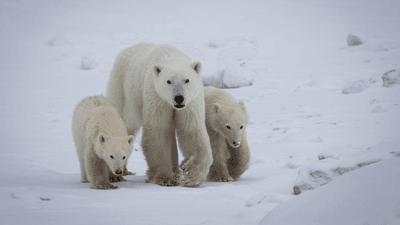


In December 2025, it was announced that a polar bear in Hudson Bay, Canada, had adopted the cub of another polar bear. It marked the 13th known case of adoption among polar bears in the region, and it’s a curious phenomenon.
Polar bear adoptions like this are extremely rare, and it’s even rarer still for scientists to identify and film the adopted polar bear family. The mother, known as X33991, is part of the Western Hudson Bay subpopulation of polar bears in this part of the world.
When she emerged from her maternity den in the spring of 2024, she and her single cub were tagged by scientists with Polar Bears International. You can imagine their surprise, then, when they later spotted X33991 with a second cub come fall.
We wanted to find out more about this curious behavior, so to celebrate International Polar Bear Day – recognized on February 27 each year – we caught up with Alysa McCall, director of science at Polar Bears International.
Given the energetic costs of caring for a little one, are polar bear adoptions surprising?
AM: Yes, it is somewhat surprising that a wild animal would take on an extra cub, knowing how energetically intensive such an undertaking is. This just makes the situation all the more interesting!
Any mom caring for any baby expends a lot of energy, but polar bears have an even more energetically costly lifestyle than most. Considering that...
- sea ice is constantly moving and beneath their paws like a treadmill;
- temperatures are freezing;
- days are dark;
- winds are howling;
- their main food source is sneaky, slippery seals;
- long swims need to be avoided as they are dangerous for cubs;
- adult males need to be avoided as they are dangerous for cubs; and
- polar bears have a sky-high metabolism…
…then it is incredible that any polar bear cubs survive, let alone that a mom would actually choose to add another mouth to feed – especially one that is not genetically related. This scenario is a testament to how truly amazing polar bear mothers are!
What kind of scenario might lead to a polar bear adoption?
AM: We don’t know much about what sort of scenario occurred that led to this adoption, but it is likely that it’s somewhat a case of right place at the right time.
No matter how it happened, we do know that with a mother to protect it, feed it, and teach it how to be a polar bear, the cub’s chances of survival are far better now than if it was left on its own.
Alysa McCall
It is rare to confirm these cases with genetics, let alone to see them in the wild, so these situations are poorly understood. However, we know that the adopted cub first must have been completely separated from its biological mother: maybe it simply got lost or maybe its mom died. This cub was fortunate to come across this particular female relatively quickly, before it starved or was killed.
The adoptive mother, X33991, likely had hormones that primed her to want to protect this scared cub. Additionally, we know this mom is young (5 years old at the time of adoption) and her own single cub could be her first litter, meaning that she might not have fully understood what she was getting into by adding another cub to the mix!
No matter how it happened, we do know that with a mother to protect it, feed it, and teach it how to be a polar bear, the cub’s chances of survival are far better now than if it was left on its own.
What are polar bears like as mothers?
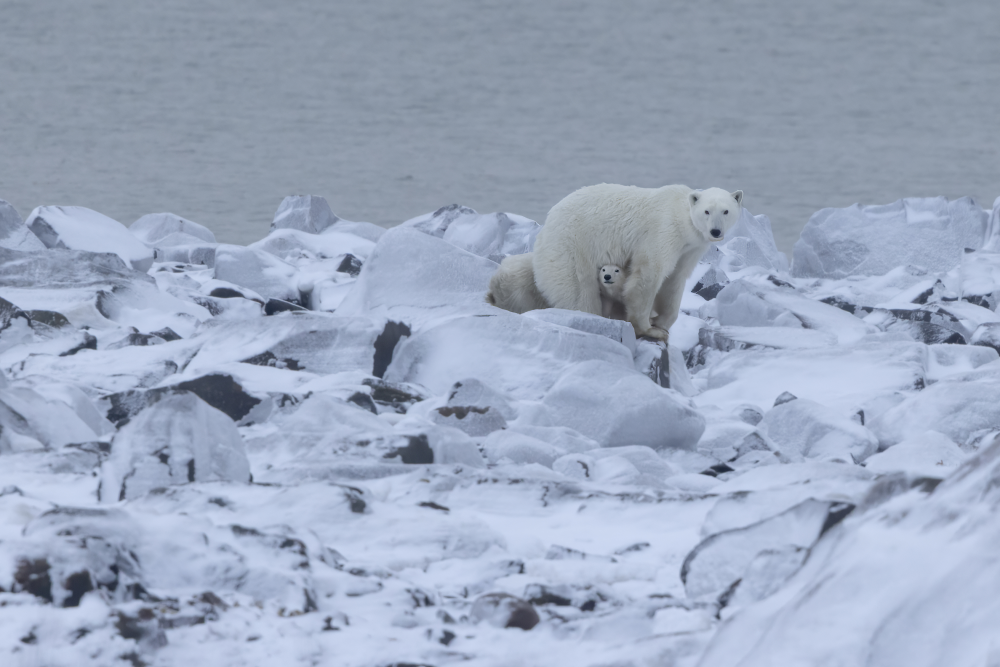
AM: Polar bear mothers are incredible teachers and protectors. They do an admirable job of avoiding the many dangers that face cubs in the Arctic (e.g., adult male polar bears, freezing open water, storms), all while hunting for seals, nursing, and navigating shifting sea ice. We often see cubs exactly mimic their mother’s movements, from stepping in the same exact places, to standing up on hind legs to get a better look at something. We know they are soaking up every lesson, every day.
One of the most extraordinary things about polar bear mothers is their journey to give birth to cubs, which includes one of the world’s longest mammal fasts.
[Polar bear moms] lose hundreds of pounds of body weight while providing their cubs with the fattiest milk found in any mammal on land.
Alysa McCall
For example, in Hudson Bay, after mating on the ice in the spring, females come ashore in the summer when the seasonal sea ice melts. On land, they live off their own body fat while resting during the summer, entering a maternity den in the fall, and giving birth to tiny cubs then nursing those cubs throughout the winter. These females do not emerge from their dens to head to the sea ice and hunt seals again until about March, going about 8 months in total without eating! During this period, they will lose hundreds of pounds of body weight while providing their cubs with the fattiest milk found in any mammal on land.
Polar bear den emergence is timed with when seals are giving birth to their pups, ensuring there is lots of easy, accessible food to eat once mom gets back out to the ice with her vulnerable cub(s). She will eat as much as possible as she teaches her cubs how to find food and survive on the sea ice. This is a species truly worth celebrating!
Despite heroic adoptions like X33991's, only around 50 percent of polar bear cubs reach adulthood. Want to find out how you can help them this International Polar Bear Day? Polar Bears International is placing a big focus on getting the right help to moms and their cubs this year, and they have lots of resources on how you can get involved. Find them here.