


 Humans
 PUBLISHED


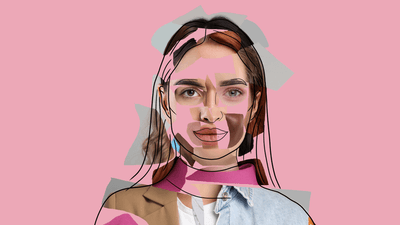


The next time you’re walking in a busy place, take a moment to appreciate the vast diversity of faces around you. Nose shape. Eye color. Head size. Cheek contour. Chin definition. The list of ways in which our faces can differ really does go on forever, and with good reason.
Human faces are unusually varied compared to those of other primates. You might think it’s just the blending of ancestor after ancestor, mixing different gene pools until we wound up where we are, but science has found there’s more to it than that. You see, it all comes down to how we identify one another.
When dogs greet each other, they sniff each other’s butts. Albatrosses do a little “good to see you again” dance, meanwhile dolphins use the taste of their pod-mates’ urine to find their buddies. Be thankful, then, that we’ve evolved to rely so heavily on faces.
A 2014 study set out to determine if our ability to super-recognize one another stems from an evolutionary pressure to be unique. Getting to the bottom of it involved studying body metrics – lots of metrics, made possible by the US Army database of body measurements.
What that data revealed is that our faces show far more variability than any other bodily trait. It also showed that facial traits are independent of one another. For example, having long arms often means longer legs, but a wider nose isn’t correlated with a bigger chin.
They also looked to the human genome for answers and found that there’s increased genetic variation in the regions that control our facial characteristics. Another sign that having the capacity to show a lot of variation in our facial phenotype – what it looks like – is an evolutionary advantage, not just an accident.
So, why favor so much diversity? After all, haven’t we all been told (without ever asking) that symmetry = beauty? If that were true, then beauty can’t be the evolutionary imperative because if it were, we would all look the same.
It seems it all comes down to our complex social lives. It’s thought that the whites of our eyes may be the result of evolving to communicate with each other with a glance. Since then, humans' need to share information has only increased, and you know what’s dead handy when trying to spread the word? Knowing who it is you’re talking to.
“Clearly, we recognize people by many traits – for example their height or their gait – but our findings argue that the face is the predominant way we recognize people,” said study author and behavioral ecologist Michael J Sheehan, a postdoctoral fellow in UC Berkeley’s Museum of Vertebrate Zoology, in a statement made back in 2014.
“Humans are phenomenally good at recognizing faces; there is a part of the brain specialized for that. Our study now shows that humans have been selected to be unique and easily recognizable. It is clearly beneficial for me to recognize others, but also beneficial for me to be recognizable. Otherwise, we would all look more similar.”
So, if you’ve always hated the way your eyebrows sit low or your chin juts out – chastise yourself no more! A rich diversity of faces doesn’t just make life more interesting – it made our beautifully complex lives possible.



 1
1