Humans
 PUBLISHED





What you'll discover in this article
- For the first time, a portable example of the Austronesian Painting Tradition has been found, allowing scientists to date the widespread artistic style.
- The scientists who found it consider the plaque evidence that humanity’s greatest dispersal was driven by an ideology, as much as by technological advances or resource scarcity.
- In an interview with IFLScience, Professor Sue O’Connor said, “cults and influencers have always had a big effect,” so we should not be surprised that the spread of ideas could change cultures as much as conquests.
The discovery of the first portable example of the Austronesian Painting Tradition may hold the key to understanding a dispersion that took people from Taiwan to Rapa Nui in one direction and Madagascar in the other.
The painted stone plaque provides evidence that the Austronesian dispersal was driven as much by ideology as technological advances, and that art was central to making it happen.
The Austronesian family of languages is distributed across more than half the world. A combination of linguistics, genetics, and archaeology has traced the origins of the family to Taiwan, from where its members spread to the Philippines, Indonesia, and then across the Pacific and Indian Oceans.
Professor Sue O’Connor of the Australian National University told IFLScience it was generally suspected that an advance in watercraft had made the expansion possible. However, since none of these early vessels have survived, we still don’t know exactly what that was.
On the other hand, some anthropologists have argued that the dispersal was driven by ideas.
An unprecedented find
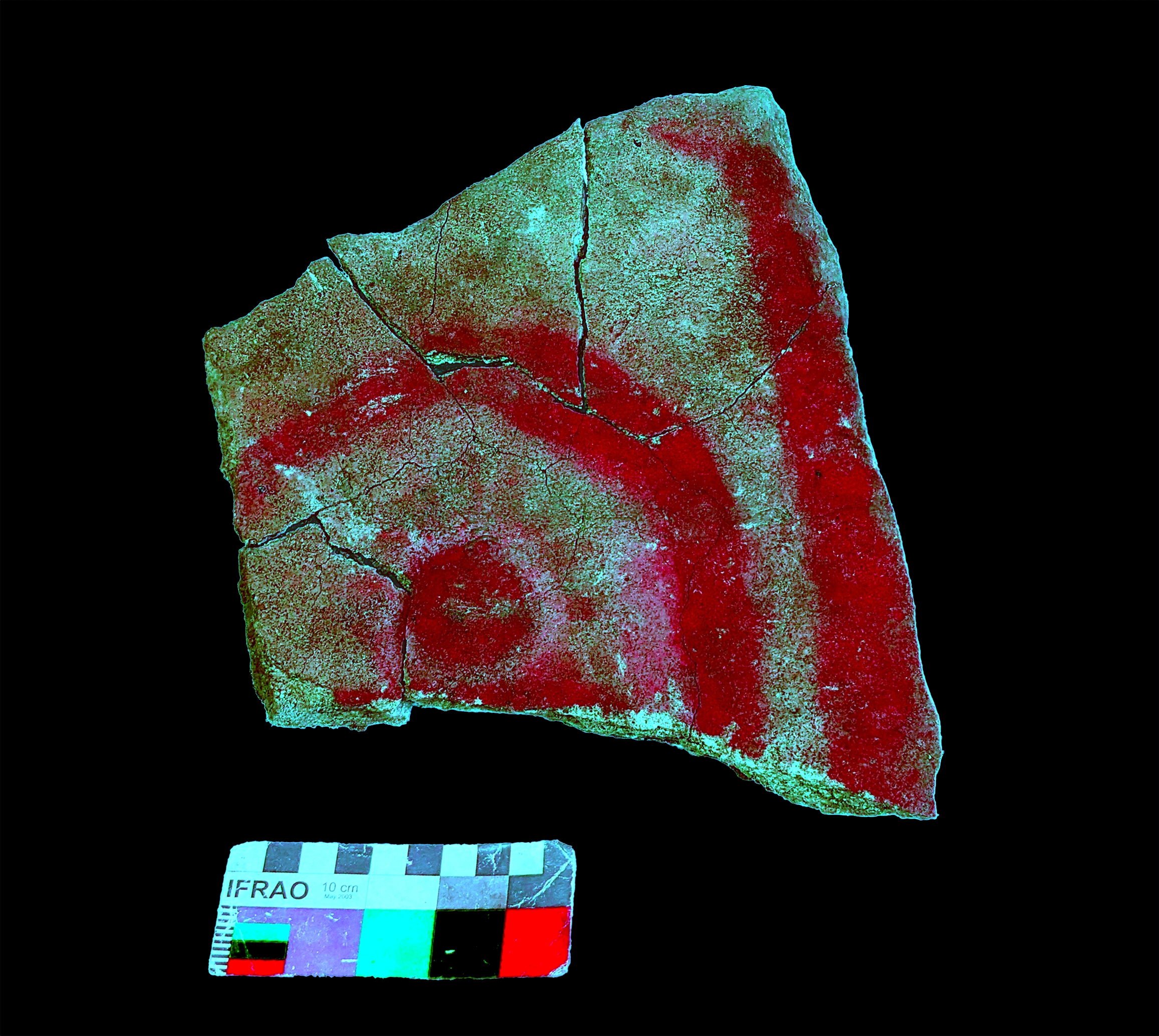
Across eastern Indonesia and the Western Pacific, many prominent rocks are painted in a very particular style, with red concentric circles and rays like those widely used to symbolize the Sun.
Although this style of art, known as the Austronesian Painting Tradition (APT), is associated with Austronesian-speaking populations, it’s not usually possible to date the pieces since the rocks that have been painted on are much older than the paintings themselves.
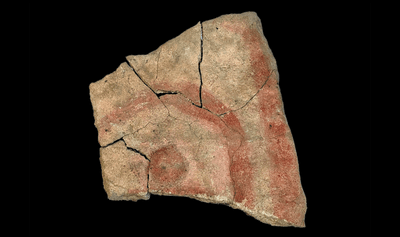
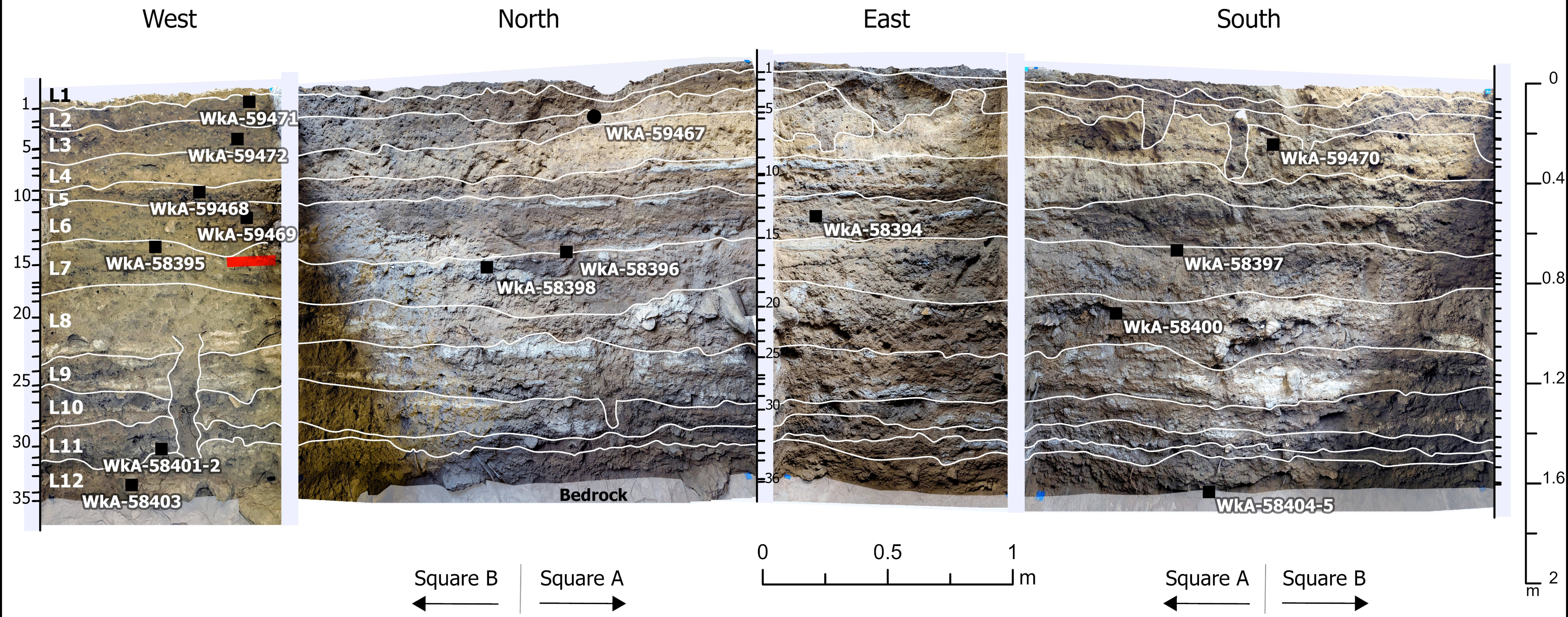
However, at the Huknaur rock shelter on Wetar Island, Indonesia, researchers found a stone plaque painted in the same style. Buried in organic sediment, it has now been possible to date this piece to between 4,050 and 3,900 years old.
"This is the first portable example of Austronesian painted art ever found archaeologically,” O’Connor said in a statement. If that’s the date at which the plaque arrived, rather than having been deliberately buried later, it means that the APT style reached Wetar before pottery, one of the key technologies Austronesian speakers took with them as they traveled across the oceans.
Pottery had come to Taiwan from China long before, O’Connor told IFLScience, but this new discovery suggests that to the explorers, spreading their art took priority over even such a crucial technology.
Art as identity
That’s a big claim, given how useful pottery is, and its importance to Austronesian culture.
However, O’Connor and co-authors argue that the APT style was central to the Austronesian identity and the drive to expand. The authors note the importance of “founders” in Austronesian culture, and the reverence with which they were held.
Such reverence may have encouraged people to undertake long, dangerous journeys. The APT Sun motifs were often painted high on cliffs in locations where they were visible from far away, serving as an advert or statement that representatives of Austronesian culture had been there.
Anthropologists have previously proposed that the expansion was, at least in part, the product of an ideology, using the term more broadly than the current association with political views.
“People didn’t just carry technologies and possessions when they voyaged to new islands,” co-author Dr Ceri Shipton said. “They carried ideas, identities, and new ways of understanding the world.”
O’Connor told IFLScience she considers it likely that Austronesian explorers, whom she calls argonauts, visited islands first with their art, before returning later with pottery when people settled. “Even if the argonauts were not carrying pottery, they were just studying, but once they found appropriate islands people absorbed the ideas.”
How ideas drove dispersion
It shouldn't be too hard to believe that people carrying ideas, rather than weapons, changed life on the islands they visited.
“Look at the amazing way we can influence people on whether you should get vaccinated,” says O'Connor. “Cults and influencers have always had a big effect.”
When Europeans arrived thousands of years later, they brought their own ideologies, but usually also violent conquest. Although we can’t know for sure, O’Connor says there appears to be little evidence of conflict in the wake of the Austronesian dispersal.
Instead, people incorporated into the culture, adopting Austronesian languages, art, technologies, and burial practices.
However, just because the plaque was portable doesn’t mean it had been transported to Wetar. The limestone it was made from could have been local or from another island, explains O'Connor, so we don’t know for certain if the argonauts brought items like this on their voyages.
A single plaque may not seem like much given the vast number of islands where Austronesian ideology found a home, but O’Connor says the team were lucky in their discovery as they were excavating an area just 2 meters by 1 meter (6.6 by 3.3 feet).
Nevertheless, the choice of where to dig was far from random. The find was made beneath an overhang with a “fabulous views of the coast,” according to O'Connor.
This indicates that a beautiful ocean outlook has been enhancing real estate value for a very long time.
The shelter’s walls were also covered in examples of APT art, which O’Connor thinks may have been used as a signal that could be seen from sea. The art was particularly concentrated near where the team chose to dig, but similar stones may be dotted through eastern Indonesia, waiting for us to dig widely enough to find them.
The study is published in Proceedings of the National Academy of Sciences