Culture and Society
 PUBLISHED
 2
2


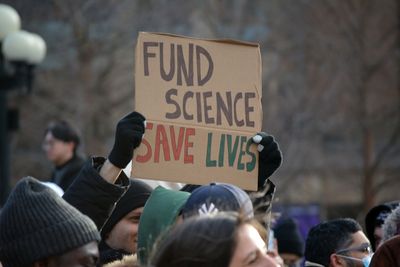


From the moment he took office for the second time in January 2025, Donald Trump has been turning his personal grudge against renewable energy into a national problem. Planned and ongoing wind farm projects were halted; subsidies and benefits for wind and solar farms were rescinded; layers of red tape were introduced to tie up the development of new projects; overall, the administration basically declared war against renewable energy.
And yet, despite this, Americans’ attitudes towards wind and solar are sky-high. Two-thirds believe the federal government should be reversing its current approach to the two energy sources; despite the Trump administration’s best efforts, residential solar uptake continues to increase year-on-year. But why?
It is, on its face, a little confusing. Shouldn’t public action and attitudes follow the government’s? After all, it was the public who elected it, ostensibly because they trusted the opinions and actions that were being proposed.
But a new study has revealed precisely the opposite is true: that for environmental, health, and technology issues, Americans are more persuaded by scientists and their fellow members of the public than they are by government and industry leaders.
Americans across the political spectrum support action
“What surprised us was how consistently the combined voice of scientists and ordinary citizens mattered across issues and partisans,” said Gregg Sparkman, Assistant Professor of Psychology and Neuroscience at Boston College and senior author of the study, in a statement this week.
“Even when governments and companies opposed action,” he said, “Americans were still encouraged to act when scientists and ordinary citizens jointly expressed support for solutions.”
Across four surveys of around 55,000 Americans, the results were clear: that when it comes to taking personal action like getting an electric car, getting vaccines, donating to a cause, and so on, government messaging and policy is surprisingly ineffective.
Instead, what counts most is the voices of scientists and society – and if both agree with each other, the effect is basically doubled.
Now, you might think, sure: it’s easy to pay lip service to scientific consensus when you’re literally mid-survey with a group of scientists. But here’s the thing: this result even played out in real-world experiments. First, the researchers followed how much of a monetary bonus people donated to a digital privacy nonprofit after being exposed to societal signals supporting the cause – it increased the amount by 50 percent, whether or not subjects were told that the government opposed the nonprofit.
Then, they ran an experiment on Facebook: identical ads for energy saving appliances were deployed randomly, with one claiming that scientists and the public recommended them while the government and private companies discouraged them, and the other saying the reverse. Which one had the greater reach and lower cost-per-result? You guessed it: the first one.
“Opposition from powerful institutions did not necessarily make people give up,” explained Anandita Sabherwal, a joint postdoctoral researcher at Princeton University and Boston College and lead author of the study.
“When people saw that scientists and ordinary citizens endorsed solutions, they were still willing to act on that joint advice – including by donating money to a nonprofit and engaging with real content on social media.”
"People's voices still matter in mobilizing change”
As the world contends with serious issues – with climate emergencies abounding, long-forgotten diseases making a comeback, and AI psychosis becoming both a thing that exists and also a thing that can kill you, and the federal government’s response to all of the above being encouragement – this result is arguably a ray of hope.
“When it comes to solving the big issues facing society today, we might expect people to look most to governments and big companies, because these groups often have the power, money and infrastructure to make large-scale change happen,” said Sparkman.
“When they fail to act, it can make people feel that their own efforts will not matter. But we found that people's voices still matter in mobilizing change.”
“This work suggests that institutional failure does not have to lead to public paralysis,” agreed Sabherwal.
“Even when leadership from the top is missing, agreement between experts and citizens can still help create momentum.”
The study is published in the Proceedings of the National Academy of Sciences.