Culture and Society
 PUBLISHED
 1
1


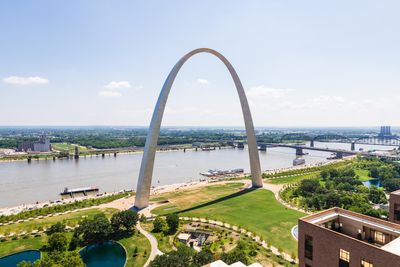


At just 36.8 hectares (91 acres), Gateway Arch National Park in St Louis, Missouri, is the smallest national park in the United States – but while it may be small in size, it manages to pack quite the punch.
The park’s beginnings
Gateway Arch National Park didn’t actually become a national park until 2018, but its origins reach back much further.
It was first established in 1935 by President Franklin D. Roosevelt as the Jefferson National Expansion Memorial, serving to commemorate not just Founding Father and third US President Thomas Jefferson, but his vision to expand the US westward and the role that St Louis later played in that. One of the park’s most notable features, the Gateway Arch, was designed to be a symbol of this.
The park is also a memorial to Dred and Harriet Scott, who filed suit against slave owner Irene Emerson for their freedom, a case that was tried in the park’s Old Courthouse in 1847. The suit ultimately landed in the Supreme Court in 1857, which ruled against the Scotts. The decision, however, is believed to have sped up the start of the Civil War and so the case is to this day considered to be one of the most important ever tried in the US.

Fast forward to 2017, and state senator for Missouri Roy Blunt sponsored a bill to get the memorial redesignated as Gateway Arch National Park – though not everyone was as keen on the idea as he was. Despite such criticism, the memorial was officially redesignated on February 22, 2018, becoming the country’s smallest national park.
The Gateway Arch
One of the most iconic features in St Louis, the Gateway Arch is an absolute whopper, standing at 192 meters (630 feet) tall and made using 4,644 metric tons of steel. Not only is it the tallest arch in the US, it’s also the tallest arch in the entire world.
The arch was designed by Finnish-American architect Eero Saarinen, who had entered his design into an architectural competition run by the (at the time) memorial in 1947. Work to bring Saarinen’s design to life began in February 1963 and was completed in October 1965.
Nearly two years after completion, the first of the arch’s trams opened, taking visitors to a viewing area at the top of the structure. A second tram opened in 1968, and both continue to run to this day.
Back down on the ground, visitors who are keen to get a feel for the arch will be happy to know that you are allowed to touch it, though you won’t get quite so many lewd jokes out of doing so as if you’d popped one state over and flicked The Bean. Instead, there’s some much more ominous local lore that says if you touch the arch, you’ll never be able to leave St Louis.