Space and Physics
 PUBLISHED




On Earth, we have an incredibly useful of navigating our way around: a magnetized needle (suspended in a liquid or inside a compass) will align itself with our planet's magnetic field, and point you towards the magnetic north pole.
References to magnetism, which occurs naturally in lodestone, go back to 600 BCE, when Greek philosopher Thales of Miletus noticed that iron was attracted to the stone. References to magnetism also appear in a Chinese 4th century BCE book Book of the Devil Valley Master, though it would take until the 12th century CE before lodestone was used in the area to create a compass for navigation.
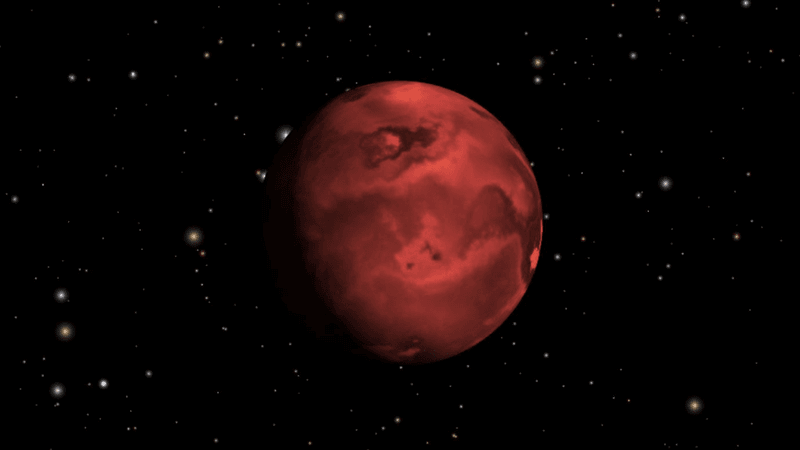
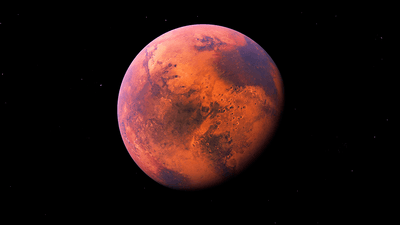
Compasses rely on our magnetosphere to work, and Mars no longer has a magnetosphere.
"When you navigate with a compass you can orient yourself thanks to Earth's global magnetic field. But on Mars, if you were to walk around with a compass it would haphazardly point from one anomaly to another, because the Red Planet does not possess a global magnetosphere," NASA explained in 2013, adding that as well as making compasses (virtually) useless, it helped make Mars hostile to life. "Scientists think that this lack of a protective magnetic field may have allowed the solar wind to strip away the Martian atmosphere over billions of years."
However, compasses would not simply do nothing. While Mars lacks a magnetosphere, it has crustal magnetic fields more than 30 times stronger than those found on Earth.

When Mars's crust cooled down to below the Curie temperature, it still had a magnetosphere. This drop in temperature locked magnetism within ferrous materials in the planet's crust.
When the magnetized crust is heated above the Curie temperature, such as when the planet is struck by space rock, it causes the crust to become demagnetized again.
With no magnetosphere around anymore, this leaves pockets of strong magnetism across the planet which may attract your compass, if you are close enough.
All “explainer” articles are confirmed by fact checkers to be correct at time of publishing. Text, images, and links may be edited, removed, or added to at a later date to keep information current.