


 Humans
 PUBLISHED



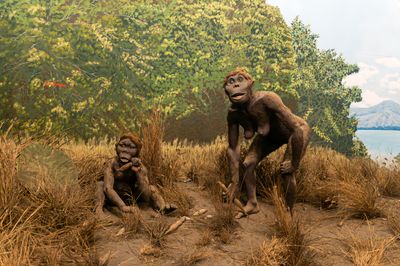


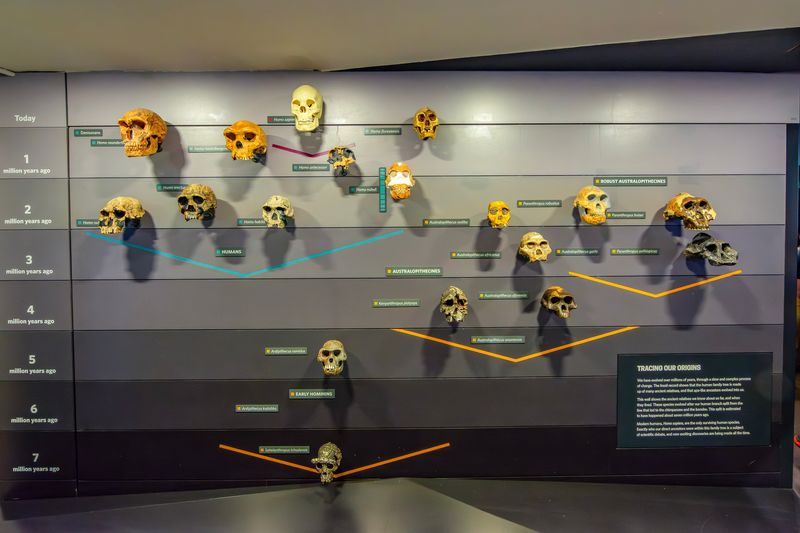
Homo erectus was the first hominin that looked a little bit like we do, with a lanky body plan that was considerably larger than anything that came before. Yet with a bigger frame also comes higher energy demands, especially for pregnant females.
In 2002, researchers attempted to calculate the energetic cost of motherhood for female Homo erectus. They concluded that, due to their size, these prehistoric mothers would have had a higher energy expenditure than earlier hominins like australopiths.
However, this could be reduced by moving away from a chimp-like reproductive schedule and adopting a pattern similar to modern humans, which is characterized by a shorter lactation period and a smaller gap between pregnancies.
Revisiting this research, study author Leslie Aiello has now published an updated version of these calculations using recently developed methods for determining energy expenditure. Known as the doubly labeled water (DLW) technique, the formula involves analyzing the ratios of two different isotopes in drinking water in order to reveal the respiration rate of an organism.
Overall, Aiello concludes that the original 2002 study underestimated the total energy expenditure for Homo erectus but overestimated the energetic cost of gestation and lactation. Based on new calculations, however, she finds that her general theory regarding Homo erectus reproduction still holds.
For instance, her updated figures suggest that switching from a chimp-like to a human-like reproductive schedule would have reduced the energy cost per infant by 66.6 percent to 78.6 percent. In other words, Homo erectus mothers probably weaned their young earlier than chimpanzees and other more ancient hominins, but they may have had more frequent babies.
Yet this implies that Homo erectus mums probably had multiple infants to care for at once. Furthermore, once weaned, these little ones would have needed solid food. As such, Aiello theorises that the shift to a more human-like reproductive pattern could only have been achieved if accompanied by “an economic division of labor, whereby the mother (and her increased energy requirements) was supported by other individuals such as older related females, males, and possibly older children.”
This, in turn, reveals something fundamental about Homo erectus communities, suggesting that they were sustained by cooperative hunting and gathering rather than ape-like foraging, and that all members of the population chipped in to help those in need of resources. At the same time, Aiello states that a shift to higher-quality food may have been essential for Homo erectus mothers to sustain both themselves and their young. To attain such nourishment, she says that these ancient hominins may have relied on cooking or other methods of food processing.
Despite these findings, the study author notes that we don’t know for sure when hominins switched to the modern reproductive schedule, and that analyses of dental morphology suggest that a fully human growth and development pattern didn’t emerge until the appearance of Homo sapiens. However, based on her findings, Aiello proposes that “the transition was underway early in the evolution of the genus Homo and likely contributed to the success of H. erectus.”
The study has been published in the American Journal of Human Biology.


 1
1