Humans
 PUBLISHED
 6
6



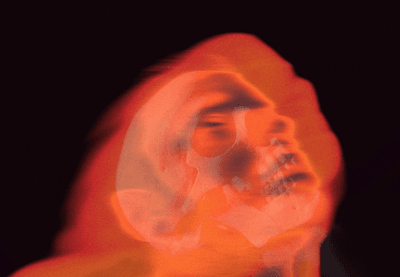


Years ago, fishermen dredged up a bunch of mysterious bones from the seafloor between Penghu Island and Taiwan. Two of them have now been revealed to be leg bones belonging to a group of extinct humans known as the Denisovans – and it's nicely shaking up what we know about their elusive identity.
Denisovans are an extinct group of humans who roamed around Asia from 200,000 years ago (but likely much, much earlier) until at least 30,000 years ago. First identified in 2010 from the DNA extracted from a single finger bone, most of our knowledge about the Denisovans still comes from genetics.
We only have a small collection of fossils that includes finger bones, ribs, teeth, jawbones, and a couple of skulls.
It is indeed a fascinating set of findings. It is just remarkable what can be done with the aid of proteomics and other molecular tools beyond DNA.
Professor John Hawks
It is this scarcity of more complete skeletal remains that is the big reason why the new discovery – which is yet to be peer-reviewed – is so intriguing.
The latest discovery
The femur and tibia fossils, known as Penghu 2 and Penghu 3, come from two Denisovan individuals, both assigned male, dating to around 45,000 years ago.
There's no record of exactly when or where in the Penghu Channel each of these leg bones were collected, but it's reported they came into the hands of scientists after a collection of fossils from the channel was donated by a local artist called Li-Ren Hou to the National Museum of Natural Science, Taiwan.
In 2010, the team identified the fossils as hominin bones, but now proteomic analysis of proteins in the tissues suggests they are Denisovans.
Were Denisovans taller than us?
In the new not-yet-peer-reviewed paper, the researchers argue that the size and shape of the bones indicate that Denisovans were surprisingly tall.
They estimate that Penghu 2 may have been around 180 centimeters tall (5 feet and 10.9 inches) and weighed around 83 kilograms (182 pounds). Penghu 3 might have weighed 91 kilograms (200 pounds) and stood about 190 centimeters (over 6 feet 2 inches) tall.
This would make both of these individuals taller than the average Homo sapiens and Homo erectus.
What do the experts make of this?
The study authors declined to be interviewed until their work is published in a journal, but IFLScience spoke to Professor John Hawks, a leading expert on human evolution from the Department of Anthropology at the University of Wisconsin–Madison.
“It is indeed a fascinating set of findings,” Hawks told IFLScience. “It is just remarkable what can be done with the aid of proteomics and other molecular tools beyond DNA.”
While the stature of the Denisovans might seem like the most striking part of the paper, Hawks believes the fossils' dating is just as important. That's because 45,000 years ago falls toward the end of the Denisovans' time on Earth, and very little of the information we have from this chapter comes from this part of the world.
“We have known about the later record of Denisovans at Denisova Cave itself [in Russia], and a bit from sediment DNA from Baishiya Karst Cave [in Tibet], but in the coastal region and river valleys of China, and in mainland Southeast Asia, there is almost no information about them,” explains Hawks. “Moreover, there is no information on later Denisovans from island Southeast Asia.”
“We know that these are all regions where modern humans, after 50,000 years ago, surely encountered Denisovan groups. We have direct evidence of their meeting from DNA of today’s people, which includes Denisovans from several different sources. But we have no idea what Denisovans were in these regions, or what their biology may have looked like.”
“Placing these specific bones into a biological and temporal framework, as little information that they provide, it is still the first information we have from this time across a large region,” he added.
Since science has only known about Denisovans for less than two decades, there's still much to learn about this enigmatic group of humans. Their DNA suggests that there were multiple, distinct populations of Denisovans living throughout Asia, but what, exactly, they looked like, whether they made tools and how they behaved is still completely unknown.
We do know, however, that they left a lasting legacy in the DNA of many people living today. It seems very likely that we've only just started to reveal their whole story.
The new paper was posted on the preprint server bioRxiv.