Humans
 PUBLISHED





People have been searching for the shipwreck of Noah's Ark since ancient times with little success, but that hasn't stopped a troop of researchers from heading to the hills and leading yet another search into the region this past summer – just don't hold your breath for any Biblical revelations or scientific intrigue from this one.
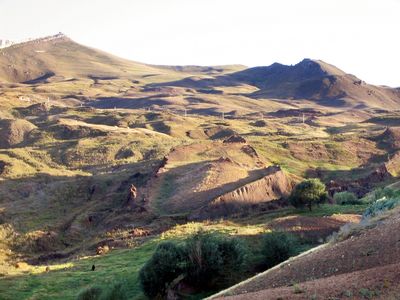
The focus of their study is an old and much-debunked favorite of Noah’s Ark hunters: a curiously ship-shaped ridge known as the Durupınar Formation near Mount Ararat in eastern Türkiye.
Why would Noah's Ark be up a mountain?
If you were an archeologist looking for a prehistoric shipwreck, you might not expect a mountaintop to be your first target, but there's some Bible-based reasoning for why this site has become such a regular focus of expeditions searching for Noah's Ark.
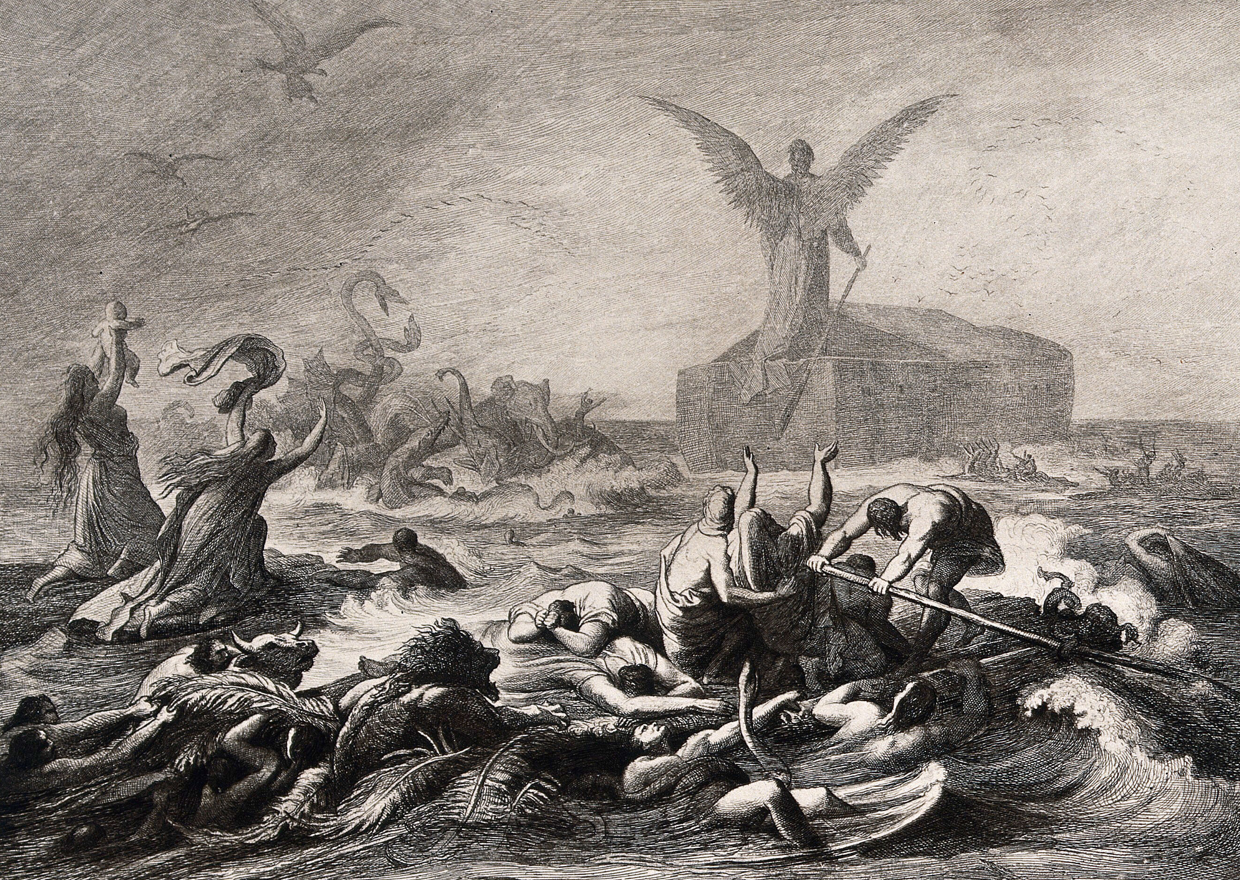
The Genesis flood myth tells the story of a grumpy God unleashing a catastrophic deluge to wipe out humanity after they had grown recklessly violent and wicked. As you've probably read, he instructed a fella named Noah to build a giant ship and use it to protect his family and every living animal on Earth. Remarkably, they all managed to fit.
In a genuinely quite intriguing turn of events, a similar tale of a disastrous flood and a lone hero appears in many ancient cultures, but that’s a story for another time.
In Genesis 8:4, it states that the “ark came to rest on the mountains of Ararat” after the flood died down. Since the Middle Ages, scholars have wondered whether this word might refer to Urartu, the old Hebrew name for Armenia, a country just a short hop over from the modern-day border of eastern Türkiye.
And so, the mountain range in eastern Türkiye, officially called Mount Ağr, has become known as Mount Ararat.
In actuality, the Durupınar Formation is approximately 29 kilometers (18 miles) south of the Greater Mount Ararat summit and part of Mount Tendürek. However, its oval-shaped ridge has been said to look like a gigantic ship's bow.
New investigations in 2026
This part of the Eastern Mediterranean has attracted searches for Noah's Ark since the Middle Ages, but efforts became more coordinated within the past 100-or-so years, during which dozens of expeditions have ventured to the hills of eastern Türkiye.
There's some interesting pseudoscientific history here that IFLScience has written about before, but we'll get to that later.
Back in June 2026, a new flurry of investigations at the Durupınar site was led by Professor Cenker Atila from the Archaeology Department at Turkey's Sivas Cumhuriyet University, including 25 scientists from a handful of different countries.
It's part of an ongoing collaboration between Turkish researchers and a Californian collective known as Noah's Ark Scan, which has been the main source of more recent investigations into the site and has prioritized non-invasive scanning over any excavation.
The same group also happens to operate a tour business at the site, with tickets going for a tidy $3,600, so... make of that what you will.
This new study, which wrapped up on September 11, is more of the same kind of work the group has collaborated on before, as a page describing the project outlines how the team will produce "detailed 2D and 3D models" and conduct "high-precision subsurface radar scans." The same page describes how the results of the investigation will be made public in 2027.
Whether there will be anything new or interesting in those findings remains to be seen, but the odds are decidedly not in their favor.
A common geological structure
Since the ark hypothesis's inception all the way back in the 1970s, the consensus from virtually all credentialed geologists and archaeologists has been deeply skeptical, to say the least.
In 1996, geologists from California State University Northridge published a study on the Durupınar Formation called “Bogus ‘Noah's Ark’ from Turkey Exposed as a Common Geologic Structure” – whose title speaks for itself.
In the piece, the researchers conclude it's a "common geological structure" that has been misidentified as Noah's Ark purely because it is vaguely boat-shaped. Its unusual appearance, they stated, could simply be explained by weathered volcanic minerals, upwelling of mud, and landslides.
Interestingly, one of the study authors, David Fasold, was originally a believer in the idea that the structure could be the remains of a boat, but after visiting the site in the 1990s, he became convinced it was a sham, reportedly remarking that the story was “the oldest running hoax in history.”
Even creationist Christian groups who believe the Genesis story is literal history have been heavily skeptical of the modern research around Greater Mount Ararat.
If that isn't a damning indictment, we don't know what is.