Nature
 PUBLISHED


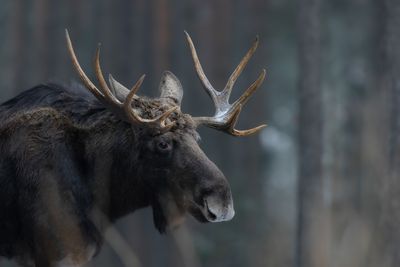


Imagine one day, you just started growing a new bone. Out of your face. At a rate so fast that after two weeks it was about the length of a bowling pin. Sounds horrific, right? Well, not if you’re a deer – because they go through that exact scenario every single year, growing new tissue faster than any other mammal on earth.
“Deer grow their antlers every year in preparation for the breeding season, and then shed them once it’s over,” explained Jack Ashby, now Assistant Director of the University of Cambridge Museum of Zoology, back in 2013. “They are often said to be the fastest growing bones in the animal kingdom.”
Indeed, a group of well-known bar-trivia umpires have given deer the top spot for exactly that: with their antlers capable of growing up to 2.5 centimeters (one inch) per day in larger species, the animals’ summer bodies are the result of the officially fastest-growing mammalian tissue known to Guinness World Records. “Indeed, a big bull specimen of the moose Alces alces, the largest living species of deer, native to Europe and North America, can grow a full set (rack) of antlers weighing 36 kg in a single summer,” the organization points out, “adding 0.5 kg of bone each day.”
With mooses (meese?) topping out at around 700 kilos, the growth of these antlers adds just over five percent to the animal’s body weight – the equivalent of the average American man adding 4.66 kilos’ worth of bone to his head. If you want to get an idea of what it might feel like, you could try balancing a cat on your face for comparison – the weight is about right, although a deer in spring probably doesn’t experience the amount of clawing you’ll have to go through.
Of course, naming the fastest-growing tissue is one thing – a more interesting question, perhaps, is how. How can bone sprout so quickly each year? And the answer is: velvet. Not the fabric, but the skin – highly vascularized skin covered with short, dense fur, which covers the growing antlers and then sloughs off in gruesome-looking strips once they’re done.
“Velvet allows oxygen rich blood to reach growing antlers, which start as cartilage and are calcified into bone,” explains the US Fish and Wildlife Service (FWS). “Abnormalities in antlers can be due to injuries to the velvet.”
That’s not the only key to fast antler growth of course: the deer also need a huge amount of good-quality food, to make up for the minerals lost to the new bone growth. “In poor habitat, a buck’s bone density will decrease as his body will take the calcium and put it toward hardening antlers,” says FWS. “Bull moose will spend a quarter of the energy from the 35 pounds of vegetation they eat each day toward growing antlers.”
“Cow moose use [this] energy to prepare for winter,” it adds. “This may be why female moose live longer than males.”
Still, at least the deer end up with some mighty weapons to show for it… for a few weeks, anyway. “Once the fall rut is over, why carry around extra weight?” says FWS. “Antlers have served their purpose and can be discarded.”
“Antlers are heavy and can be cumbersome for males whose primary interest is now eating enough to survive the winter,” it explains. And so, after using all that energy to grow bone faster than any other mammal – perhaps any other animal at all – the deer sheds its antlers, ready to survive the winter before starting the whole darn cycle over again. Oh deer.