Health and Medicine
 PUBLISHED


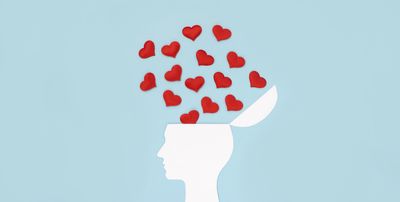


Ah, the honeymoon phase – when everything is new and exciting, and you can’t keep your hands off each other. It’s thrilling, nerve-wracking… and a really bad time to be making important financial or career decisions. For many years, science wasn’t clear on exactly why our brains go to mush when we’re falling in love, but a new study might just have some answers.
“It is thought that romantic love first emerged some five million years ago after we split from our ancestors, the great apes. We know the ancient Greeks philosophized about it a lot, recognising it both as an amazing as well as traumatic experience. The oldest poem ever to be recovered was in fact a love poem dated to around 2000 [BCE],” said first author Adam Bode, a PhD student at The Australian National University, in a statement.
Despite this long history, however, “We actually know very little about the evolution of romantic love,” Bode added.
Teaming up with Dr Phil Kavanagh, of the University of Canberra and University of South Australia, Bode conducted a survey of 1,556 young adults who identified themselves as being “in love”. The questions aimed to assess the respondents’ feelings and behavior toward their partner.
A second stage of the study looking at the intensity of early romantic love included only 812 of the original participants, who reported being in love for no more than two years.
The scientists wanted to investigate whether the behavioral activation system (BAS) – the mechanism within the mind and body that promotes behaviors that might lead to a reward – plays a role in romantic love. Research has linked the BAS to various aspects of human behavior, as well as psychiatric conditions like bipolar disorder, but this is the first time it’s been studied in this context.
The results confirmed what many people will have experienced themselves when they’ve fallen in love – that the brain operates differently, with thoughts and actions (albeit temporarily) revolving around the new romantic partner.
“The BAS is evolutionarily old,” the authors explain in their paper, “and romantic love made use of this system in a novel way.”
As to what drives these changes in behavior, Dr Kavanagh suggests that a rush of hormones may be to blame.
“We know the role that oxytocin plays in romantic love, because we get waves of it circulating throughout our nervous system and blood stream when we interact with loved ones. The way that loved ones take on special importance, however, is due to oxytocin combining with dopamine, a chemical that our brain releases during romantic love.”
“Essentially, love activates pathways in the brain associated with positive feelings.”
Armed with these new findings, Bode and Kavanah are already turning their attention to the next phase of their research. They’re planning a study looking at the different approaches to love in men and women, as well as a global survey to categorize people who experience romantic love into four different types.
There’s still a lot we can’t explain about love. You could easily argue it belongs up there with some of the greatest mysteries of the universe. But with research like this, we can move one step closer to understanding how it works.
The study is published in the journal Behavioral Sciences.

 1
1