Space and Physics
 PUBLISHED
 1
1


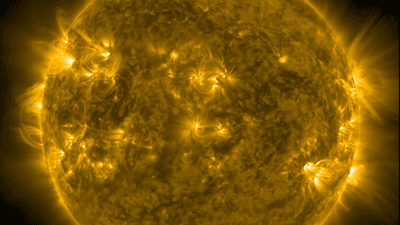


A new preprint paper has taken a look at what propulsion systems could deliver spacecraft to a particularly interesting area of space, enabling us to use our host star as a gigantic telescope. According to the paper, it may be possible to deliver a mission to the region in under three decades.
In Einstein's theory of general relativity, mass curves spacetime. A sufficiently large object (say a black hole or a star) curves it a significant amount. While looking out into the cosmos, astronomers regularly spot gravitational lenses, where light from distant objects is magnified by an intervening object, which alters the path of the light.
While this is obviously "very cool", gravitational lenses are not the most adjustable of telescopes. You are limited to where the large collection of mass is. While you can spin a regular telescope around, good luck adjusting your gravitational lens to look left a bit when that involves moving a galactic cluster.
But some scientists have proposed another idea that might make it – just a little – easier, whilst still giving us unprecedented views of whatever we want to look at. We have a massive object sitting at (not quite) the center of our orbit. To observe an object using the Sun as a telescope – known as a solar gravitational lens (SGL) – all we would need to do is to place our equipment on the opposite side of the Sun and in the correct position. Fortunately, this is made easier as we are working with a focal line, rather than a focal point.
"The gravitational field of the [S]un acts as a spherical lens to magnify the intensity of radiation from a distant source along a semi-infinite focal line," Von Russel Eshleman, who first proposed a mission to make such a telescope, explained in a 1979 paper. "A spacecraft anywhere on that line in principle could observe, eavesdrop, and communicate over interstellar distances, using equipment comparable in size and power with what is now used for interplanetary distances. If one neglects coronal effects, the maximum magnification factor for coherent radiation is inversely proportional to the wavelength, being 100 million at 1 millimeter."
Using such a telescope, we could possibly even observe the surface of an alien planet, far outperforming any other telescope in existence, or that will come into existence in the foreseeable future. Side note, but another possibility is to turn the Earth into a telescope, an easier, though less powerful, starter project.
While far cheaper and simpler than building an equivalently powerful telescope, the mission would still be incredibly complex.
"Realistic mission concepts place science operations along the SGL focal line at heliocentric distances z ≃ 650–900 AU, where the spacecraft must (i) maintain precise pointing near the solar limb, (ii) execute controlled lateral motion in the image plane for pixel-by-pixel sampling and image reconstruction, and (iii) sustain power and communications where solar flux is ∼ 4.2 × 10⁵ to 8.1 × 10⁵ times weaker than at 1 AU," the new paper explains. "At these distances, solar power is not an enabling resource for high-rate communications or precision control; radioisotope or fission power is required throughout the science phase."
With 1 AU being the average Earth to Sun distance, that's quite a lot of distance to cover in order to get telescoping. Voyager 1 – humanity's most distant space probe – is currently around 170 AU from the Sun, and it has taken nearly 50 years for it to get there. So what can we do to speed things up? In the new paper, which has not yet been peer reviewed, Slava G. Turyshev – a scientist working at NASA's Jet Propulsion Laboratory – lays out the options for such a mission. Though it may sound very "out there", NASA is considering such a mission as part of its Innovative Advanced Concepts initiative.
First off, Turyshev explains that traditional chemical propulsion is entirely insufficient for getting a payload to the correct position in any reasonable time frame, even using a series of gravitational assists. Instead, he looked at solar sailing and fission-powered nuclear electric propulsion (NEP).
Of the two, he found that using a solar sail-powered craft would be the most credible way to get to that distance in a reasonable time frame. The mission would still require quite a daring approach to the Sun, taking it within 0.04–0.08 AU of our host star in order to do a gravity assist. Using this method, Turyshev says that the spacecraft could make it to 650 AU in around 25-40 years. However, solar sails do not provide much power, limiting how big a payload the mission would be able to take with it.
NEP, meanwhile, could carry a heavier payload, and has the advantage that whatever propellant is left over could be used to adjust the position of the probe once it reaches its intended destination. This system would be slightly slower, but using a combined NEP and nuclear thermal propulsion, the mission could reach that distance in under 20 years.
However, these are both technologies in their infancy. Should NASA choose to begin such a mission in the near future, it will be limited by the progress of the technology.
"Programmatically, a credible 2035–2040 start requires aligning architecture choice with what can be demonstrated by the early 2030s," Turyshev explains.
On that front, solar sails are a little further along in development, and have even been tested (sometimes unsuccessfully) in space. While by no means anywhere near a done deal, it would be pretty cool to sail on the Sun's energy, before using its mass to view distant objects behind it.
The paper is posted to preprint server arXiv.