


 Humans
 PUBLISHED



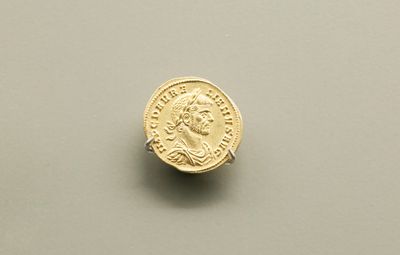


Roman emperors had a habit of meeting untimely ends, although one ruler in particular seems to have departed office in the most abrupt of fashions. Carus, who presided over the empire for a single year beginning in September 282 CE, is said to have died after being struck by lightning following a glorious military victory on Persian soil – yet not all historians are convinced by this unlikely-sounding tale.
Thought to have been born in what is now France, Carus took power in somewhat murky circumstances, with some sources implicating him in the murder of his predecessor, Probus, while others absolve him of blame. Having ascended, Emperor Carus then led the Roman army deep into Persia, famously advancing beyond the capital city Ctesiphon and earning the title Persicus Maximus—meaning "Great Victor in Persia"—in 283 CE.
It was precisely at this moment of glory, however, that Carus suddenly died on the banks of the River Tigris. Unfortunately, everything we know about his final moments comes from ancient historians who weren’t even alive at the time of the event, which makes it very difficult to trust a particular narrative.
The most widely cited account of Carus’ demise is found in the highly dubious Historia Augusta, which chronicles the lives of several Roman emperors but is widely considered to be unreliable and littered with embellishments and inaccuracies. Nonetheless, this ancient source – which was written by an unknown author about a century after Carus died – states that “at the time of his death there suddenly occurred such violent thunder that many, it is said, died of sheer fright… and during this he expired.”
Suspiciously, however, the same text goes on to suggest that “Fate” had forbidden any Roman ruler from conquering Ctesiphon and that the lethal blow was therefore delivered as divine punishment for Carus having disobeyed the will of the gods. For this reason, some historians suspect that the lightning story may have been invented by superstitious Romans who saw Persia as a land of bad omens.
It’s also noteworthy that Historia Augusta alludes to a conflicting narrative in which Carus actually died of some unknown illness, but that his final breath did happen to coincide with an almighty lightning storm. In fact, most historians tend to favor the idea that Carus fell victim to disease, although it seems that the legendary tempest that allegedly accompanied his death echoed through multiple generations of ancient Roman authors.
For instance, both Eutropius and Aurelius Victor – neither of whom had been born yet in 283 CE – wrote that Carus was killed by a “lightning bolt." Still, modern scholars are reluctant to accept this explanation, and numerous opposing arguments have been proposed.
Among these is the idea that Carus was in fact murdered by his rival Diocletian or his supporters. This theory is particularly hard to ignore given that both of Carus’ sons were also killed shortly afterwards, suggesting that Diocletian was keen to remove the emperor and his heirs so that he himself could ascend.
What makes this idea even more plausible is that most Roman emperors were in fact assassinated, with less than a quarter actually having the pleasure of dying of natural causes. Statistically, then, it seems that Carus was far more likely to have been murdered than struck by lightning.
Unfortunately, due to a lack of reliable primary sources we’ll probably never know for sure whether Carus really was killed by a lightning strike. If this truly was the case, then the old emperor can consider himself monumentally unlucky, given that the chances of being struck by lightning are thought to be around 15,300 to one.
Still, the idea can’t be ruled out, and stranger things have happened. Just ask former United States park ranger Roy Sullivan, who earned himself a world record by being struck by lightning on seven different occasions!




 2
2