


 Humans
 PUBLISHED




In 89 BCE, when the residents of Pompeii rebelled against Rome, the Empire pulled no punches in its attempts to quell the revolt, launching a full-scale siege of the ill-fated city. Led by Lucius Cornelius Sulla, the Roman army brought its most destructive weaponry to Pompeii – including a polybolos, which was capable of firing multiple projectiles in rapid succession with no need to reload.
Likened to an ancient machine gun, this highly advanced weapon is believed to have been designed by Dionysius of Alexandria while working as an engineer at the Rhodes arsenal in the third century BCE. And while archaeologists are yet to discover any physical traces of the fabled polybolos, blueprints describing its mechanics have been found in the writings of another ancient Greek engineer called Philo of Byzantium.
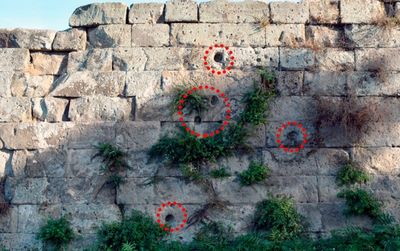
During Sulla’s campaign against Pompeii, standard Roman catapults known as scorpions were used to batter the city’s northern wall, which is pockmarked with large, round holes produced by individual boulders launched by this weapon. However, the same wall also displays smaller four-sided holes arranged in a fan-like pattern.
To learn how these were produced, researchers created 3D scans of the artillery marks, enabling them to study their dimensions and determine which type of weapon might be responsible. Mathematical models indicated that the damage could only have been achieved using some sort of high-powered machine.
This finding “makes it reasonable to hypothesize the use of an automatic scorpion intended to strike archers emerging in succession from the lateral posterns of the towers,” write the study authors. Intriguingly, they also note that Sulla was the governor of the province encompassing Rhodes, which was famed for its engineering excellence and is believed to have been the birthplace of the polybolos.
Analyzing Philo’s diagrams, the researchers conclude that the polybolos he describes probably wouldn’t have been capable of producing the damage seen at Pompeii – unless the legendary engineers of the Rhodes arsenal introduced a few upgrades in the centuries leading up to the siege of Pompeii. Specifically, the study authors say that “a gear-reduction system or mechanical reducer similar to the low gears of a bicycle” could have delivered the torsional energy required to create the bullet holes.
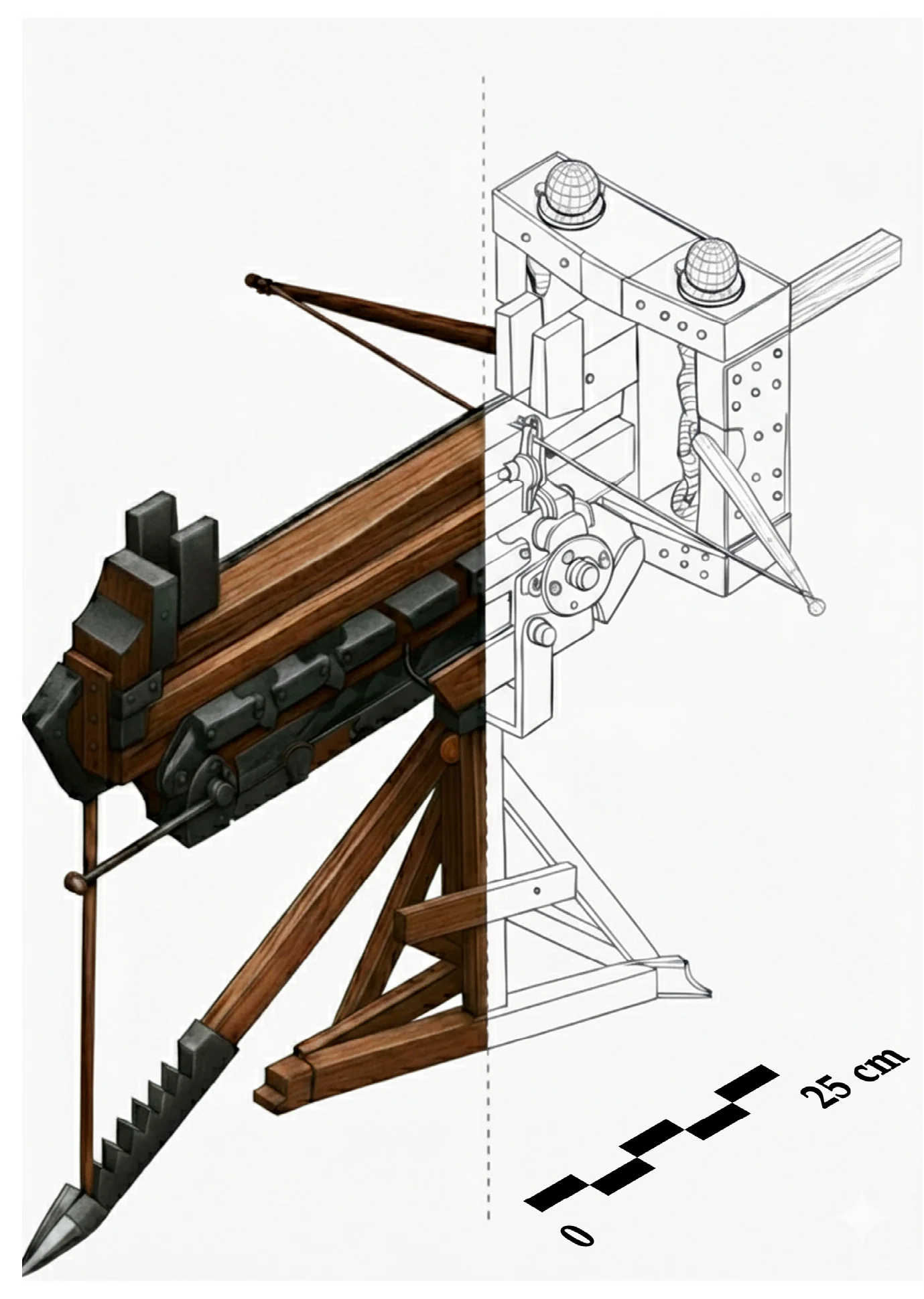
As it happens, a German artillery officer and archaeologist named Erwin Schramm built a full-scale polybolos during World War I, replacing Philo’s transmission system with a bicycle chain. Noting that this machine is said to have “worked splendidly”, the study authors conclude that Rhodian engineers could probably have developed an improved polybolos that “incorporated such a reduction system, possibly concealed within the main structure of the engine.”
“It is therefore plausible that Sulla – a politically astute and technically informed commander – could have acquired or encouraged Rhodian innovations, deploying an enhanced multi-shot engine during the siege of Pompeii between the summer of 89 and the winter of 88 [BCE],” they write.
The study is published in the journal Heritage.




 8
8