Nature
 PUBLISHED



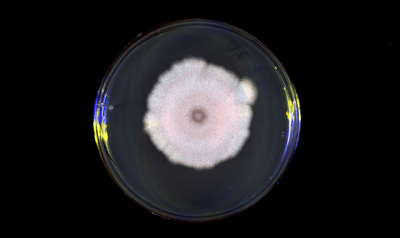


All living things rely on information from their environment to make decisions, and now it turns out even viruses can learn from other viruses. However, research on the process has revealed that taking advice from another species can sometimes lead them astray.
When a virus enters a cell, it doesn’t always turn the cell into a virus-producing factory immediately, killing it in the process – sometimes the intruder lies dormant instead. Understanding when and why viruses make this decision can teach us something about evolution, and it might also help us fight or harness their power as needed.
Phages are viruses that infect bacteria rather than animals or plants. They’ve been proposed as the answer to antibiotic resistance, since although bacteria can evolve to fight them off, phages can also adapt in response and maintain their effectiveness. Nevertheless, the use of phages for medical purposes remains in its infancy, so PhD student Rebecca Woodhams at Exeter University in the UK is seeking to understand them better.
“The decision to kill (called lysis) or lie dormant (called lysogeny) depends on the specific situation,” Woodhams said in a statement. “When many bacteria are available, a phage should choose lysis and look to infect these potential hosts. When many hosts have already been killed and few remain, lying low and waiting for better times (lysogeny) is safer.” It’s the equivalent of hibernating when food is scarce, but without the signals the planet provides that let animals know when winter is coming.
Phage particles were shown a decade ago to send out chemical messages in the form of peptides that give other particles information on the state of the food supply. When peptide concentrations are low, fewer bacteria have been killed, so it’s probably safe to feast on the one you’ve entered. High peptide concentrations signal a widespread host slaughter, indicating it might be best to wait until the population recovers. When bacteria do something similar, it is known as quorum sensing.
Such an approach has obvious benefits for any phage species that adopts it, and now Woodham and her colleagues are one of two teams that have independently discovered that phages' can also pay attention to the peptides produced by other phage species – but this is where things get trickier.
“When a phage detects signals from another species, it is more likely to stay dormant instead of killing the cell and releasing more viruses, even when the message was not meant for it and does not reflect its own situation,” said Exeter’s Robyn Manley.
Intriguingly, the team discovered that while some species of phage can detect each other’s peptides, for others, communication is unidirectional: virus A can understand virus B, but virus B doesn’t pick up on A’s signals. “This can benefit the virus that sent the signal, as it prevents another virus killing cells, but it can come at a cost to the virus that responds. In other words, viral communication is not just cooperation. Sometimes, it is manipulation,” said Manley.
Some phages, known as superinfectors, spread more readily than others. Being able to induce lysogeny in its more virulent rival is one way a less virulent phage can fight back.
So, it turns out anyone who thinks disinformation campaigns are a modern human invention really doesn’t understand evolution. On the other hand, the authors note that if the misinformation is too effective, it will promote the appearance of a mutant strain of phage that can’t pick up on others’ signals.
Woodham, Manley, and their co-authors studied phages that infect Bacillus subtilis and Bacillus thuringiensis, bacteria that are important for breaking down food in the guts of ruminants and for pest control, respectively. However, they expect the lessons learned here to be applicable to phages that infect disease-causing bacteria in humans.
The study is published in Cell, with the same edition carrying a paper from another team reaching similar conclusions using different phage species.


 1
1