Humans
 PUBLISHED
 1
1


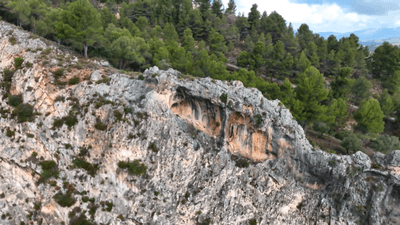


Rock art dating back 7,000 years has been discovered by scientists flying a drone, marking one of the first times the technology has been used this way. Researchers studying the mountains surrounding Alicante were used to having to hike their way to the region’s hidden archaeological treasures, but now they’ve demonstrated that there can be an easier way.
During their research project “Rock Art and Cultural Landscapes in the Mountains of Alicante,” they’ve had to grapple with sheer drops, walls, and uneven terrain in their search for prehistoric rock art hidden within the mountains. Their experiences led researcher Francisco Javier Molina Hernández, a trained drone pilot, to the idea flying might be a good way to scout the area.
As luck would have it, the maiden flight into 18 caves revealed two that contained prehistoric paintings. The approach not only speeds up prehistoric rock art hunting, but also makes for magnificent footage.
If you’ve got a spare three minutes, we strongly recommend kicking back and enjoying this flight through the Alicante mountains.
“This methodology can be applied not only in prehistoric rock art research, but also in heritage studies related to preventive conservation, taking into account the different threats to this heritage, such as urban development, quarrying operations or outdoor recreational and sport activities,” wrote the study authors.
“Although this proposal focuses on prehistoric representations, the study of similar archaeological sites from any historical period could be useful.”
Of course, flying doesn’t get you the up-close look at prehistoric rock art that traversing on foot does, but the researchers were able to enhance and enlarge the footage using Photoshop to get a clearer image. Giving images from the Castellet-Barranc del Salt ravine this treatment revealed figures, archers, deer, and goats. Arrows striking figures could even be seen, demonstrating the level of detail drone photography can pick up even at a distance.
With the added benefit of speeding up the scouting process, it’s hoped that future drone surveys could boost our understanding of the region and the ancient artworks it contains.
“There are many inaccessible areas of the Alicante mountains,” Molina told Artnet News. “Using a drone to photograph walls is a quick method and this recent find means there are many prehistoric cave paintings to be found.”
The team will need to apply for special permits to fly camera-enabled drones around the region, so until more footage arrives, we’re off to watch it again.
The study is published in Lucentum XVII.