


 Health and Medicine




Update 3/30/2026: This story has been updated to include additional comments made by independent experts to the UK Science Media Centre of which the editors have been made aware following publication of the study, some of which raise criticisms of the methods and conclusions. The title of this article has also been amended to reflect this update.
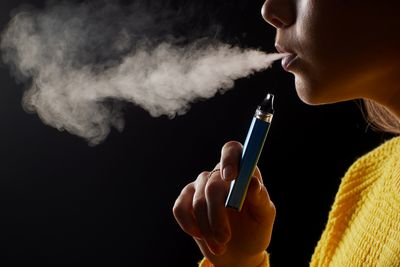
Vaping and e-cigarettes are likely to cause cancer in their own right, a comprehensive new review has concluded. These products, which are largely marketed towards those trying to give up smoking, may therefore not be a solution to the health problems associated with tobacco, but instead run the risk of causing more cases of lung and oral cancer.
The team behind the new study specifically wanted to look at the risk of vapes causing cancer, rather than situations where these products may be a gateway to later cigarette smoking. They looked at studies published between 2017 and midway through 2025, and crucially, they included a huge range of different publications.
“We did not ‘select’ publications that suited any particular point of view,” first author Bernard Stewart AM, an adjunct professor at the University of New South Wales (UNSW) in Sydney, said at a press briefing.
This included human biomarker studies, looking for evidence of carcinogenic chemical exposure in blood and urine; case reports from dentists who identified oral cancer in people who had vaped but never smoked; animal studies; and mechanistic studies examining what inhaling the ingredients of vapes could do to the cells of the mouth and airway.
As Stewart put it, “There’s no doubt about exposure.” The ingredients of nicotine vapes and e-cigarettes can and do cause DNA changes in humans that could lead to cancer.
“In humans, there is unequivocal pre-carcinogenic change as a consequence of vaping.”
There was a noticeable difference between earlier studies, from back in 2017, compared with more recent ones in 2025. In Stewart’s words, 2017 researchers were saying “we just don’t know” about the risk of cancer from vaping, whereas today the tone has shifted to one of genuine concern. Fundamentally, he explained, scientists can no longer definitively say that vaping is safer than smoking.
Other experts who were not involved in the study agreed with this conclusion.
“The finding that e-cigarettes are likely to be carcinogenic is not at all surprising. Public health advocates have been saying for years that the products contain carcinogenic chemicals, so it was only a matter of time before this evidence emerged,” commented Professor Michelle Jongenelis, Director of the Melbourne Centre for Behaviour Change at The University of Melbourne, to the Australian Science Media Centre.
Professor Dr Muhammad Aziz Rahman from the Institute of Health and Wellbeing at Federation University Australia said, “This study has nicely synthesised all the previous evidence of the presence of carcinogenic compounds in vaping and relevant carcinogenicity, based on animal studies, case reports and laboratory tests. Many of the vaping product users are dual users of vaping and cigarette smoking, but this review has clearly indicated that vaping by itself can cause cancer.”
What this study cannot do, as Stewart explained, is make any quantitative claims – the authors cannot say how many cases of cancer are directly linked to vaping, only that it is likely that there are some.
For some experts, however, the study’s methods don’t allow for even these conclusions to be supported.
“This review did not follow standard practice. No information is provided about how studies were selected, nor were any inclusion or exclusion criteria specified or a protocol preregistered. This increases the risk of selection bias, including studies that favour one interpretation over another and certainly does not provide a systematic assessment of the literature,” said Professor Lion Shahab of University College London to the UK Science Media Centre.
“While it is clear that e-cigarettes expose users to harmful chemicals, which may lead to later disease, I would urge against sensationalisation of evidence.”
One thing a number of the experts were concerned about was the idea that these conclusions could be taken as evidence that vaping is somehow less safe than smoking tobacco, something several commenters strongly refuted.
“Vaping does not involve exposure to the combustion products in smoking which have massive carcinogenic effects. It would require quite a stretch of the imagination to envisage how vaping compounds could match the cancer-causing effects of combustion smoking,” said Professor Stephen Duffy, Emeritus Professor of Cancer Screening at Queen Mary University of London.
“Misinforming smokers risks discouraging them from using e-cigarettes, which are one of the most effective methods that exist to help people stop smoking,” said Professor Peter Hajek, also of Queen Mary.
Finding definitive, quantitative proof that vaping causes cancer is not possible right now, the authors concede, as these products simply haven’t been around long enough. Indeed, as Professor Stephen Burgess of the University of Cambridge told the UK Science Media Centre, “There may never be a day when evidence for the safety or harm of vaping is fully conclusive.”
Co-author Freddy Sitas, an adjunct associate professor at UNSW, compared it to the approximately 100 years it took before we had definitive scientific proof that smoking causes cancer.
Over the years, evidence began to emerge that smoking was associated with other diseases, starting with a reported link to tuberculosis way back in the 1860s. According to Sitas, a similar evolution is happening with vaping, with studies suggesting links with chronic obstructive pulmonary disease, heart attacks, and pneumonia, among other health conditions.
In particular, he pointed to a 2024 study from a team at The Ohio State University, which found that combining smoking and vaping increased the risk of lung cancer fourfold compared with smoking alone. While vapes are often marketed as a smoking cessation aid, in practice it can be very difficult for many people to completely kick the habit, leaving a lot of people in what Sitas described as a “limbo” of smoking and vaping – which, according to these results, could put them at even greater risk of health problems than if they had never taken up vaping.
There’s also been much concern around the marketing of vapes to younger people, and the consequent risk of early-onset cancers in a generation of people who may never smoke traditional cigarettes at all, but instead only use vapes and e-cigarettes.
“What saddens me is the deliberate targeting of children and young people with these products. The tobacco and nicotine industry need to addict a new generation to nicotine to safeguard their profits, and this evidence shows they are very likely giving our children cancer in the process,” said Jongenelis.
To gather evidence on this, Sitas said, we need to start now: “If we want to get early results, we have to start really, really big studies, and I mean really big.”
What the researchers really don’t want to see happen is society waiting another century to act on the evidence around vaping, as it did with smoking. While further research is done, it may be possible to change approaches to the use of vapes as a smoking cessation aid, for example, to try to limit the harms that appear to be associated with smoking and vaping at the same time.
“I think we have a very good opportunity to be proactive,” said Sitas at the media briefing.
The study is published in the journal Carcinogenesis.




 2
2