Humans
 PUBLISHED




This week, bioluminescence in animals has been found to have existed for at least 540 million years, bacteria on the ISS is mutating into new strains not seen before on Earth, and an engraving on a prehistoric bear bone is the oldest example of Neanderthal culture. Finally, we explore the myth behind the “deadly” pharaoh’s curse.
Subscribe to the IFLScience newsletter for all the biggest science news delivered straight to your inbox every Wednesday and Saturday.
Uranus May Be Filled With A Lot More Methane Than We Thought
Uranus and Neptune are often referred to as ice giants, with scientists believing that they are mostly made up of "icy" materials such as water, methane, and ammonia, surrounding a hot, rocky core. Astrophysicists believe this is the case because the region they formed in would likely have been abundant in the necessary components, hence the expectation of a lot of water and ice. But now, astronomers taking a closer look at Uranus believe it could be filled with a lot more methane than previously thought. Read the full story here
Bioluminescent Animals Have Been Glowing For At Least 540 Million Years
Evidence has been found for bioluminescence having existed among animals 540 million years ago, more than doubling the previous record. Besides altering how we picture the oceans of the world in the Ediacaran era and thereafter, the finding could shed light (sorry) on the reasons bioluminescence evolved and is so widely used by creatures today. Read the full story here
Bacteria On The ISS Have Mutated Into Something Not Seen On Earth Before
Movies and TV shows give the impression of space stations as aseptic and squeaky-clean environments. But wherever there are humans, there are all the bacteria that we bring with us. Bacteria have found niches in the International Space Station (ISS) and since they can evolve pretty quickly, a species has been seen becoming distinct from its earthly counterparts. Read the full story here
Meet A Megaraptor: New Dinosaur Footprints Reveal Raptors Grew Scarily Big
A remarkable coincidence has seen a late Cretaceous mudflat preserve the footprints of two different types of raptors. More astonishingly still, one of these prints comes from a previously unknown species larger than any raptor we have previously found. Fujianipus yingliangi is estimated to have been 1.8 meters (5 foot 11 inches) high at the hip, and a terrifying 5 meters (16 feet) long, much larger than Jurassic Park's already supersized Velociraptors. Stand by for future big-screen appearances. Read the full story here
Engraved Bone Of Prehistoric Bear Is The Oldest Example Of Neanderthal Culture
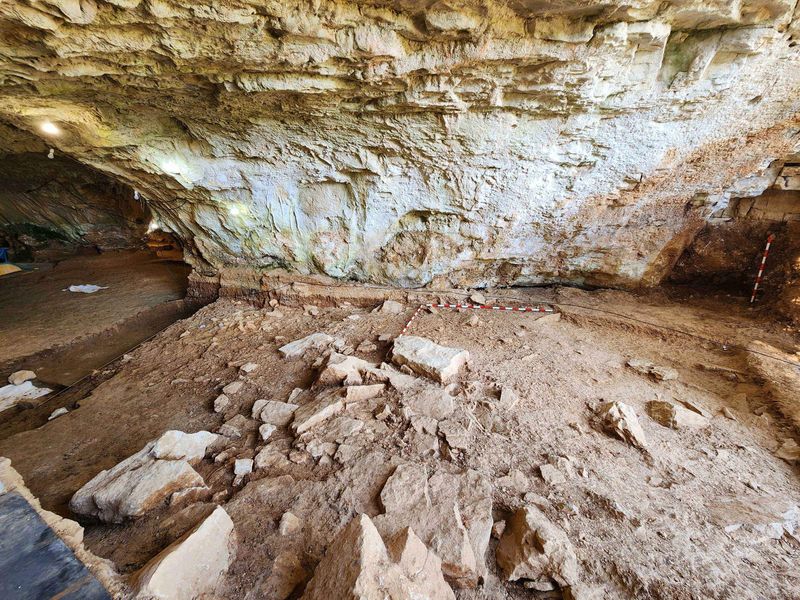
Sometime between 115,000 and 130,000 years ago, a Neanderthal living in a cave in Poland etched a series of markings into a bear bone. Despite consisting of just 17 lines, the engravings converted the bone into one of the oldest known symbolic items in Europe and one of the earliest to be associated with Neanderthals. Read the full story here
TWIS is published weekly on our Linkedin page, join us there for even more content.
Feature of the week:
The Pharaoh’s Curse: Does Opening A Tomb Really Lead To An Untimely Death?
In addition to being one of the most significant archaeological finds of the 20th century, the tomb of Tutankhamun also turned out to be a glorified can of worms, the opening of which has inspired countless myths, movies, and pseudo-archaeological theories. In particular, the so-called "Pharaoh’s Curse" became a globally recognized phenomenon – but where did this myth come from? Read the full story here
More content:
Have you seen our e-magazine, CURIOUS? Issue 21 April 2024 is out now. Check it out for exclusive interviews, book excerpts, long reads, and more.
PLUS, the entire season 3 of IFLScience's The Big Questions Podcast is available now.