Health and Medicine
 PUBLISHED


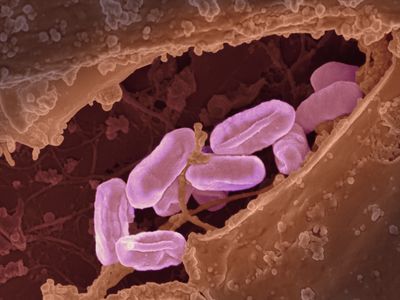


Typhus is one of those diseases you might assume has been largely consigned to the history books, but officials are warning that recent years have seen record-breaking case numbers in LA County, California.
Flea-borne typhus is a bacterial disease spread from animals to humans via infected fleas. It cannot spread onwards from human to human. It’s caused by the bacterium Rickettsia typhi.
Fleas have an unpleasant habit of pooping where they feed, so if you’re bitten by a Rickettsia-ridden flea it will leave a deposit of bacteria-filled feces (called flea dirt) right near the wound it has just created. When that bacteria enter the wound, that’s how you get typhus. Exposure can also happen by inhaling infected flea dirt or getting it into the eyes.
Flea bites often go unnoticed – the Centers for Disease Control and Prevention (CDC) says fewer than 5 percent of people who get typhus actually remember being bitten. The species that most commonly spread typhus are the Oriental rat flea (Xenopsylla cheopsis) and the cat flea (Ctenocephalides felis) – sorry, feline fans! As well as the obvious rats and cats, other animal carriers include mice, opossums, dogs, and raccoons.
In the last decade, County of Los Angeles Public Health’s Acute Communicable Disease Control division has tracked a steady rise in typhus cases. This peaked in 2025 with 220 cases. As of April 2, 2026, there have been 17 cases this year. Most cases have been identified in Central and South LA and numbers tend to peak during late summer and fall.
Dr Aiman Halai, a Medical Epidemiologist with the department, told ABC 7 Eyewitness News that 90 percent of patients have required hospitalization. Symptoms of typhus include fever, body aches, headache, nausea, and vomiting. About half of patients will develop a rash around the fifth day of their illness.
“Some patients can develop severe illnesses in which multiple organ systems can be involved and really can result in death as well,” Halai told ABC.
Some deaths have been reported, with the last in LA County recorded in 2022, but fortunately, antibiotic treatment is almost always effective. Still, it’s worth knowing some tips to help avoid getting sick in the first place.
The CDC recommends speaking with your veterinarian about flea prevention for your pets, especially those that spend time outdoors. You can also take steps to keep rodents other wild animals away like sealing up holes in your home, removing any outdoor clutter, and keeping food tightly sealed. Steer clear of stray animals too – LA County health officials say that free-roaming cats are among the primary animals that transmit flea-borne typhus.
Insect repellents that you may use to ward off mosquitoes and ticks can also be effective against fleas.
“The majority of people who used to get infected with [Rickettsia bacteria] were, like, people who hiked in wildlife and were out in nature. Now, we’re getting it from our pets,” infectious disease expert Dr Monica Gandhi told SFGate.
Flea-borne typhus is not the only notable human disease caused by bacteria in the Rickettsia genus. Another is Rocky Mountain spotted fever, caused by Rickettsia rickettsii and spread by certain species of tick.
And of course, fleas themselves are most commonly associated with a different bacterial disease: plague, which we regret to report has also not disappeared from the face of the Earth.