Nature
 PUBLISHED


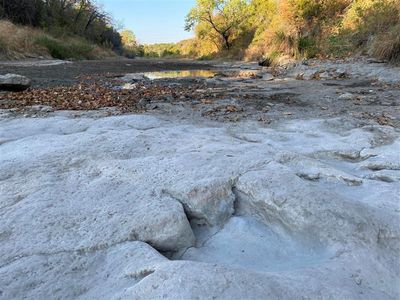


Texas has been experiencing extreme drought conditions for the past few years. While this is a worrying and damaging situation generally, it has revealed something previously unknown: for millions of years, dinosaur tracks (up to 70) have been hiding under the water and mud of the Paluxy River. Now, the hot temperatures have exposed these secret footprints for the first time.
The tracks, which are around 110 million years old, were found in what is known as the Dinosaur Valley State Park’s Ball Room and Denio sites in Glen Rose, Texas. According to experts, the tracks likely belong to two species of dinosaur: the three-toed tracks belong to a large carnivore called Acrocanthosaurus, while the ones that look like they belonged to an elephant were probably made by a long-necked Sauroposeidon.
Acrocanthosaurus (“high-spined-lizard”) was a large theropod that could grow to around around 12 meters (39 feet) in length. These fearsome carnivores lived during the Early Cretaceous period (115-105 million years ago) and roamed across what is now modern North America. In contrast, Sauroposeidon, a species of brachiosaurus of Jurassic Park fame, were giant plant eaters that may have reached lengths of 34 meters (around 110 feet) and possibly up to a staggering 60 feet (18.2 meters) in height. However, the current estimations are based on incomplete fossils.
According to a video from WKYC Channel 3, one of the tracks known as the “Lone Ranger Track” is thought to be the longest in the world.
A Facebook post from Friends of Dinosaur Valley State Park explained that the tracks “will be the most tracks we have ever seen at this location.”
Once the rains return, the tracks will likely disappear underwater again, so researchers have been quick to collect as much data on them as they can. This has included making castings of the prints which will be used in an ongoing mapping project.
"This is not normal for us”, Paul Baker, retail manager at the Friends of Dinosaur Valley State Park, explained to Chron.com. But “due to two consecutive years of high temps and drought conditions it has given us the opportunity to uncover new tracks.”