


 Humans
 PUBLISHED


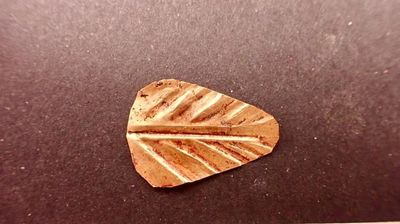


Archaeologists have unearthed two more Egyptian mummies with golden tongues at the ancient town of Oxyrhynchus, around 100 miles from Cairo. This brings the total number of specimens to 16, all of which have been recovered from this site.
Oxyrhynchus, otherwise known as the "City of the Sharp-nosed Fish", has been a veritable treasure trove for archaeologists for some time. From late 1896 to 1907, excavation teams discovered thousands of pieces of papyrus buried in ancient rubbish mounds at the site. The surrounding areas have been almost continuously excavated ever since, and have continued to yield various important finds, including papyrus texts from the Ptolemaic Kingdom (305-30 BCE) and Roman Egypt (30 BCE to 641 CE).
But in recent years, archaeologists have recovered even more intriguing artifacts: golden tongues.
During the Roman period, golden tongues were put into the mouths of some mummies in the belief that the precious object would aid the deceased in the afterlife. By having a gold tongue, it was thought the dead would be able to communicate with the god Osiris in the underworld. This was because gold, to the ancient Egyptians, was the “flesh of the gods”.
The tongues were discovered by archaeologists from the University of Barcelona, who were led by Drs Maite Mascort Roca and Esther Pons Mellado.
In 2021, the same team found three other golden tongues at Oxyrhynchus, but the latest finds were not the only discoveries of note.
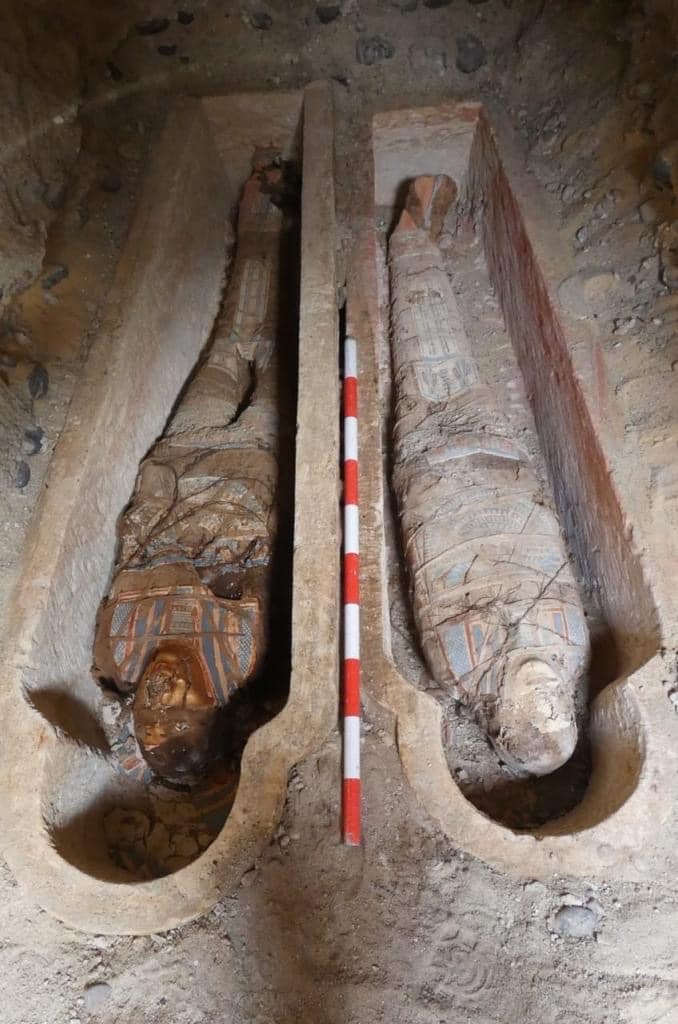
In addition to these spectacular objects, the team identified three large hypogea, underground burial chambers, that date to the Ptolemaic period. Inside were nine sarcophagi, two of which had not been opened by tomb robbers.
The chamber contained over 30 mummies wrapped in “colorful rolls”, some of which also had “colorful funerary masks”, according to a statement from the Egyptian Ministry of Tourism and Antiquities. It was within the mouths of some of these mummies that the tongues were found.
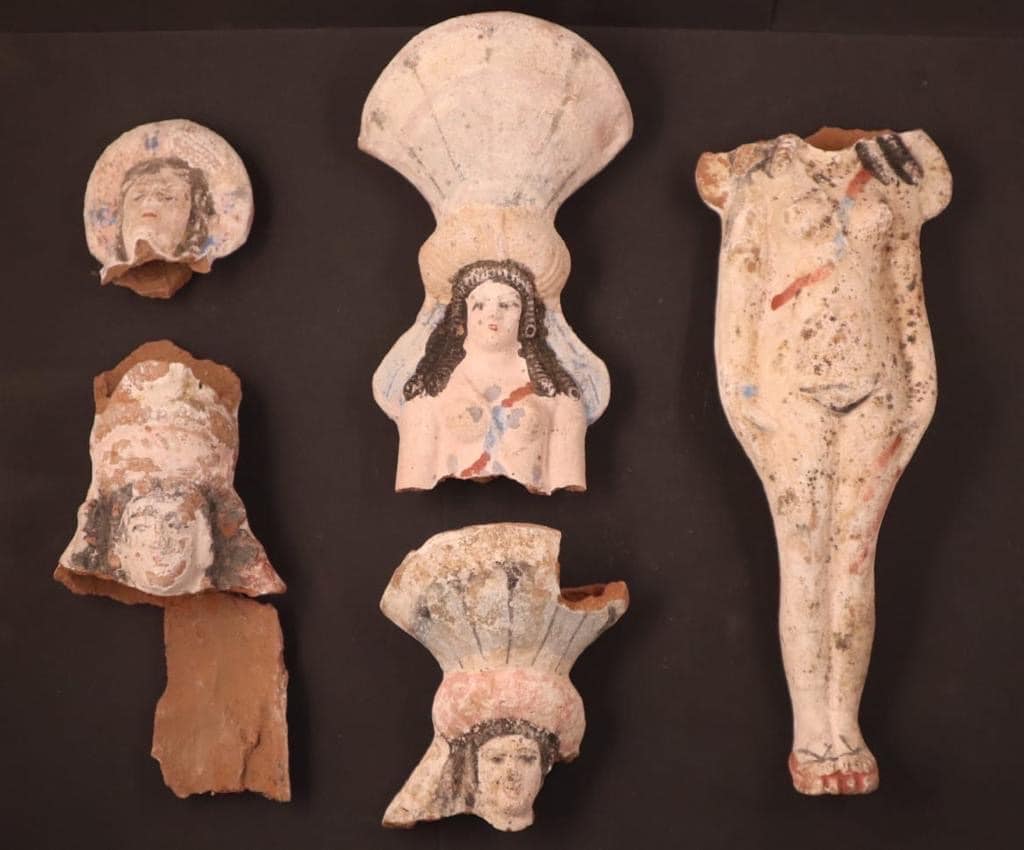
The mummies were also accompanied by terracotta figurines of Isis-Aphrodite, a goddess that blended together the Egyptian goddess of healing and magic, with the Greek goddess Aphrodite, who was associated with beauty.
"It is the first time that we have found in Oxyrhynchus terracotta with the image of Isis-Aphrodite and the first time that [these] kind[s] of pieces appear in this area of the middle Egypt," Pons Mellado told Live Science.
At the moment, it is unclear who these mummified individuals were, but they would have been important in their day, given they had been mummified and buried with such valuable possessions.


 1
1