Health and Medicine
 PUBLISHED


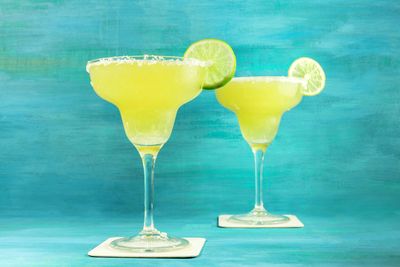


Sunshine and margaritas, what could be better? Much as we’d all like to crack out a jug of Lonely Gal as we feel the warming effects of the climate crisis, combining this lime-rich beverage with fun in the sun can actually result in a pretty nasty skin condition. We’re talking about Margarita Burn.
Phytophotodermatitis (try saying that after a few) is a skin condition that is triggered by direct contact with certain substances followed by sun exposure. Offending agents include furocoumarins and psoralens, both of which are found in some of the plant materials we eat such as oranges, lemons, figs, and limes.
Mixology can get a little sloppy once tequila comes into the picture, so it’s easy to see how it might be easy enough to wind up with lime on your hands or beyond while mixing up a few cocktails. Should you then take in your handiwork under the warm embrace of some summer sun, you may fall victim to Margarita Burn.
The condition usually develops in three stages: first, patches called erythematous macules appear, which later morph into blisters that mimic second-degree burns. Finally, they turn into asymptomatic but highly pigmented lesions.

A case of Margarita Burn is described in The Journal of the American Board of Family Medicine detailing the experience of a 26-year-old after slicing and juicing 24 limes before a pool party. Seven hours after the juiceathon, they began developing symptoms including a patchy rash on the thighs and abdomen.
Over the next five days, the patches grew slightly larger, more painful and increasingly red. Eventually, the pain subsided with the aid of steroid treatments to reduce inflammation.
Avoiding Margarita Burn is a simple case of trying to keep any offending agents off your skin, and if you do then washing it off before heading out into sunlight. However, here timing is important.
“Prevention is the cornerstone of education regarding phytophotodermatitis,” write the paper’s authors, “as patients should understand that phototoxic agents should be cleansed from the skin before they can be absorbed, meaning that such exposures must be identified and washed with water within 30 to 120 minutes.”
The condition’s symptoms are manageable but can be severe and may have the potential to land someone in the burn unit of a hospital if the affected area is 30 percent of the body or more. Management for Margarita Burn largely centers around trying to increase the affected person’s comfort as they wait for the symptoms to subside, so until some such time that a treatment is discovered it pays to be meticulous with your juicing.
For a list of potential phytophotodermatitis agents, click here.
[H/T: Bon Appetit]