Nature
 PUBLISHED


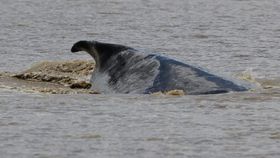


The crocodile-infested waters of Australia’s Kakadu National Park received three unexpected visitors earlier this month when a trio of humpback whales entered the river. Two of the unexpected sightseers swam into the East Alligator river before shortly returning to the ocean, but the remaining individual was spotted in the Northern Territory (NT) river sparking fears it might get stuck in the shallow waters, a potentially fatal mistake when there are crocs about.
Exactly how the whales came to be in the river isn’t clear, though it’s apparent they took a wrong turn. They were likely on their way south to Antarctica when the navigational error occurred, instead entering an estuary that led them up river into a habitat where humpback whales have never been seen before. The whales swing by Australian waters annually in spring to give birth but return to the cooler waters down south to feed. Suffice to say, when Parks Australia spotted them in crocodile country there was considerable concern for the fate of the nomadic trio.
“Earlier this week we became aware of a very unusual event at Kakadu National Park – three Humpback whales had entered the East Alligator River,” Parks Australia wrote in a recent statement. “As far as we’re aware, this is the first time this has happened... The last thing we want is a collision between a boat and whale in waters where crocodiles are prevalent and visibility underwater is zero. We also don’t want boats to inadvertently force the whale further up the river."
While two escaped fairly quickly, the third whale took a little longer to find its way back to the big blue. The remaining wanderer was spotted 30 kilometers (18.5 miles) inland by locals on boats prompting officials to closely monitor its progress as fears rose it could get struck by a boat or stranded on the shallow banks.

Its large size was likely enough to protect it from attack in the water but even the mighty humpback is a tantalizing snack when beached. Fortunately, the whale seemed to find its way back out again following high tides at the weekend and is believed to have been in good condition when it returned to the Van Diemen Gulf.
"After monitoring the whale this weekend, we’re delighted to see it has made its way out of Kakadu’s East Alligator River and into Van Diemen Gulf. The whale made its way out on the high tides of this weekend and we’re pleased it appeared to be in good condition and not suffering any ill effects," said Feach Moyle, Manager Country and Culture Section at Kakadu National Park, in a statement posted on Facebook.
"We’re so grateful to Kakadu’s Traditional Owners, national park staff and scientists from the NT and across the county, who have worked together to manage this very unusual situation for a good outcome."
"This is great news. It’s been fantastic working with staff at Kakadu as well as expert scientists to identify ways to assist the whale, but I’m very happy it has found its own way," said Dr Carol Palmer, Senior Scientist with the Northern Territory Government. "This is the very best outcome we could have hoped for."