Humans
 PUBLISHED
 12
12




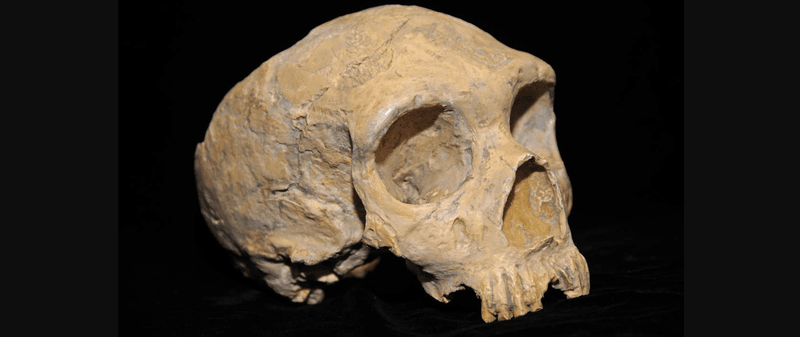
Your face is the result of thousands of years of lovemaking between multiple human species, with Neanderthals, Denisovans, and Homo sapiens being the main players in this ancient three-way romance. Because of a lack of physical evidence, however, we don’t really know how the features we’ve inherited compare to those of our extinct lovers – although the authors of a new study say that those two archaic human species probably had wider noses and more distantly spaced eyes than we do.
To figure out how our long-lost relatives may have looked, the researchers examined the genomes of around 20,000 modern humans from around the world, paying particular attention to how genetic differences correspond to changes in facial structure. Ultimately, they identified 71 genomic loci that appear to influence a total of 78 different facial traits and distances.
By applying this model to the genomes of seven Neanderthals and one Denisovan, the study authors were able to make predictions about how the faces of these ancient individuals might have appeared.
“[Modern human] faces differ from archaic humans mainly in terms of a narrower nose width and a more obvious nose bridge,” write the researchers. “We infer that the nose shape of Neanderthals and Denisovans, were relatively different from the average [modern human], but were similar to the nose shape of [modern African humans] to some extent,” they continue.
“The mouth of Neanderthal is similar in width and height to the average modern human, especially to [Europeans]. The height of the Denisovans’ mouth is also comparable to that of [modern humans], but the width is smaller,” add the study authors.
Results also indicated that the distance between the eyes was greater for both Neanderthals and Denisovans than it is for Homo sapiens, and that Denisovans had shorter yet wider noses than either of the other two human species.
Previous research has suggested that Neanderthals probably had larger schnozzes than we do because they evolved in a colder climate and therefore needed to burn more energy to keep warm, which means their oxygen intake requirements would have been higher than ours.
Scientists have also found evidence to suggest that our own noses may have expanded as a result of our intermingling with Neanderthals, as we might have inherited some of their genes for large hooters.
According to the authors of the new study, Denisovans probably had even higher airflow demands than Neanderthals since they lived in colder climates and at higher altitudes. Their supremely wide nostrils may therefore represent an adaptation to their environment, which would have suited big noses.
The study has been published in The Journal of Genetics and Genomics.