Culture and Society
 PUBLISHED
 5
5


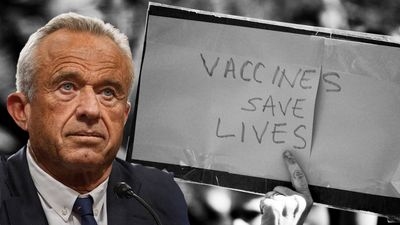


After months of escalating rhetoric and action against established vaccine policy in the US, Trump and RFK Jr’s Department of Health and Human Services kicked off the new year with sweeping changes to the nation’s childhood vaccine schedule – including the removal of some seven vaccines total from the rotation entirely.
Now, just days after these changes were announced, leading national health organizations are seeking legal intervention against them. In a suit initially launched in July but amended in November and updated this week, groups including the American Academy of Pediatrics, the American Public Health Association, the Infectious Diseases Society of America, the American College of Physicians, and others seek to reverse the new guidance and prevent the upcoming February meeting of the CDC’s Advisory Committee on Immunization Practices (ACIP).
Both these moves, the groups argue in a new press release, are vital to “prevent further harm and protect evidence-based public health”. So, what do they want precisely – and why are they so concerned?
The background: a year of anti-vax
It’s been less than a year since Robert F. Kennedy, Jr. was installed as head of the United States’ Department of Health and Human Services (HHS), and much of his tenure so far has been, let’s say, controversial.
Despite promising multiple times throughout his senate confirmation hearing that he would “do nothing as HHS Secretary that makes it difficult or discourages people from taking vaccines”, in practice it took less than a week before RFK Jr’s longstanding and well-documented vaccine denialism took hold in the department.
Some of his first actions included halting the Centers for Disease Control and Prevention’s (CDC’s) publicity campaign encouraging uptake of the seasonal flu vaccine and indefinitely postponing the meeting of ACIP, in which official US vaccine recommendations would normally be developed.
It was in June, however, that this new legal action became all but inevitable. It was then that RFK Jr fired all 17 experts that made up the ACIP, replacing them with eight of his own preferred advisors – many of whom were known conspiracy theorists and vaccine deniers.
“ACIP is widely regarded as the international gold standard for vaccine decision-making,” said Helen Chu, a professor of epidemiology and medicine at the University of Washington and one of the fired advisers, at the time, as reported by The Guardian. “We cannot replace it with a process driven by one person’s beliefs.”
“In the absence of an independent, unbiased ACIP, we can no longer trust that safe and effective vaccines will be available to us and the people around us,” Chu argued.
Sure enough, the new panel immediately announced its intention to review the number and timing of vaccines given to children and adolescents in the US. The meeting was highly unusual: there was no agenda nor topics posted in advance to allow for public comment; one presentation was added last-minute to allow for an anti-vaccine group founded by Kennedy himself to speak; that presentation not only promoted a debunked conspiracy theory about a rarely used vaccine preservative, but did so citing a study that literally did not exist. Nevertheless, the proposal passed.
Normal preparations and research for COVID-19 and influenza didn’t even occur – they were cancelled because no new ACIP members had been assigned, according to group members at the time. Still, it wasn’t long before COVID-19 vaccine recommendations were removed by ACIP, replaced instead by a policy of “shared clinical decision-making”. While the details of this change were “extraordinarily vague”, their effect was simple: less easy access to COVID-19 vaccines.
Combine that with some of the other alarming titbits that have come out of the current administration’s health and medicine bodies – such as one FDA official’s baseless claim that COVID vaccines had killed “at least 10 children”, or RFK Jr’s apparent lack of understanding of scientific ethics – and it all adds up to a year of increasing concern for anybody interested in preserving evidence-based health policy in the US.
Now, with a new meeting of ACIP on the cards – no agenda has yet been posted, at time of writing – and major changes to children’s vaccine schedules already announced, a new sense of urgency has taken hold.
Suing for health
The current suit was originally launched back in July, as a response to the changes to COVID-19 vaccine recommendations. At that time, the plaintiffs were announced as the American Academy of Pediatrics, the American College of Physicians, the American Public Health Association, the Infectious Diseases Society of America, the Massachusetts Public Health Association, the Society for Maternal-Fetal Medicine, and an unnamed individual physician.
“Unless the Secretary's baseless and uninformed policy decision is vacated, pregnant women, their unborn children, and, in fact, all children remain at grave and immediate risk of contracting a preventable disease,” the suit declared. “This decision immediately exposes these vulnerable populations to a serious illness with potentially irreversible long-term effects and, in some cases, death.”
“This is not a hypothetical concern,” it said. “[It is] a pressing public health emergency that demands immediate legal action and correction.”
In November, however, the filing was amended. Now, the suit was more broad, alleging that “the current ACIP is not fairly balanced, is not acting independently, and is being inappropriately influenced by the Secretary, as evidenced by the ACIP’s discussion and votes at the June and September, 2025 meetings that promoted an anti-vaccine agenda.” Not only are the current ACIP panel members unqualified for the position, the plaintiffs say, but their very appointment was unlawful, being based as they were “not […] on relevant experience or credentials”, but “on whether their views align with the Secretary’s.”
Because the ACIP has been so thoroughly tainted by its staffing with vaccine denialists, the plaintiffs – which, to remind you, are a collection of some of the nation’s leading public and children’s health groups – argue that the current advice should be voided, and restored to what it was as of April 15, 2025.
“Children’s health depends on vaccine recommendations based on rigorous, transparent science,” argued Andrew D. Racine, a Professor in the Department of Pediatrics at Albert Einstein College of Medicine, President of the American Academy of Pediatrics, and lead plaintiff in the case, in the press release. “Unfortunately, recent decisions by federal officials have abandoned this standard, causing unnecessary confusion for families, compromising access to lifesaving vaccines and weakening community protection.”
But the most recent update to the case, newly filed as of January 2026, is the addition of a temporary restraining order aimed at preventing the upcoming ACIP meeting scheduled for February 25-26.
The logic is simple: the last time the new, Kennedy-approved ACIP panel met, the result was a slew of vaccine misinformation and bad policy decisions: “Their most recent action unilaterally substitutes guidance from other countries that was developed without taking into consideration how those countries’ health care systems, social structures, and disease patterns differ from those of the US,” pointed out Jason M Goldman, an internal medicine specialist and president of the American College of Physicians.
“Abandoning the U.S. evidence-based process is a dangerous and potentially deadly decision for Americans that will lead to preventable morbidity,” he warned. “My patients, and everyone in America, deserve vaccine recommendations that are designed to best meet the needs of our country’s population and protect our health.”
Barring the ACIP from meeting again, the plaintiffs therefore argue, is simply damage limitation.
“Court intervention is now essential to prevent further harm, protect evidence-based recommendations, and ensure that critical decisions affecting children’s health are made transparently and guided by evidence, not ideology,” said Richard Hughes IV, partner at Epstein Becker Green and lead counsel for the plaintiffs. “We are confident that we will demonstrate for the court that this administration has acted arbitrarily and capriciously in revisions to the childhood immunization schedule and, furthermore, that the current ACIP will continue this destructive pattern if allowed to continue meeting.”
How the plaintiffs will fare is, of course, yet to be determined – a hearing on both matters is currently scheduled for February 13. They’ve so far been generally successful, however, fending off motions to dismiss and welcoming multiple amicus briefs in support of their case.
Many in the medical and healthcare communities will be hoping their winning streak continues. Until then, Racine said, “the American Academy of Pediatrics will continue to champion an evidence-based schedule that protects every child, just like we always have.”
“We ask the Department of Health and Human Services to do the same.”