Health and Medicine
 PUBLISHED


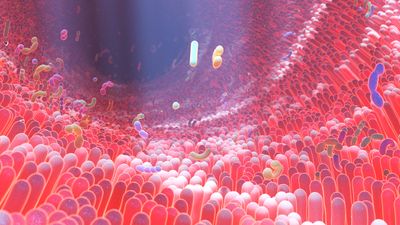


Scientists are looking to create a vault that will hold samples of human poop from around the world. Through building this “doomsday vault,” they hope to protect the world’s microbial diversity and foster a deeper understanding of how global health is influenced by the trillions of bacteria living inside the human gut.
Dubbed the Microbiota Vault, the project says it takes direct inspiration from the Svalbard Global Seed Vault, a facility in the Norwegian Arctic that safeguards the global diversity of food crop seeds. It’s the brainchild of a team of microbe-obsessed researchers based at the University of Basel, the University of Lausanne, ETH Zürich, and Rutgers University.
Outlining their plan in a 2018 paper published in Science, the team explains how the rise of many diseases and conditions in recent decades – including obesity, diabetes, asthma, allergies, inflammatory bowel disease, Alzheimer’s, and autism – can be linked to changes in the human microbiome caused by urbanization, industrialization, and globalization.
Our changing diet, overuse of antibiotics, and squeaky-clean approach to hygiene have affected the diversity of microbes living in the guts of many people. If we take a look at the poop of hunter-gatherers who live in remote parts of the world, we see a far more diverse and robust gut microbiome.
Worldwide, however, this diversity is coming increasingly under threat, and scientists argue this is having an impact on our immune systems and global health.
While science is just starting to get to grips with the profound importance of the human microbiome, there is still a lot left to learn – and a huge amount of knowledge that risks being lost forever.
“Metagenomic analyses had previously shown that ~80 percent of the bacteria inhabiting the human body are unknown, prompting the metaphor of ‘microbial dark matter.’ Such unknown diversity also extends to archaea, microbial eukaryotes, and viruses. Taken together, this means that there is a danger of irrevocably losing valuable information and opportunity, at a time when science has just started understanding the health relevance and potential of our microbial environment and the microbiome,” the researchers explain in a 2020 feasibility study.
They argue that the solution is a biobank to preserve the world’s microbial diversity and provide researchers with the opportunity to master the science of human microbiomes.
In 2021, the Microbiota Vault initiative sparked the Launch Phase of the project, a two-year period to kick-start the installation of a biobank somewhere in Switzerland. Their aim is to eventually start collecting a diverse range of microbial samples, which they say will primarily come from human poop, and preserve them either through cryogenic deep freezing or freeze-drying.
There is already a rich landscape of existing projects hoping to achieve similar things. One example, called the Global Microbiome Conservancy, is already in action and has collected over 1,000 microbiome samples from people living across America, Europe, Africa, and Asia.
The Microbiota Vault says they wish to build on this work and become part of a “powerful global framework” to strengthen human microbiome research.
“A global repository of human-associated microbes should back up existing research collections, similar in principle to the inspiring example of the Seed Vault established in the permafrost of Svalbard Island in Norway to preserve the natural biodiversity of plants. We owe future generations the microbes that colonized our ancestors for at least 200,000 years of human evolution,” the researchers explained in the 2018 study.
“We must begin before it is too late,” they conclude.

 2
2