


 Nature
 PUBLISHED


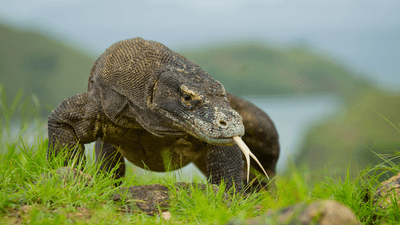


Journey to the Komodo National Park in Indonesia, and you’ll find dragons. The reptilian beasts that roam here can grow to over 3 meters (9.8 feet) in length and weigh up to 166 kilograms (366 pounds), wearing a veil of bony chain mail over their faces to protect against attacks from their own species. We’re talking, of course, about Komodo dragons.
As adults, Komodo dragons are top predators. Their jaws are lined with iron-tipped teeth, and they will eat almost anything from buffalo to deer, pigs, and even smaller Komodo dragons.
Their mouths contain a lot of nasty bacteria, but it’s thought that it’s their venom that secures a kill – even if it may take hours to days to take effect. Their size means little is off the menu, but the source of their gigantism is another aspect of Komodo dragons that science has historically gotten wrong.
When isolated populations move to islands, it can result in changes that are sometimes significant enough to qualify them as a new species. We’ve seen birds go flightless and sloths become very small, all as a result of moving to a new island.
Island gigantism describes the way some animals evolve to be much larger after moving to a new habitat. We used to think this was how the Komodo dragon got so huge, but in 2021, researchers at The Australian National University discovered the root of their gigantism lay in their unusual breeding history.
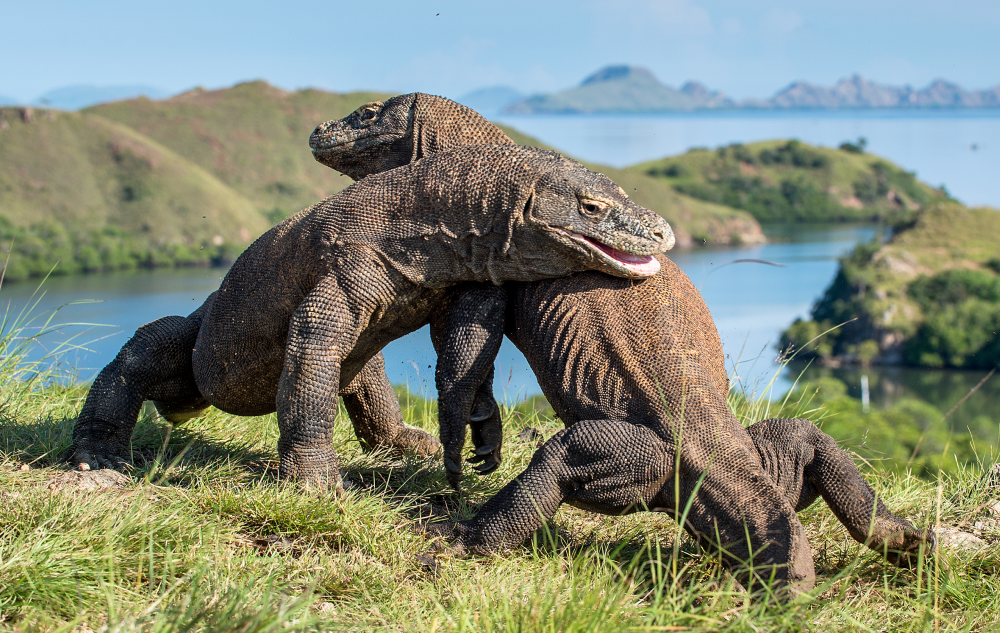
Using a comprehensive workflow, they discovered evidence of ancient hybridization between the Komodo dragon (Varanus komodoensis) from Indonesia and a common ancestor of an Australian group of monitor lizards known as sand monitors.
The discovery marked the first time we’d ever found clear evidence for this type of hybridization occurring in wild monitor lizards, demonstrating that hybrids among vertebrates might not be as rare as we think they are – they could just be harder to find.
"Previously it was assumed the Komodo dragon was a good example of what biologists call the island rule – with smaller animals growing larger in an island environment," said lead author of the study Carlos Pavón Vázquez in a statement. "But our findings offer more strong evidence the Komodo dragon was already huge when it originated in Australia."
"We also showed how to use different kinds of data to detect hybridisation. This is crucial because when it took place millions of years ago it can be hard to detect. Now we can tell by looking at the animal's morphology and genes."
Beyond revealing a hidden hybrid ancestry, it’s hoped getting to know the Komodo dragon better can help us to better protect it going forward – crucial information, in light of the fact it was officially listed as “Endangered” in 2021.



 1
1