Nature
 PUBLISHED
 1
1


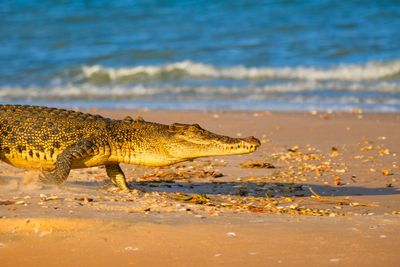


Saltwater crocodiles are not to be messed with – they’re the largest of all the living reptiles, have the strongest bite of any animal, and are notoriously unfussy about what they use that bite on. Still, even the most fearsome of apex predators haven't mastered it all; these crocs might be good at swimming in short bursts, but long-distance swimming definitely isn’t their strong suit. So how on Earth have they been able to spread to so many islands in the South Pacific?
In 2010, a group of researchers from the University of Queensland, the Queensland Parks and Wildlife Service, and Australia Zoo – including the late, great Steve Irwin – finally solved the mystery.
To do so, they strapped sonar transmitters to 27 adult crocodiles in Australia’s Kennedy River and used underwater receivers to track their movements over 12 months. By the end of the study, they had 1.2 million data points on their fleet of saltwater crocs, and it revealed some intriguing insights as to how they get around.
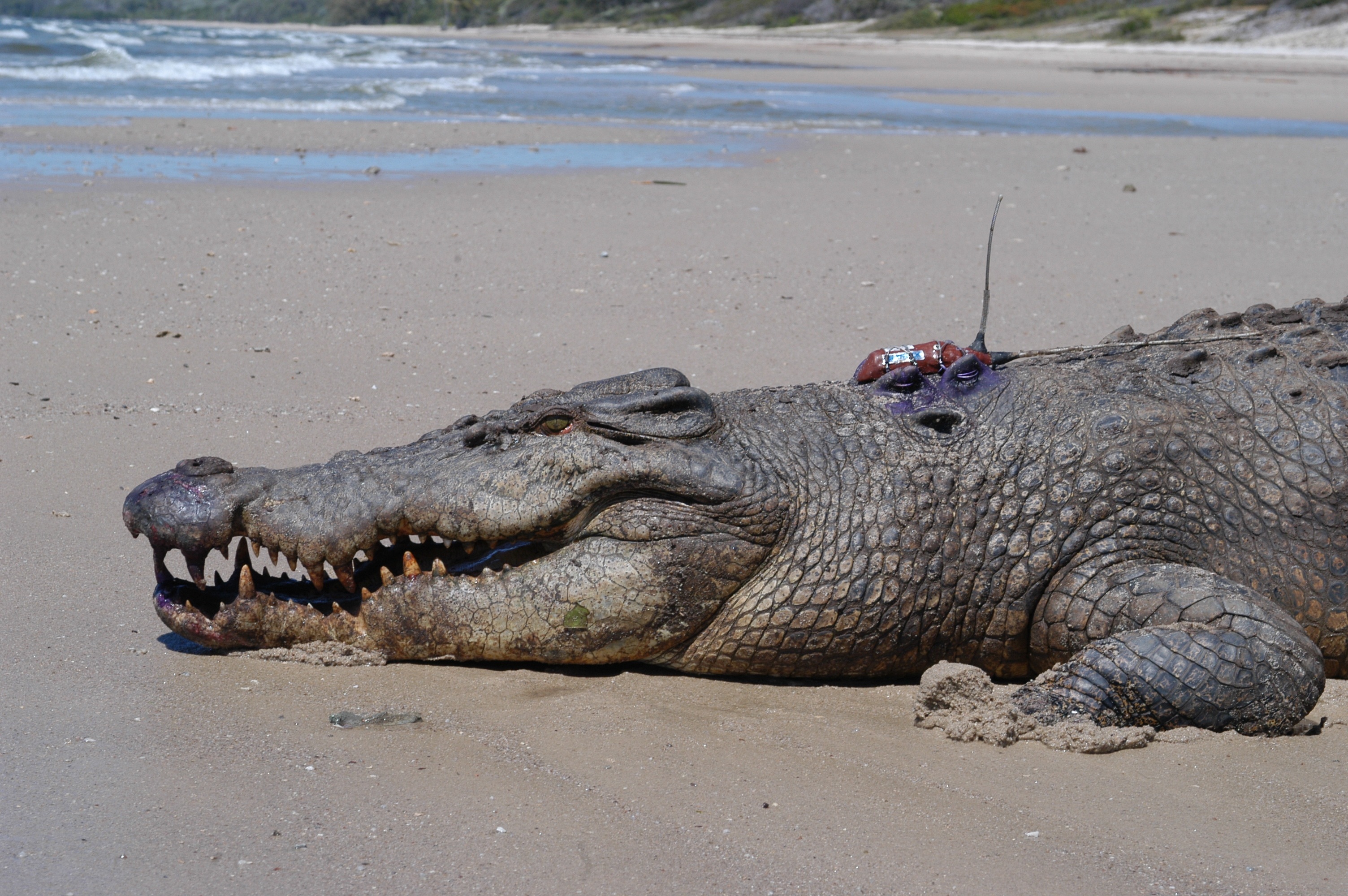
The crocs would begin their long-distance travel within an hour of the tide changing, and this meant that they could essentially “surf” ocean currents. When the tide died down again, they’d haul themselves onto a riverbank and wait for the tide to change.
Their adventures took them vast distances, regularly traveling over 50 kilometers (31 miles) from their home to the river mouth and even out into the open sea. Such trips were completed in bursts of 10-kilometer (6.2-mile) stretches while the currents were good.
The results were then compared to crocodiles that had been tracked during ocean travel, revealing that this surfing behavior applied to their movements out in the open sea, too. At last, an explanation as to how these versatile giants have been so successful in occupying many South Pacific islands.
“The estuarine crocodile occurs as island populations throughout the Indian and Pacific ocean, and because they are the only species of salt-water living crocodile to exist across this vast area, regular mixing between the island populations probably occurs,” said study author Dr Hamish Campbell from University of Queensland, in a statement at the time.
"Because these crocodiles are poor swimmers, it is unlikely that they swim across vast tracts of ocean. But they can survive for long periods in salt-water without eating or drinking, so by only travelling when surface currents are favourable, they would be able to move long distances by sea.”
“This not only helps to explains how estuarine crocodiles move between oceanic islands, but also contributes to the theory that crocodilians have crossed major marine barriers during their evolutionary past."
Among the most impressive stats logged was a 3.84-meter (12.6-foot) male who left the Kennedy River and went on a 590-kilometer (366.6-mile) mission to the west coast of Cape York Peninsula in 25 days by capitalizing on a seasonal current system that develops in the gulf of Carpentaria. There was also a 4.84-meter (15.9-foot) male that travelled 411 kilometers (255.4 miles) in just 20 days by waiting for the Torres Straits’ notoriously strong water currents to change direction in its favor.
Clever boys.
An earlier version of this article was published in August 2025.