Nature
 PUBLISHED


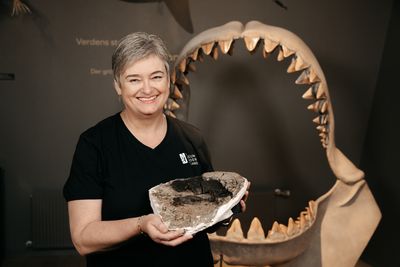


The largest known fossilized vertebra belonging to Otodus megalodon – an enormous prehistoric shark that lived between 23 million years ago and 3.6 million years ago – has been rediscovered after vanishing in a museum move in the late 1980s.
The specimen was one of several vertebrae recovered from a large clay pit in Gram, Denmark, in the late 1970s and subsequently housed in the Geological Museum of Copenhagen. Photographs and measurements were taken in the early 1980s, but the vertebrae were misplaced when moving between storage locations in 1989.
Even while missing, these specimens have been of great scientific importance due to their extraordinary size – even for a megalodon – with the largest reportedly being 23 centimeters (11.5 inches) in diameter.
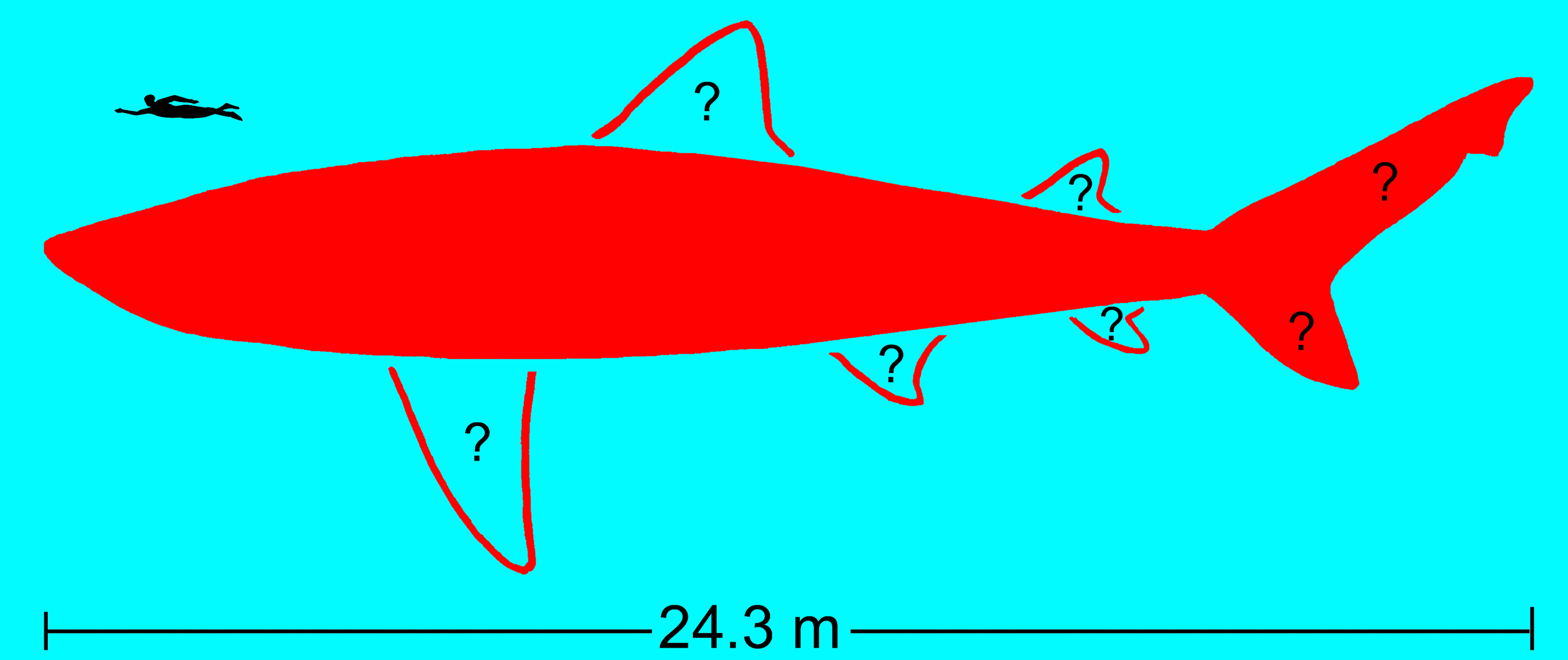
That measurement formed part of the justification in 2025 for a new estimate of megalodon's maximum length, putting it at 24.3 meters (80 feet) or around four times the length of a great white shark. The recovery of these fossils has bolstered the strength of that claim and provided additional insights into this enormous fish.
"The rediscovery of the vertebrae was a true delight because they empirically confirm the maximum vertebral diameter of 23 cm reported in the literature," said Kenshu Shimada at DePaul University in Chicago in a statement. "The specimen not only represents the largest shark vertebrae known to date but also the largest fish vertebrae ever recorded to our knowledge."
Despite megalodon being well known even outside palaeontological circles as a terrifying super-predator, we are surprisingly uncertain about how big it could get. This is partly because shark skeletons are made of cartilage – the same flexible substance that gives structure to your nose and ears – which doesn't fossilize as readily as bone.
That may come as a surprise to those who recall seeing enormous, fossilized jaws in some museum exhibits, but these are all reconstructions based on the smattering of remains we do have, the vast majority of which are individual teeth. As a result, researchers have had to guess at the true length of this prehistoric beast using comparisons with modern-day sharks.
Older estimates leaned heavily on measurements from teeth and the apparent close evolutionary relationship between megalodon and the great white shark, coming to maximum body length values of around 14 to 18 meters (46-59 feet), or about three times the maximum length of a great white.
The tendency with more recent work has been to revise that value up: a 2021 study taking into account relationships with other shark species suggested a maximum size of 20 meters (66 feet), and this was supported by a 2022 work that used 3D modeling and boosted the size of a Belgian specimen previously placed at 9.2 meters (30 feet) to 15.9 meters (52 feet).
In 2024, a number of researchers – including Shimada – made the case that this still wasn't long enough. In their paper, they argued that the strength of the shark's spinal column suggested megalodon had a more slender body shape than had previously been assumed, implying it was less of an ambush predator and more of a long-distance pursuer.
Taking that into account, they came out with a maximum length of 24.3 meters (80 feet) for a specimen with vertebrae as big as those found at Gram.
It bears noting that all of these estimates remain just that – estimates. No complete megalodon skeleton has ever been found, and without one, the true body proportions of this ancient predator cannot be known with certainty.
In addition to validating the vertebra's size, the team analyzed growth bands in the cartilage using X-ray imaging, allowing them to estimate that this megalodon was around 64 years old when it died and, had it lived, that it could have reached the age of 96, potentially growing larger still.
That said, the researchers remain cautious about the implications of their findings, writing in their paper: "As these size and age estimates are based on incomplete remains of O. megalodon and several major assumptions, they must be regarded as highly tentative."
The team also made an unexpected find in the rocks surrounding the vertebrae: fragmentary gill structures and tiny scales belonging to a basking shark.
The researchers ruled out the possibility that the vertebrae themselves belonged to a basking shark and instead interpreted the remains as stomach contents, suggesting the megalodon had eaten a basking shark shortly before it died.
"[This] is the first documentation for the Megalodon fossil record," said coauthor Mikael Siversson at Western Australian Museum in Welshpool.
The study is published in the journal Palaeontologia Electronica.


 1
1