Nature
 PUBLISHED


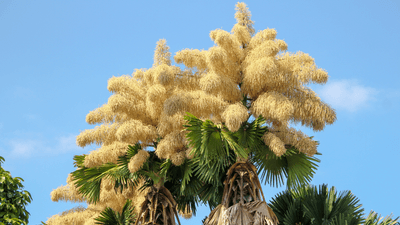


Flowering plants are a real treat for the senses, but when it comes to the biggest blooms, the talipot palm really puts on a show. With the largest branched inflorescence in the world, it can produce in the region of 24 million flowers that bloom all at once in a dazzling swan song that marks the beginning of this peculiar palm’s end.
Known to science as Corypha umbraculifera, the talipot palm is native to India and Sri Lanka, but you may also spot it in Cambodia, Mauritius, Myanmar, and Thailand. These palms live for around 30 to 80 years, growing to staggering heights of 25 meters (82 feet).
Staggeringly, in all that time, they only get round to blooming once. Still, they’ve earned themselves a reputation as one of the most dramatic plants in nature because when they do, they put on one hell of a show.
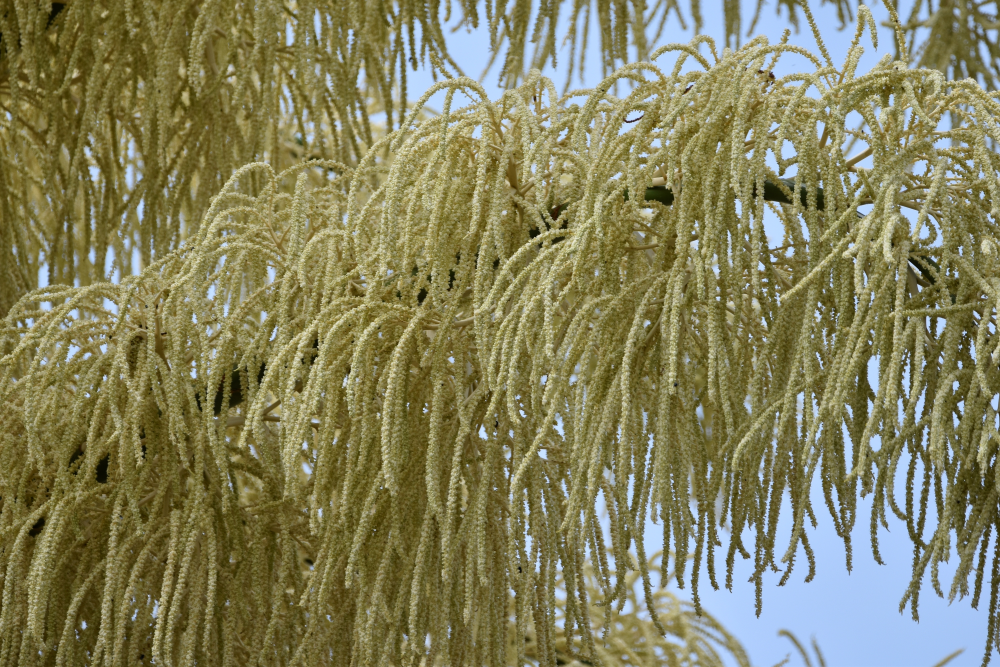
“Some palms go out with a bang,” explains Kew. “After a long period of growth without blooming, they literally flower themselves to death. Once such species, the talipot palm (Corypha umbraculifera) indulges in the most prolific sexual spectacle of the plant kingdom, producing the largest inflorescence of any plant.”
“Above the enormous fan-shaped leaves that crown its 20 m [66-foot] trunk, an immense candelabra emerges, some 8 m [26 feet] high. This bears an estimated 24 million flowers in tiny clusters, and the total length of the branches within this inflorescence is thought to exceed 9 km [5.5 miles].”
These impressive stats have earned the talipot palm the Guinness World Record for “largest branched inflorescence”, a distinction characterized by the fact the talipot palm’s flowers are arranged in clusters of multi-branched stems, rather than flowers growing on the end of a single stem, such as daffodils or roses. The crown for largest unbranched inflorescence goes to our old stinky pal, Titan arum, or Amorphophallus titanum – better known to most as the “corpse flower”.
A corpse flower develops quickly, gaining around 10 centimeters (4 inches) per day, until it reaches a height of around 2 meters (6.6 feet), and that’s in a matter of weeks in some cases. Then it will open, releasing its noxious gas for all the carrion-eating insects of Sumatra to smell. When a corpse flower blooms, the pinky-purple spathe unfolds from an enormous yellow spadix that can grow to 3.7 meters (12 feet). It's the shape of this unusual bloom that really puts the “misshapen penis" in its Latin name, Amorphophallus.
Animals get a lot of airtime when it comes to curious mating displays, but let it be known that when it comes to putting on a sexual spectacle, there are plenty of freaks in the plant kingdom, too.