Nature
 PUBLISHED
 1
1




What you'll discover in this article
- Roger Kastel, the illustrator behind the movie poster for Jaws, based his drawings on a model of a real shark specimen housed at the American Museum of Natural History (AMNH).
- That specimen was not a great white shark, as features in the 1975 movie based on the novel of the same name by Peter Benchley.
- As a spokesperson from the AMNH told IFLScience, "He took photos of shark models, including one made from the shortfin mako shark, which eventually became the key art for the now iconic movie poster."
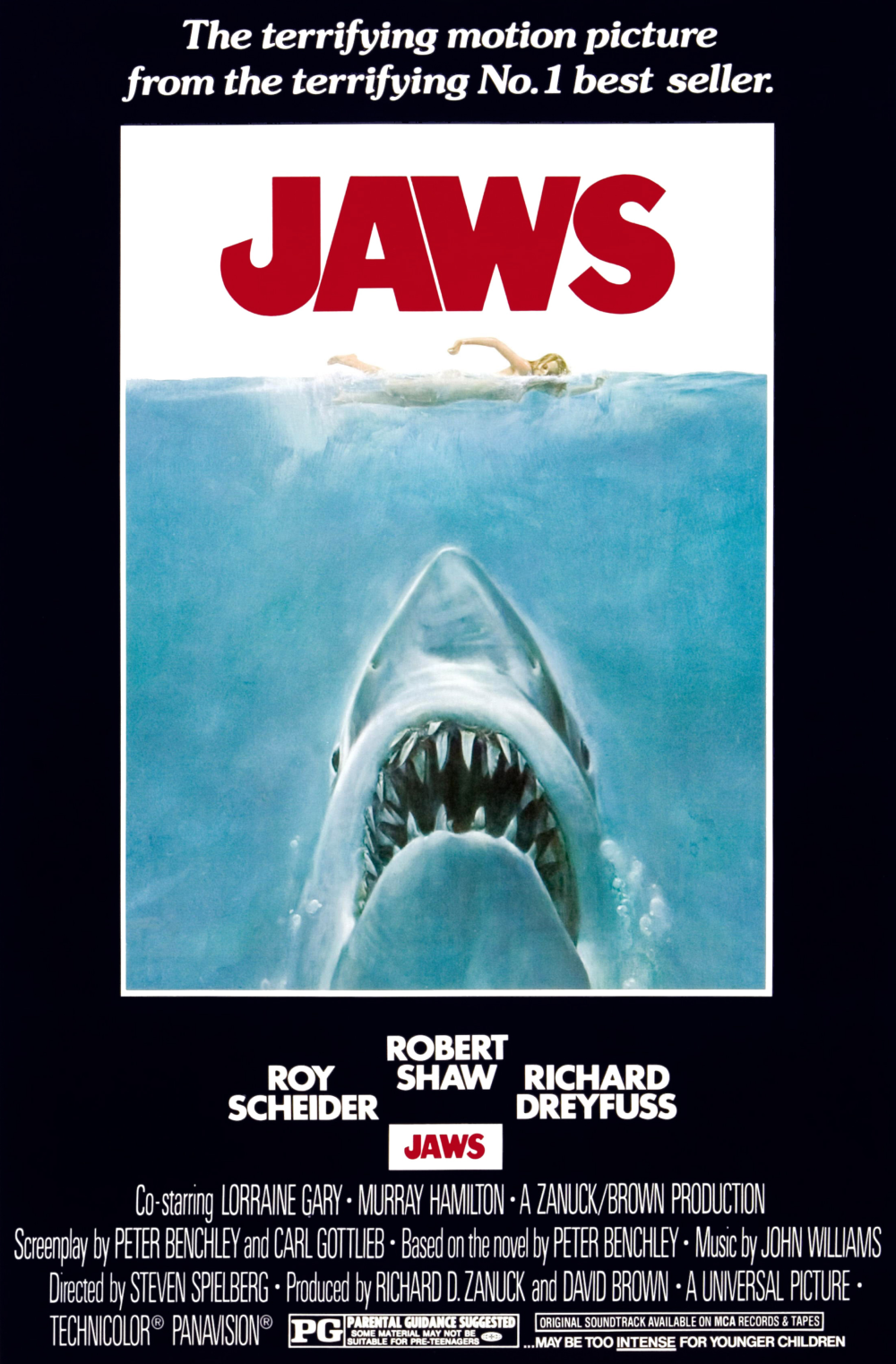
Just over 50 years ago, the 1975 thriller Jaws told the fictional tale of a town terrorized by a bloodthirsty great white. You’ll no doubt recognize the iconic movie poster that depicts a monstrous killer ascending from the depths beneath a clueless swimmer.
What you might not know, however, is that the illustrator behind the image based it on an entirely different shark.
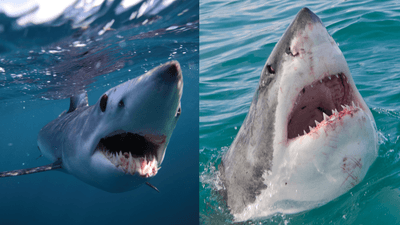
That pointy snoot and jagged needle-like teeth belong to a specimen housed at the American Museum of Natural History (AMNH) ichthyology collection. It was collected in 1939 and preserved in ethanol before joining the museum.
A model was then created based on its anatomy, and it was this that caught they the eye of a celebrated illustrator.
“Back in the 1970s, the renowned artist Roger Kastel visited the Museum seeking inspiration for a film poster he was working on for Jaws,” said a spokesperson from the AMNH to IFLScience. “He took photos of shark models, including one made from the shortfin mako shark, which eventually became the key art for the now iconic movie poster.”
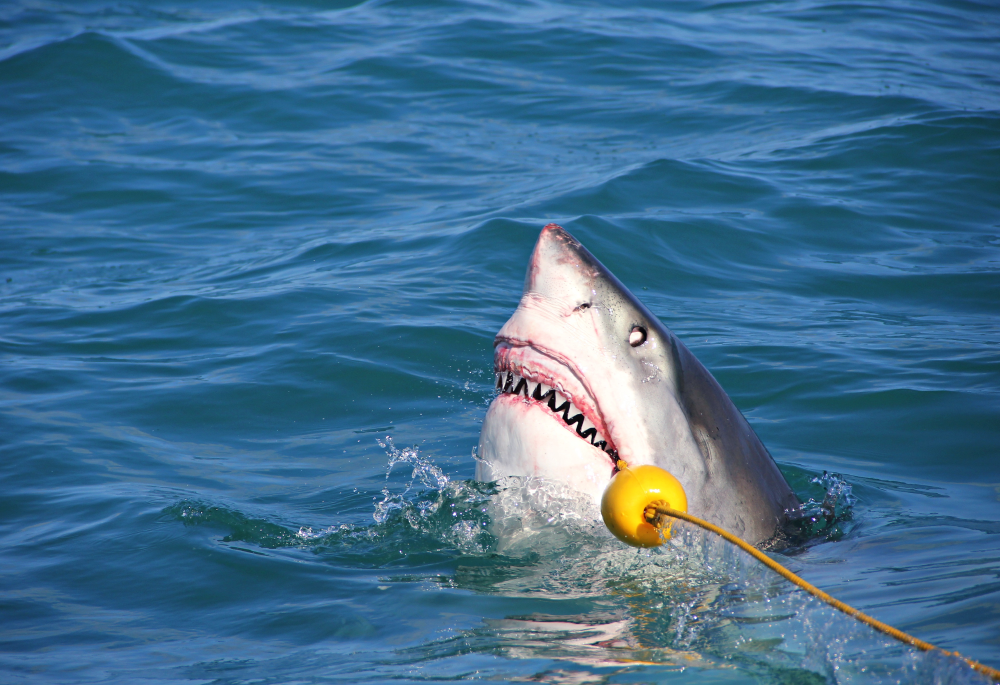
Though not nearly as enormous as great white sharks (Carcharodon carcharias), shortfin makos (Isurus oxyrinchus) are capable killers, but they’re rarely involved in attacks with humans. According to the Florida Museum of Natural History, they’ve been implicated in 10 unprovoked attacks, one of which was fatal.
Meanwhile, the great white is among the “Big Three” alongside tiger and bull sharks that, being so large, are capable of inflicting serious injuries even with “sampling bites”. That said, it’s important to note shark bite data is tricky to collect because it relies on victims identifying the species – something that’s not easy to do when you’re in the process of being bitten.
The great white is a more obvious choice for a thriller, then, but what the shortfin mako lacks in size it makes up for in speed. As the fastest shark in the ocean, it can zoom up to 70 kilometers per hour (43 miles per hour) when hunting underwater.
Speedy, but sadly not fast enough to outrun “the Jaws effect”.
While not the star of the movie, the shortfin mako was one of many shark species to see population dives following the release of Jaws.
A 2021 estimate suggested that since the 1970s, open ocean species like the shortfin mako have experienced losses of 71 percent due to a spike in fishing pressure, be that for meat, fins, or sport.
As activist Wendy Benchley, wife of Jaws author Peter Benchley, told IFLScience, “Some people took Jaws as a license to kill sharks. There was this uptick in shark tournaments, but there was also a huge increase in interest in sharks and in shark research.”
Jaws director Stephen Spielberg has spoken openly about his regret over how the movie impacted shark populations.
When asked in an episode of Desert Island Discs how he would feel to find himself surrounded by shark-infested waters, he said, “That’s one of the things I still fear – not to get eaten by a shark, but that sharks are somehow mad at me for the feeding frenzy of crazy sport fishermen that happened after 1975. I truly, and to this day, regret the decimation of the shark population because of the book and the film.”
The movie’s passed it’s half-century anniversary, meanwhile that shortfin mako is nearing 90. An unusual bit of cinema history that will continue to inspire for many years to come.
“It will presumably last for many decades to come,” said the AMNH. “In our collections of over 3 million specimens, there are some over 150 years old.”
So, perhaps this inaccuracy is actually an added layer of depth to Kastel’s movie poster. A fitting reminder that Jaws is about more than just one shark, and it should inspire us to care about all of them.
Still, it’s fun to imagine what the poster might have looked like had Kastel opted for the appropriate species. My money’s on more gum and much creepier eyes.