Nature
 PUBLISHED



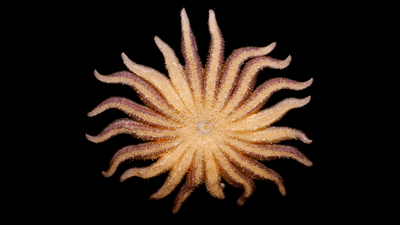


California’s kelp forests are in crisis, but an unlikely hero has been discovered hiding on the seabed: the 24-armed predatory “sasquatch of the sea.”
But you mustn’t be fooled by the sunflower sea star's common name, as these echinoderms are eating machines. Fortunately for us, that’s a good thing. Sunflower sea stars help to keep one of the ocean’s most abundant sea urchins in check.
In the early 2010s, the purple sea urchins’ numbers exploded by over 10,000 percent. The cause? The sudden disappearance of sunflower sea stars, due to a perfect storm of changing environmental conditions and disease.
As the northeast Pacific Ocean experienced a devastating heatwave in 2013, this aligned with a mass die-off event driven by the sea star wasting disease. This combination of events is thought to have killed around 99 percent of California’s sunflower sea stars.
Good news for the purple sea urchin, but bad news for just about everyone else. By 2017, the region's already struggling kelp forests were stripped to ribbons, with over 90 percent of the kelp forests lost along the West Coast. While some of this decline was driven by warming waters, any hopes of the kelp bouncing back is being thwarted by ravenous purple sea urchins.
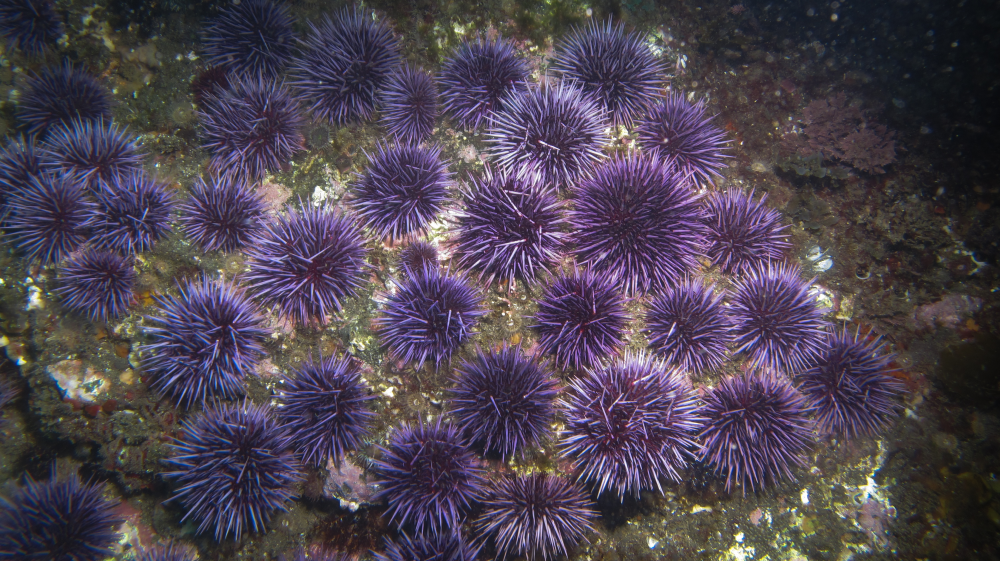
The problem is that there’s no easy way to get rid of purple sea urchins to give the kelp a chance.
Divers and beachcombers have tried removing the urchins manually, but its labor-intensive work. While the upside is that the purple sea urchins can be used as food, nobody eats them quite like sunflower sea stars. Unfortunately, the sea star's numbers had fallen so low they'd been nicknamed the “seasquatch” by scientists unable to find any sign of them. That was until about a year ago.
“The moment I saw my first sunflower star underwater, I was so excited that I literally screamed through my regulator,” Rachael Karm, a research technician at The Hugh's Lab for coastal ecology and conservation at Sonoma State University, said to National Geographic. “For most of my career, seeing a sunflower star felt almost out of reach, something you hear about but don't get to see yourself because the chances are so slim.”
Karm and colleagues later identified the largest southernmost population of sea stars documented since the double whammy of heat and disease. At just 18 individual sea stars, it’s not exactly an army, but it’s enough to have reproductive potential, and their DNA samples could reveal what enabled them to survive when so many others died out.
It’s likely there are other sunflower sea stars hiding just out of sight. Very good news not only for the sea stars, but also for one of California’s most critical habitats.
It’s hard to overstate the importance of kelp forests. Not only are they essential for marine biodiversity, providing food and nurseries for countless marine species, but they also regulate the climate through carbon sequestration, absorbing 20 times more CO2 than the same area of terrestrial forest. Kelp forests also reduce erosion as they absorb wave energy, meaning they’re an important habitat for protecting coastal human homes, too.
Today, they are among the most at-risk marine ecosystems on the planet. The Nature Conservancy has found that from San Francisco to Oregon we’ve lost around 96 percent of kelp forests over the past decade, putting this stretch of kelp forest on the verge of collapse.
But even if we were to lose the kelp forest completely and try to start over, that still wouldn’t get rid of their worst threat. Because if purple sea urchins run out of food, they can go into a “zombie” mode, aggregating on the seabed in a state of torpor. They can endure like this until reanimating when nutrients become available again.
So while we can’t starve the urchins out, with the discovery of a hidden lair of their worst nightmare there’s hope we can once again restore balance to California’s precious kelp forests. We’ve seen in places like Papahānaumokuākea, one of the largest marine conservation areas in the world, just how effectively and rapidly the oceans can bounce back if given the chance.
Strange to think that that chance looks like a 24-armed sasquatch of the sea, but that’s the beauty of conservation for you.

 2
2