Culture and Society
 PUBLISHED




The World Monuments Fund (WMF) has just announced its biennial list of 25 cultural heritage sites that are under threat – and for the first time ever, it’s gone lunar.
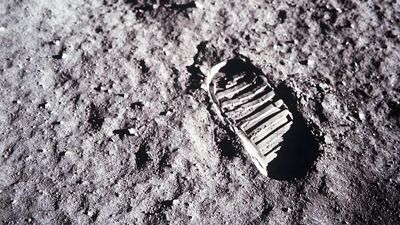
The preservation organization’s list, the World Monuments Watch, usually sticks to cultural heritage sites within Earth’s bounds. However, with humanity recently ramping up (uncrewed, for now) visits to the Moon, concerns have grown over what that means for the future of the culturally significant marks we’ve left on its surface.
“For the first time, the Moon is included on the Watch to reflect the urgent need to recognize and preserve the artifacts that testify to humanity’s first steps beyond Earth—a defining moment in our shared history,” said WMF’s president and CEO Bénédicte de Montlaur in a statement.
Such artifacts include not just physical objects like planted flags, cameras, and memorials, but also the very first imprints left by lunar landers and astronauts’ feet.
“Yet, they face mounting risks amidst accelerating lunar activities, undertaken without adequate preservation protocols,” said de Montlaur. “The inclusion of the Moon underscores the universal need for proactive and cooperative strategies to protect heritage—whether on Earth or beyond—that reflect and safeguard our collective narrative.”
While the Moon is potentially the most attention-grabbing addition to the list, the remaining 24 Earth-bound sites demonstrate that cultural heritage is just as much at risk back down on the ground.
Dotted across five continents, the sites represent three main trends in risk: conflict, natural disasters, climate change, and tourism.
Sites put on the list as at risk from conflict include Gaza’s historic urban fabric, home to a particularly high concentration of heritage sites representing a breadth of human history. However, between October 7, 2023, and November 29, 2024, UNESCO has verified that 75 such sites have been damaged.
The ancient city of Antakya has also been added to the list. Back in February 2023, Turkey and Syria were hit by a series of major earthquakes and aftershocks. Alongside significant loss of human life, several of the city’s important historical sites were destroyed.

In sub-Saharan Africa, climate change was identified by the panel behind the list as an especially critical issue, adding the Swahili coast to the list with its cultural heritage at risk from storm surges and coastal erosion.
Then there’s tourism. One of the places on the list – the Buddhist grottoes of Maijishan and Yungang, China – is experiencing so much of it that it’s become a challenge to conservation. On the other hand, the conservation of places like Albania’s Drino Valley monasteries could benefit from more responsible tourism and the investment that comes with it.
It’s hoped that putting these places on the watchlist will bring public awareness and funding to the sites at risk and to the preservation of the past, but also have a positive impact on the surrounding communities too.
“The Watch underscores World Monuments Fund’s commitment to ensuring that heritage preservation not only honors the past but actively contributes to building a more sustainable, inclusive, and resilient future for communities around the world and beyond,” said de Montlaur.


 1
1