Space and Physics
 PUBLISHED


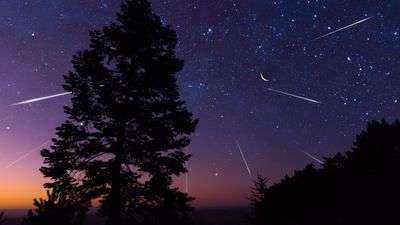


It’s April, which means the second meteor shower of the year is upon us: the Lyrids. Known for its super-fast shooting stars that zip across the night sky in a flash, the Lyrid meteor shower is currently ramping up its activity and is set to peak next week.
How To View The Lyrid Meteor Shower
This year, the Lyrids will run from April 15 to April 29, with a peak of activity occurring on the night of 22 to 23 April, according to the UK Space Agency blog.
The Lyrid meteor shower is best seen in the Northern Hemisphere during the dark hours (after moonset and before dawn). On a clear, moonless night, you can expect to see 10 to 15 meteors per hour.
The Lyrids have been known to very occasionally deliver surges of intense activity that bring over 100 meteors per hour. In 1803, for example, astronomers spotted up to 700 meteors an hour.
Unfortunately, 2024 won’t have the most favorable conditions for star gazing. A full moon is set for April 23, just after the peak of activity, meaning the night sky might be drowned out by moonlight. Likewise, you should keep an eye out for April showers, as cloudy weather conditions could obscure the spectacle.
As with any meteor shower, they are best viewed from a dark place that’s far away from street lamps and other artificial lighting – that includes phone screens. You should be patient and go outside early to let your eyes acclimatize to the lower light conditions.
What Is the Lyrid Meteor Shower?
They are called Lyrids as they appear to come from the direction of the Lyra constellation. However, they actually have little to do with this distant group of stars.
Meteor showers are the product of small space rocks and dust crashing into Earth's atmosphere at high speed and burning up, creating a high-energy fireball. To Earth-bound humans, they appear as a bright streak of light in the sky.
In the case of the Lyrids, the rocky debris comes from comet C/186 G1 (Thatcher) which left a trail of cosmic dust when it passed by our planet hundreds of years ago.
It takes 415.5 years for Thatcher (the comet, not the late British Prime Minister) to orbit the sun once. It was observed first back in 1861 and won't be seen from Earth again until 2283 CE during its next passage around the Sun, long after our lifetime (well, probably).
The Lyrids are the oldest recorded meteor shower in the world, as Chinese astronomers documented their appearance over 2,500 years ago. In ancient records dated to April 687 BCE, Chinese court astronomers wrote how the "stars fell like rain" in the empty night sky.


 1
1