Technology
 PUBLISHED




Friction is all around us. While useful in some cases, like the brakes on a bicycle, it can be a much bigger problem in industries like mechanics and engineering. In fact, around 20 percent of global energy is lost to friction in machinery and industrial processes.
Industries across the world are facing greater demands to lower energy consumption while strengthening their competitiveness. Fighting friction is now not only needed to achieve efficiency, it’s also a key step in producing sustainable futures. But how do we achieve this?
Magnetic ball bearings can help reduce friction
SKF, a Swedish-founded engineering company, has been tackling friction for over 100 years. Their story begins in Gothenburg, Sweden, at the start of the 20th century. For nearly 400 years, engineers struggled with the mud the city was built on. As buildings settled into the ground over time, they caused machinery to misalign. Then, in 1907, SKF founder Sven Wingquist developed a self-aligning ball bearing to solve this issue. It was so successful that it quickly introduced SKF to the world.
This was the start of SKF’s story as an innovator in rotating equipment, and they’ve been leading the fight against friction ever since. This mission is powerfully illustrated by two recent campaigns.
Back in 2025, they helped launch the Faroe Islands Space program, a space program that aimed to never leave Earth; instead, it ventured out into the depths of the Atlantic to harness tidal energy. In the same year, they launched The Patent Bay, a platform where companies can freely share patents that accelerate adoption of sustainable technologies.
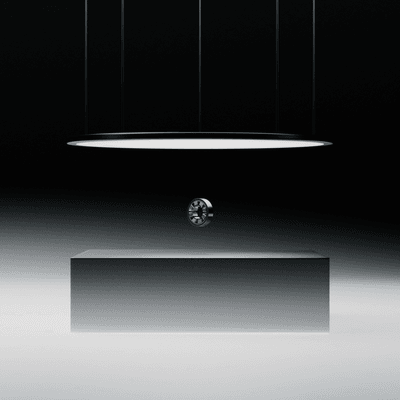
The fight against friction can clearly come in various forms, and SKF are well positioned to do this. Their innovative levitating magnetic bearing is one example of a technology that can make a huge difference. The bearing eliminates friction entirely, making machinery more efficient as it needs no additional lubrication and doesn’t experience wear-and-tear like traditional bearings.
“Our magnetic bearings suspend a rotating shaft without physical contact within the bearing itself. Depending on the application, this can reduce energy consumption, wear and maintenance needs. Making those benefits clear under a customer’s operating conditions is an essential part of adoption,” says Annika Ölme, Chief Technology Officer and Senior Vice President of Technology Development at SKF.
So, this new contactless invention reduces friction, along with lubrication consumption and the need for bearing changes or repairs. It can also help reduce wear and energy consumption, lowering maintenance requirements and the carbon footprint.
Since their conception, magnetic bearings have been used in highly important and energy-intensive applications like cooling systems, air compressors, and data centers.
The payment model with links to the past
Inventing new zero-friction technology is only one part of the solution for fighting friction. There is a need for widescale adoption of new energy-saving technologies, like this magnetic bearing. SKF has an answer to this too, and it is something they introduced over 100 years ago. Back in 1919, there was a payment model where customers financed their investments through the energy savings generated by their technology over time.
SKF is bringing this back in a payment model called ‘Pay like it’s 1919’. This payment model will make the next generation of energy-efficient technology more accessible and affordable for magnetic customers. This model will allow parts of the investment to be paid over time rather than entirely upfront, and every case is assessed individually as it is not a fixed financial product.
SKF is also highlighting this payment model by bringing in an AI-based interpretation of an iconic actress from 1921, Greta Garbo. In 1921, Garbo appeared in a Swedish industry campaign film aimed at an international audience. This was long before she became a global celebrity. By representing her here, SKF believe they can demonstrate a century of progress and innovation.
“There are few companies in the world better at fighting friction than SKF. But having the most innovative technology or the most customer-focused payment model is not enough. The way we communicate must be equally innovative and inspiring. By bringing Greta back, we hope to open more eyes to frictionless and energy-efficient technology,” says Per Nilsson, Global Head of Communication and Brand at SKF.
“Sometimes, we need to look back to find the best way forward”.
You can learn more about ‘Pay it like its 1919’ here.
This article is an advert and includes sponsored material. Read our transparency policy for more information.